

Chef’s Notes
Mason Bostwick · Executive Chef
Pacific oyster
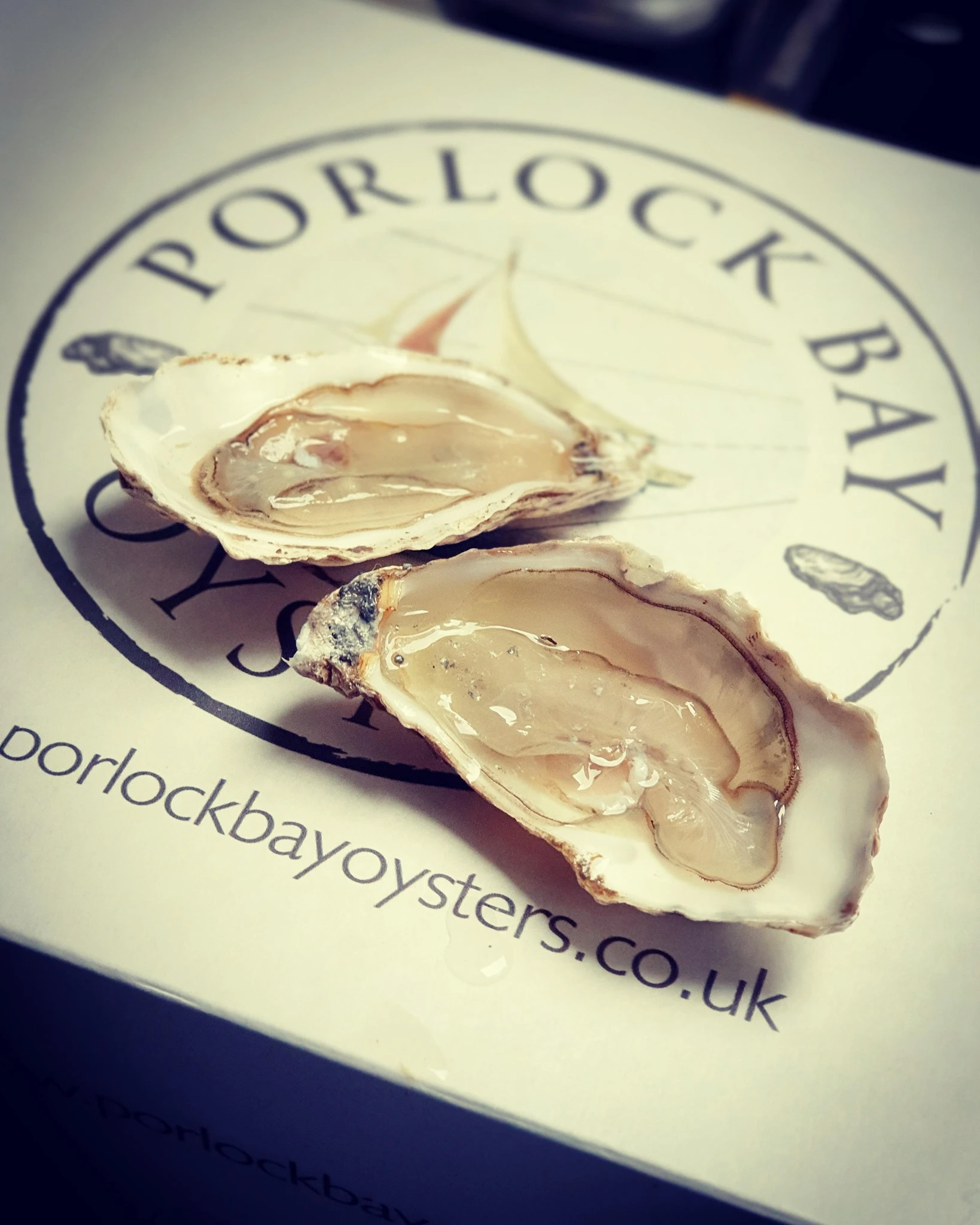
Porlock Bay — Porlock Bay — Strong minerality — clean flavor and melon. A solid farmed pacific oyster.
Flavor chart
Chef palate read
Shuckability
Shell & line performance
When I buy it
Look for Porlock Bay Oysters in peak season when conditions are optimal.
How I serve it
On the half shell with minimal garnish — let the oyster speak.
What to watch for
Mild salinity with creamy finish. Reject any with broken shells or milky liquor.
My read
Strong minerality — clean flavor and melon. A solid farmed pacific oyster.
What Are Porlock Bay Oysters?
Porlock Bay Oysters are farmed Pacific oysters from Porlock Bay on the Somerset coast within Exmoor National Park. The farm raises triploid Magallana gigas on trestle-and-bag gear for roughly three years. Market size runs three to four inches with year-round harvest when beds are open.

On the half shell the line reads clean Atlantic brine with cucumber and honeydew melon notes. Salinity near twenty-seven to thirty ppt drives a silky finish chefs praise across the United Kingdom. The profile suits raw bars that want a Category A Exmoor Pacific cup.
Strong tidal surges shape deep cups and dense shells typical of Porlock Bay culture. Semi-oceanic water feeds oysters on fresh Atlantic plankton through each tide cycle. Porlock Bay remains among the few English Pacific sites with top Food Standards Agency classification.
How Did Porlock Bay Oysters Get Their Name?
Porlock Bay Oysters take their name from Porlock Bay and Porlock Weir on the Somerset coast in England. The trade label marks Pacific cups grown in that Exmoor harbor rather than a generic British sack name. Buyers see Porlock Bay on tags from farm direct sales and UK distributors.
Historic oyster fishing at Porlock Weir dates to the nineteenth century before beds collapsed in the 1890s. Community revival efforts relaunched farming in twenty-thirteen with Category A Pacific classification. The place name now signals Exmoor tidal culture on menus nationwide.
About Porlock Bay Oyster Company
Porlock Bay Oyster Company farms Pacific oysters on trestles with open-mesh sacks in Porlock Bay. Crews hand-pick at low tide while strong Exmoor surges build deep cups over a three-year grow-out. The site holds Category A status from the Food Standards Agency for Pacific oysters.
Porlock Futures revived the fishery in twenty-thirteen after more than a century without commercial harvest. Mark Pendarves acquired the venture in twenty-nineteen to stabilize farm sales and community benefit. Today the farm supplies restaurants, takeaway, and overnight courier buyers across Britain.

Sustainable trestle culture keeps oysters filtering Atlantic plankton while purifying bay water. The Shellfish Association of Great Britain highlights Porlock as a small-scale artisanal revival model. Farm tours and The Kitchen restaurant at Porlock Weir extend the brand beyond wholesale tags for visitors.
Follow Them
Discover Porlock Bay Oysters on their official website and social channels for farm hours and Kitchen bookings. The Porlock Weir site lists takeaway windows and courier ordering for home delivery. Follow their feeds for seasonal harvest updates from Exmoor.
Porlock Bay Oysters Information

Pacific oyster
If you like Porlock Bay Oysters, then check out these similar varieties!
Location
Porlock Bay oysters grow at Porlock Weir on the Somerset coast inside Exmoor National Park. The bay opens to the Bristol Channel with semi-oceanic Atlantic exchange on every tide. That setting gives farm lines full salinity and steady plankton feed.
Porlock Bay sees among the largest tidal ranges in the world with twelve to fourteen meters between high and low water. Strong currents exceeding two meters per second in the outer bay sculpt deep cups on trestle-grown stock. Daily surges flush the harbor and renew Atlantic feed for filter feeders.

Salinity typically runs twenty-seven to thirty parts per thousand with Porlock Weir bathing water often above thirty ppt. Category A classification from the Food Standards Agency marks the bay among the cleanest Pacific grow-out zones in England and Wales. Low catchment urbanization inside Exmoor helps protect that water quality.
Minimal development across the Exmoor catchment limits runoff into Porlock Bay oyster leases. Farm crews grade and harvest when tides expose trestles for hand picking at Porlock Weir. That geography defines Porlock Bay cups on UK raw-bar lists year-round.
Suggested Beverage Pairings
This crisp white wine’s refreshing acidity and subtle mineral notes complement the oysters’ clean, briny flavors. Its citrusy undertones of lemon and green apple add a zesty contrast that enhances the oysters’ natural taste.
The effervescence of this Champagne creates a sensational textural contrast with the oysters. Its bright acidity, coupled with subtle notes of apple, pear, and toast, beautifully complements the oysters’ intricate flavors.
This crisp, light lager pairs well with oysters due to its clean flavor profile and bright carbonation. The beer’s subtle hop bitterness and malty sweetness balance the oysters’ brininess without overpowering their delicate flavors.
This creative twist on a martini incorporates the oyster itself into the drink. The gin’s botanical notes, particularly the subtle cucumber flavor of Hendrick’s,. complement the oysters’ briny character while the cocktail’s chill refreshes the palate.
This Chablis’ remarkable minerality and flinty character, derived from Kimmeridgian soil containing fossilized seashells,. create a captivating match with the oceanic essence of oysters. Its steely acidity and notes of green apple and white peach provide an elegant accompaniment to the briny oyster flavors.
Where Can I Buy Porlock Bay Oysters?
- Porlock Bay Oysters – Order farm-direct Pacific oysters for overnight courier delivery across the United Kingdom from Porlock Weir.
- The Kitchen at Porlock Bay Oysters – The Kitchen restaurant at Porlock Weir serves Porlock Bay oysters and local seafood on site Wednesday through Sunday.
- Visit Exmoor — Porlock Bay Oysters – Visit Exmoor lists Porlock Bay Oysters with click-and-collect hours and fishery pickup details at Porlock Weir.
- Porlock Bay Oysters — Our Oysters – The farm oyster page documents takeaway windows and wholesale contact for restaurants serving Porlock Bay cups.
Stay Connected with The Oyster Encyclopedia!
Follow us on social media to get the latest updates, oyster recipes, and behind-the-scenes glimpses into the world of oysters:
Stay tuned for exclusive content, oyster trivia, and more! Engage with our vibrant community of oyster enthusiasts by liking, commenting, and sharing our posts. Your support helps us continue providing valuable oyster knowledge to fellow seafood lovers worldwide.
References
- “About Us.” Porlock Bay Oysters, http://www.porlockbayoysters.co.uk/about-us. Accessed 6 Mar. 2025.
- “Our Oysters.” Porlock Bay Oysters, http://www.porlockbayoysters.co.uk/our-oysters. Accessed 6 Mar. 2025.
- “The Kitchen @ Porlock Bay Oysters.” Porlock Bay Oysters, http://www.porlockbayoysters.co.uk/the-kitchen. Accessed 6 Mar. 2025.
- Uncles, R. J., and J. A. Stephens. “The Structure of Vertical Current Profiles in a Macrotidal, Partially-Mixed Estuary.” Estuaries, vol. 13, no. 4, 1990, pp. 349-361.
- “Bathing Water Profile for Porlock Weir.” Environment Agency, environment.data.gov.uk/bwq/profiles/profile.html?_search=porlock&site=ukk1200-12400. Accessed 6 Mar. 2025.
- “Exmoor National Park Local Plan 2011-2031.” Exmoor National Park Authority, http://www.exmoor-nationalpark.gov.uk/__data/assets/pdf_file/0030/257815/Local-Plan-2011-2031-for-Web.pdf. Accessed 6 Mar. 2025.
Discover more from The Oyster Encyclopedia
Subscribe to get the latest posts sent to your email.