



Chef’s Notes
Mason Bostwick · Executive Chef
Pacific oyster
Jersey — Jersey — Bold brine — clean and versatile. A solid farmed pacific oyster.
Flavor chart
Chef palate read
Shuckability
Shell & line performance
When I buy it
Look for Jersey Oysters in peak season when salinity peaks.
How I serve it
On the half shell with minimal garnish — let the oyster speak.
What to watch for
Full brine with creamy finish. Reject any with broken shells or milky liquor.
My read
Bold brine — clean and versatile. A solid farmed pacific oyster.
What Are Jersey Oysters?
Jersey Rock Oysters are Pacific oysters grown in the Royal Bay of Grouville on the east coast of Jersey, Channel Islands. The Shellfish Association of Great Britain describes their flavor as crisp green wood and cucumber with a hint of lemon. Meats run delicate and soft with a refreshing sea-salt brine and light algal undertone on the half shell. That profile sets them apart from many other British and European Pacific cups.
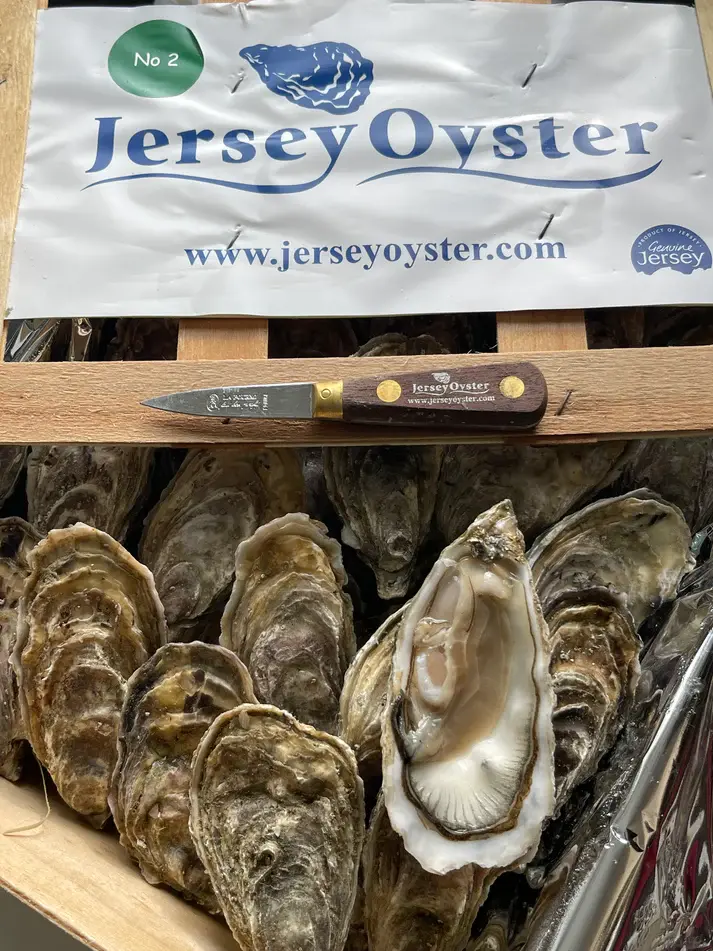
Jersey oysters benefit from one of the world’s largest tidal ranges and among Europe’s cleanest coastal waters. Daily tidal movement filters the bay and feeds plankton-rich currents through the trestle lines. The Royal Bay of Grouville concession gives growers long intertidal exposure that shapes deep cups and even shell growth. Those conditions produce a distinctive Channel Island terroir rather than a generic farmed Pacific profile.
Jersey hosts the largest oyster growing area in the British Isles, with modern trestle farms replacing historic dredge fisheries. Workers tend bagged oysters on intertidal rows at low tide using tractors and trailers. Harvest runs year-round after roughly two years on the beds before grading and export. Markets across the UK and France receive most of the annual crop from this concentrated Grouville operation.
How Did Jersey Oysters Get Their Name?
Jersey Oysters take their name from the island of Jersey and the Royal Bay of Grouville where they are cultivated. The label follows the classic geographic convention where an oyster name reflects its place of origin. Local markets also call them Jersey Rocks, a nickname tied to the island’s rocky intertidal beds and trestle lines. That naming keeps the product linked to Channel Island waters rather than a standalone trademark brand.
Many modern farms trademark invented brand names, but Jersey oysters keep a place-based identity tied to Grouville. Strong tidal currents and clean Atlantic water feed the beds along the east coast concession. Archaeological finds show islanders ate oysters here more than 6,000 years ago, long before today’s aquaculture revival. The modern industry rebuilt that heritage after 19th-century boom years and a later collapse from overfishing.
About Jersey Oyster Company
The Jersey Oyster Company is a family business led by Chris Le Masurier, a third-generation oyster farmer active in the trade since 1998. His grandfather started the modern operation more than forty years ago on intertidal beds in the Royal Bay of Grouville. The company farms roughly 36 hectares, making it the largest oyster producer in the British Isles. Pacific oysters here grow on trestles for about two years before harvest and grading.

The company exports roughly 1,000 tonnes of oysters annually, with about 80 percent sold to France. Switzerland and Dubai joined the export list after Aquaculture Stewardship Council certification in 2015. Jersey Oyster Company was among the first oyster farms globally to earn ASC recognition for responsible cultivation. That certification underpins wholesale relationships across Europe and the Middle East.
Jersey’s 12-meter tidal range and clean seawater create ideal conditions for Pacific oyster culture on the Grouville flats. Oysters spend several hours out of water each tide cycle, which firms meats and keeps shells closed in transit. Crews turn and shake trestle bags during low-water windows to maintain even cup development. The farm pairs that routine with MCS-classified water quality in one of Europe’s most tightly managed bays.

Follow Them
Visit the Jersey Oyster Company website for product listings, contact details, and wholesale information. The company posts harvest and farm updates on Facebook, Instagram, and YouTube. Those channels show trestle work on the Royal Bay of Grouville flats at low tide. Buyers can reach the Grouville office at +44 (0) 1534 850 440 on weekdays.
Jersey Oysters Information

Pacific oyster
If you like Jersey Oysters, then check out these similar varieties!
- Cumbrae Rock Oysters
- Cumbrae Select Oysters
- Isle Of Mull Oysters
- Kyle Of Tounge Oysters
- Mali Ston Oysters
Location
Jersey Oysters are cultivated in the Royal Bay of Grouville on the east coast of Jersey in the Channel Islands. The Jersey Oyster Company holds a 36-to-40-hectare beach concession, the largest oyster growing area in the British Isles. Growers suspend bagged oysters on trestles in the intertidal zone through a two-year cycle. That layout keeps shells above the sand while tides move food-rich water through each line.
Jersey experiences the third-largest tidal range in the world, with lows that can expose miles of foreshore around the island. A 12-meter swing creates strong flushing that benefits filter-feeding oysters on the Grouville beds. Each tide leaves oysters out of water for several hours, which helps shells harden and meats firm before harvest. Crews turn trestle bags during those windows to keep cups round and shells clean.
Waters around Jersey rank among the cleanest in Europe, and the Royal Bay of Grouville holds top Marine Conservation Society classification. Gulf Stream influence keeps the bay nutrient-rich without heavy sediment loads common in sheltered estuaries. Fast-moving tidal water delivers steady plankton to the trestle lines through every season. That food supply supports quick growth and the crisp, clean flavor profile chefs associate with Jersey Rocks.

Extreme tides, clean water, and managed trestle culture combine into a stable production environment for Pacific oysters. The Jersey Oyster Company harvests roughly 1,000 tonnes annually from this single bay concession. ASC-certified farming practices limit environmental impact while maintaining export volumes to France and other markets. Together these factors make Grouville one of the most concentrated oyster-growing sites in northwest Europe.
Suggested Beverage Pairings
Highland Park 12 Year Old brings gentle heather smoke and maritime malt beside Jersey Rock brine. Orkney whisky complements Channel Island sweet finish without overpowering half shells.
Guinness Draught brings smooth roasted bitterness beside Jersey Rock saltiness. Iconic stout creates sublime match with creamy Channel Island cups from Grouville beds.
Eric Sussman County Line Rosé offers edgy acidity and aromatics beside Jersey Pacific and Eastern cups. Crisp rosé works across briny Channel Island raw-bar flights.
Half Shell Gin Martini uses oyster shell-infused gin and Aecorn Dry beside Jersey brininess. Utterly dry cocktail offsets Channel Island salinity with botanical precision.
Negroni Sbagliato blends Campari, sweet vermouth, and Prosecco beside Jersey briny nature. Bubbly bitter-sweet counterpoint refreshes palate between Channel Island bites.
Where Can I Buy Jersey Oysters?
- Jersey Oyster Company — The primary producer in Grouville, Jersey. Contact +44 (0) 1534 850 440 or info@jerseyoyster.com Monday through Friday, 9:00 AM to 5:00 PM.
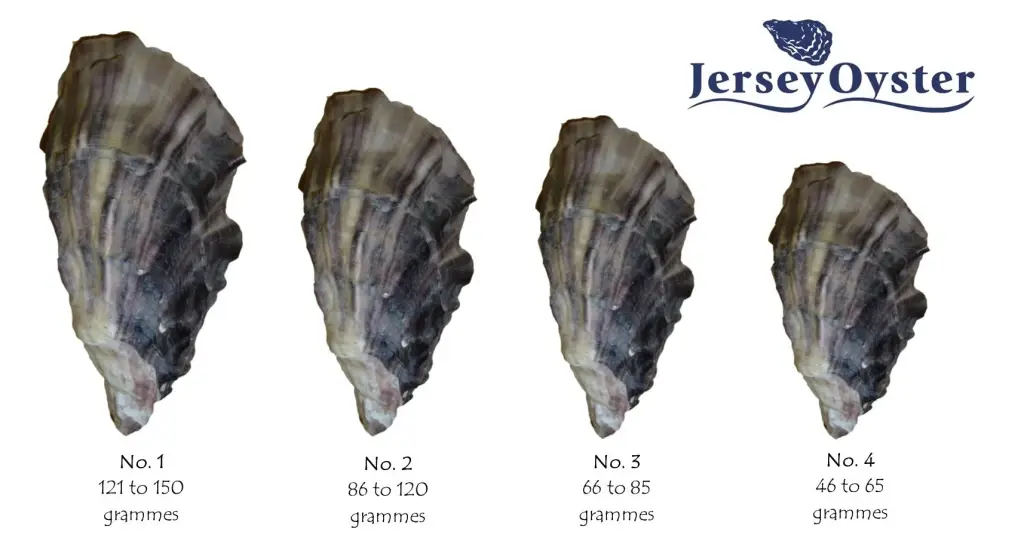
- Wright Brothers Home Delivery — Sells No. 3 Jersey Rock Oysters year-round for UK home delivery. Stock matches the oysters served in Wright Brothers restaurants.
- Simply Oysters — Lists medium Jersey Pacific oysters from the Royal Bay of Grouville with next-day UK courier delivery Tuesday through Friday.
- Classic Fine Foods UK — Wholesale supplier stocking Jersey Rock Oysters for UK foodservice accounts. Confirm size grades and availability before placing trade orders.
Stay Connected with The Oyster Encyclopedia!
Follow us on social media to get the latest updates, oyster recipes, and behind-the-scenes glimpses into the world of oysters:
Stay tuned for exclusive content, oyster trivia, and more! Engage with our vibrant community of oyster enthusiasts by liking, commenting, and sharing our posts. Your support helps us continue providing valuable oyster knowledge to fellow seafood lovers worldwide.
References
- Jersey Oyster Co. “Jersey Oyster Co.” Genuine Jersey, www.genuinejersey.je/member/jerseyoystercoltd. Accessed 28 Feb. 2025.
- Simply Oysters. “Simply Oysters – UK’s Widest Selection of Oysters | UK Delivery.” Simply Oysters, 1 Jan. 2021, simplyoysters.com. Accessed 28 Feb. 2025.
- Wright Brothers. “Fresh Jersey Oysters, Buy Online – Wright Brothers Home Delivery.” Wright Brothers Home Delivery, 4 May 2020, thewrightbrothers.co.uk/products/fresh-jersey-oysters. Accessed 28 Feb. 2025.
- Jersey Oyster. “Contact – Jersey Oyster.” Jersey Oyster, jerseyoyster.com/contact-us/. Accessed 28 Feb. 2025.
- Aquaculture Stewardship Council. “Jersey Oyster Companies Enjoy Success One Year on From Certification.” ASC-Aqua, 16 Oct. 2024, asc-aqua.org/news/jersey-oyster-companies-enjoy-success-one-year-on-from-certification/. Accessed 28 Feb. 2025.
- Jersey Oyster. “Jersey Oyster.” Jersey Oyster, 4 Feb. 2025, jerseyoyster.com. Accessed 28 Feb. 2025.
Discover more from The Oyster Encyclopedia
Subscribe to get the latest posts sent to your email.