



Chef’s Notes
Mason Bostwick · Executive Chef
Pacific oyster
Isigny — Isigny — Bold brine — creamy meat and nutty. A solid farmed pacific oyster.
Flavor chart
Chef palate read
Shuckability
Shell & line performance
When I buy it
Look for Isigny Oysters in peak season when salinity peaks.
How I serve it
On the half shell with minimal garnish — let the oyster speak.
What to watch for
Full brine with creamy finish. Reject any with broken shells or milky liquor.
My read
Bold brine — creamy meat and nutty. A solid farmed pacific oyster.
Quick Facts
- Isigny oysters are farmed in the Bay of Veys Estuary, Normandy, France 4.
- They are Pacific oysters (Crassostrea gigas) known for their creamy, plump meat 410.
- The grow-out period lasts 2 to 3 years, resulting in robust flavor and texture 45.
- Isigny oysters are available year-round and are sustainably hand-harvested 4.
- Their flavor profile features briny, grassy, and nutty notes with a medium brininess rating 410.
What Are Isigny Oysters?
Isigny oysters are a celebrated variety of Pacific oysters that hail from the nutrient-rich waters of Normandy’s Bay of Veys Estuary 4. These oysters stand out for their plump, creamy flesh and a distinct flavor profile that balances brininess with subtle grassy and nutty undertones 410. Their unique environment, influenced by four converging rivers and strong tidal flows, imparts exceptional qualities to the oysters.

Unlike many other oyster varieties, Isigny oysters come to fruition using a long cultivation cycle of two to three years 45. This extended period allows them to develop a robust texture and a high meat-to-shell ratio, making them a favorite among chefs and gourmets in France and beyond 410. The careful, hands-on farming methods ensure each oyster achieves optimal quality before reaching the market.
The Bay of Veys has a reputation of environmental richness, which directly influences the taste and texture of Isigny oysters 4. The combination of fresh water inflows and high tidal ranges creates perfect conditions for oyster growth, resulting in a product that is both sustainable and highly prized for its culinary excellence 410. Producers hand-harvest them year-round, which keeps shell quality high for raw service and retail platters 4.
How Did Isigny Oysters Get Their Name?
Isigny oysters derive their name from the port town of Isigny-sur-Mer, located in the Calvados region of Normandy, France 4. The area has a long history of oyster farming, dating back to the mid-20th century, when the nutrient-rich estuary waters proved ideal for cultivating Pacific oysters 4. The town’s reputation for high-quality seafood is why the oysters have the Isigny name. Thus highlighting their local origin and unique terroir.
The Bay of Veys closely associates with Isigny-sur-Mer. The bay benefits from the convergence of the Aure, Douve, Taute, and Vire rivers 4. This geographical connection has cemented the Isigny name as a mark of quality in the oyster world. Over time, Isigny oysters have gained international acclaim, appearing on menus at top restaurants and seafood bars across France and the UK 46.
The Cultivation Process
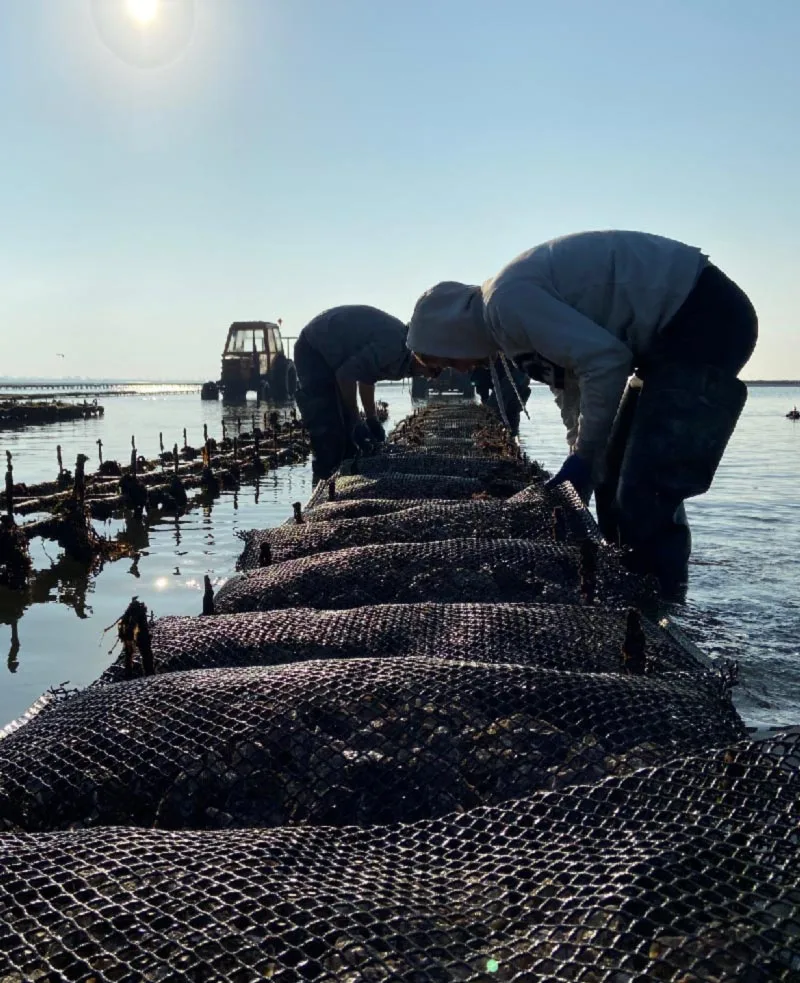
Isigny oysters are farmed Pacific oysters, not wild-harvested, and growers raise them on intertidal racks and bags in the Bay of Veys Estuary 4. Seed oysters attach to collectors before transfer to mesh bags mounted on tidal racks above the seabed. This elevation keeps shells cleaner and exposes each oyster to alternating immersion and air during the strong Normandy tides 8.
The grow-out cycle typically lasts two to three years, longer than many Pacific oyster programs, which builds plump meat and a high meat-to-shell ratio 45. Farmers grade, clean, and hand-harvest oysters before purification and packing for market. Several Normandy producers marketing Speciales d’Isigny follow this traditional long-cycle approach to maintain consistent quality 10.
About Maison Taillepied
Maison Taillepied is a traditional, family-run oyster farm based in Grandcamp-Maisy, Normandy, within the Bay of Veys. The farm took it shape in the late 1960’s by André Taillepied. This farm was the result of a pivot from fishing to oyster cultivation. Ultimately, to become a pioneer in the region. In 1986, André formed a partnership with his sons, and the business eventually evolved into Maison Taillepied, now led by the third generation—Josselin and Thomas Taillepied4.

The Taillepied family cultivates their oysters using time-honored methods, focusing on quality and respect for the environment. Although, they manage their own oyster beds in the nutrient-rich estuary, they also are constantly carefully monitoring the oysters’ growth and ensuring optimal conditions. Their “La Royale d’Isigny” oysters are recognized for their round shape, firm texture, and unique flavor. Justifiably, earning accolades from chefs and culinary experts 45.
Maison Taillepied produces approximately 180 tonnes of oysters annually, supplying fishmongers, restaurants, and gourmet markets throughout France and Italy. Their dedication to craftsmanship and sustainable farming has solidified their reputation as one of Normandy’s leading oyster producers 45.
Follow Them
Discover the world of Maison Taillepied and their renowned “La Royale d’Isigny” oysters by visiting their official website. Explore behind-the-scenes stories by following their social profiles. Learn about their sustainable farming practices, and stay updated on the latest from this celebrated Normandy oyster farm. Don’t miss out on exclusive content and fresh oyster inspiration—check them out today!
Isigny Oysters Information

Pacific oyster
If you like Isigny Oysters, then check out these similar varieties!
Location
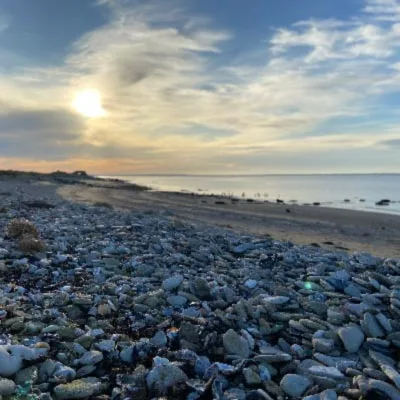
Isigny oysters thrive in the Bay of Veys Estuary near Isigny-sur-Mer, Normandy, France. The estuary opens onto the English Channel along the Calvados coast west of the D-Day landing beaches. Four rivers—the Aure, Douve, Taute, and Vire—feed freshwater and nutrients into the bay, shaping the brackish conditions that define this terroir 4.
This location benefits from the convergence of four rivers—Aure, Douve, Taute, and Vire—which deliver nutrient-rich freshwater into the estuary 12. The mixing of riverine and oceanic waters creates a brackish environment with salinity levels between 25-35 ppt, ideal for oyster growth 36. Strong tidal flows ensure constant water movement, preventing stagnation and distributing plankton for feeding while flushing waste 812.
The Bay of Veys’ high tidal range, among Europe’s largest, exposes oysters to alternating immersion and air during low tide. This strengthens their shells and muscles, enhancing texture and resilience 412. The estuary’s firm, sandy substrate provides a stable base for oyster cultivation, reducing silt accumulation and promoting healthy attachment 212. Farmers use intertidal rack-and-bag systems to elevate oysters above the seabed, minimizing predation and ensuring cleaner shells 813.
Sustainable practices, including controlled stocking densities and regular cleaning, maintain ecological balance 13. The temperate climate and pollution-free waters further support year-round growth, yielding oysters with a distinct briny-creamy profile 6. These factors collectively make the Bay of Veys a prime location for producing high-quality Isigny oysters while enhancing marine biodiversity 13.
Suggested Beverage Pairings
Negroni Sbagliato with extra Prosecco adds light bubbles and citrusy bitterness beside Isigny briny salinity. Sparkling twist enhances sweet finish on Normandy Pacific cups.
Blood Orange Radler blends blood orange juice with light lager beside Isigny natural sweetness. Low-alcohol carbonation contrasts creamy French Pacific texture refreshingly.
Suze Tonic brings earthy, citric, and bitter French apéritif notes beside Isigny fresh salty flavor. Herbal bitterness creates balanced sophisticated match on half shells.
Michelada combines beer, hot sauce, lime, and spices beside Isigny sweet-briny flavor. Spicy tangy profile complements Normandy Pacific oysters for vibrant summery pairing.
Bunnahabhain 12-Year Scotch offers driftwood, citrus, and salt beside Isigny oceanic flavors. Subtle Islay smokiness adds depth without overpowering delicate French cup.
Where Can I Buy Isigny Oysters?
- Simply Oysters
Simply Oysters offers Isigny Pacific Oysters in small and medium sizes, packed live to order and shipped directly to your door. Orders are dispatched Monday to Thursday for next-day delivery within the UK. Oysters are cleaned and purified before shipping, ensuring maximum freshness4. - Seafood Society
Seafood Society provides Speciales d’Isigny Oysters in packs of 48 or 96. The oysters are shipped in their original packaging and should be consumed within three days of opening. They are delivered chilled to maintain quality8. - Les Coquillages de la baie d’Isigny
This vendor markets their trademark “La Precieuse” special oysters from Isigny, shipping both domestically and internationally. Oysters are purified and packed in baskets for secure transport, ensuring they arrive fresh and ready to enjoy9. - Huitres Taillepied
Huitres Taillepied offers Normandy oysters, including those from Isigny, cultivated using traditional long-cycle methods. Oysters are carefully graded, purified, and shipped in compliance with the highest standards5.
References
- “Isigny Pacific Oysters (S-M).” Simply Oysters, http://www.simplyoysters.com/isigny-oysters.
- “Production – Huitres Taillepied.” Huitres Taillepied, http://www.huitres-taillepied.fr/en/production.
- “The best places to eat oysters on the coast of Normandy.” Normandie Tourisme, en.normandie-tourisme.fr/top-spots-to-eat-oysters-in-normandy6.
- “Speciales d’Isigny Oysters – Hong Kong.” Seafood Society, seafoodsociety.hk/oysters_hong-kong_hk/oysters_isigny-sur-mer_special_fresh_hong-kong_hk8.
- “en-Oysters-Perdriel – Les Coquillages de la baie d’Isigny.” http://www.baie-isigny.fr/en-oysters-perdriel.
- “Normandy East Coast Oysters – Cultimer.” www.cultimer.com/en/prod-huitres-est.html[10].
- “The Best Beverages to Pair with Oysters.” Sanctuary Oysters, http://www.sanctuaryoysters.com/blog/2021/4/15/the-best-beverages-to-pair-with-oysters.
Discover more from The Oyster Encyclopedia
Subscribe to get the latest posts sent to your email.