


Chef’s Notes
Mason Bostwick · Executive Chef
Eastern oyster
Dutch Island — Dutch Island — Strong minerality — clean and versatile. A solid farmed eastern oyster.
Flavor chart
Chef palate read
Shuckability
Shell & line performance
When I buy it
Look for Dutch Island Oysters in peak season when salinity peaks.
How I serve it
On the half shell with minimal garnish — let the oyster speak.
What to watch for
Full brine with creamy finish. Reject any with broken shells or milky liquor.
My read
Strong minerality — clean and versatile. A solid farmed eastern oyster.
Dutch Island oysters have a unique flavor profile that makes them a popular variety among oyster enthusiasts. Growers cultivate these oysters in floating cages in the West Passage of Narragansett Bay, Rhode Island. Where they grow in pristine waters that contribute to their exceptional quality and taste. The oysters have a full oceanic mineral saltiness that complements their thick umami finish. Creating a truly unique and enjoyable oyster experience.
Dutch Island oysters are known for their distinct umami gland, which contributes to their unique flavor profile. The umami gland is a small bump on the inside of the shell that contains the oyster’s umami flavor. This gland is prominent in Dutch Island oysters and is a defining characteristic of their taste
Mark Goerner from Jamestown Oyster Co is the grower of Dutch Island oysters. These oysters are easily visible from the Jamestown Bridge due to their location in the proximity of the ocean water. Which gives them a fresh and salty taste. If you’re a fan of oysters or looking to try something new, Dutch Island oysters are definitely worth seeking out.
What Are Dutch Island Oysters?
Dutch Island Oysters are farmed Eastern oysters from Narragansett Bay, Rhode Island. Mark Goerner at Jamestown Oyster Co raises them in the West Passage off Jamestown. The site sits on the west side of Jamestown near open ocean influence. That exposure shapes their briny, mineral character.
On the half shell the line reads Briny + Clean with salinity near 28 ppt. Growers cultivate them in floating cages and off-bottom bags in pristine bay water. The shellfish develop a full oceanic mineral saltiness. A thick umami finish follows on the palate.
Dutch Island oysters carry a distinctive umami gland inside the shell. That bump concentrates savory flavor many tasters notice right away. Shells are classic and elongated with grayish-brown tones. Market size typically reaches about 3 to 3.5 inches.
How Did Dutch Island Oysters Get Their Name?
The Dutch Island name appears on tags tied to West Passage-grown stock near Jamestown. Dutch Island itself lies in Narragansett Bay within sight of the Jamestown Bridge. Mark Goerner at Jamestown Oyster Co uses the trade label for this line. Distributors and raw bars recognize Dutch Island as the retail name.
The label highlights geography rather than a single lease block. Growers and sellers pair the name with Rhode Island origin on menus and tags. That clarity helps buyers distinguish these oysters from other Narragansett Bay brands. The name has become the standard market handle for this Jamestown-grown eastern oyster.
About Jamestown Oyster Co
Mark Goerner at Jamestown Oyster Co grows Dutch Island oysters in Narragansett Bay. The farm uses a multi-stage process starting with off-bottom bags. Oysters then move to surface gear and floating cages in the West Passage. Those methods protect shellfish from predators while easing maintenance and harvest.
Floating cages sit in pristine waters visible from the Jamestown Bridge. Proximity to ocean water contributes to the fresh, salty taste buyers expect. The company sells through regional distributors including Ocean State Shellfish Cooperative and Fortune Fish & Gourmet. Farmed Eastern oysters from this program reach raw bars year-round.
Dutch Island Oysters Information

Eastern oyster
If you like Dutch Island Oysters, then check out these similar varieties!
Oyster: Dutch Island
Size: 3.5″
Season: September- April
Cultivation Method: A multi-stage process. starting with off bottom bags to surface gear and floating cages.
Culture Method: Off bottom culture. The use of bags and baskets allows for easier maintenance and harvesting of the oysters while protecting them from predators and other environmental factors
Salinity: 32-35 ppt
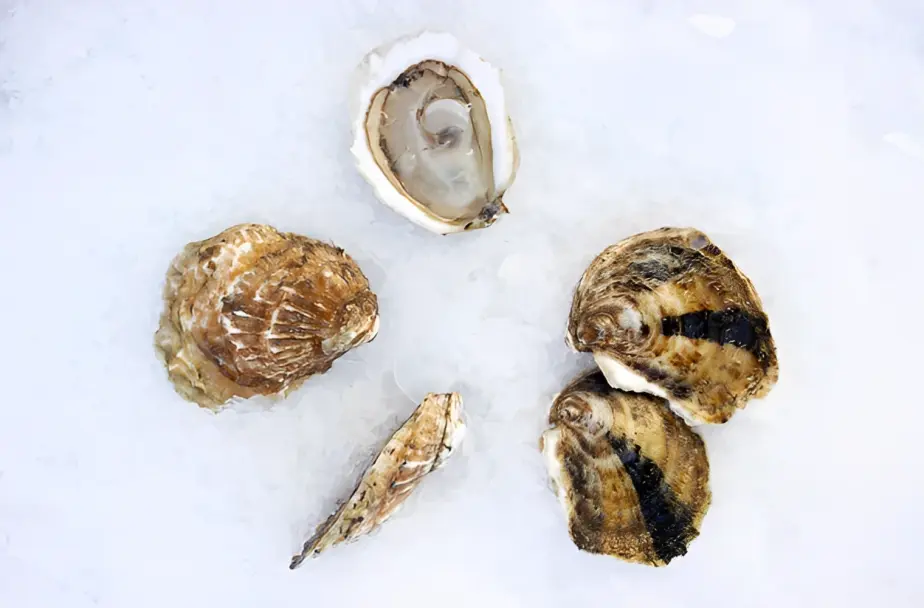
Appearance: They have a classic, elongated shape with a slightly curved shell. The shells are typically grayish-brown in color with some greenish hues with rough and slightly jagged edges.
Flavor Profile: Savory, full oceanic mineral saltiness, thick umami finish, and creamy texture.
Location
Dutch Island oysters are cultivated in the West Passage on the west side of Jamestown. The lease sits within Narragansett Bay, Rhode Island. Open ocean water nearby drives higher salinity in the growing area. That mix gives the oysters a fresh and salty taste.
Growers plant gear where tidal flow stays strong through the passage. Floating cages keep oysters suspended in clean, food-rich water. The site is easily visible from the Jamestown Bridge above the bay. That visibility has become part of the Dutch Island brand story.
The West Passage environment supports year-round harvest for this farmed eastern oyster. Salinity in the area runs roughly 32–35 ppt according to vendor listings. Minerally brine and creamy umami reflect that open-bay exposure on the half shell. Chefs often feature the line when Rhode Island oysters are on the menu.
Suggested Beverage Pairings
Louis Roederer Brut Premier brings crisp fizz and acidity beside Dutch Island oceanic mineral salinity. Carbonation refreshes palate between bites, letting thick umami and umami-gland savor read clearly. Classic sparkling for West Passage Narragansett Bay cups.
William Fèvre Chablis offers Chardonnay acidity and citrus aromas beside Dutch Island brine. Unoaked minerality complements full oceanic saltiness and creamy umami finish on floating-cage half shells.
Domaine Vacheron Sancerre brings crisp acidity and citrus beside Dutch Island savory salinity. Light Loire white balances saltiness and refreshes palate between each West Passage cup. Complex steely profile for umami-forward oysters.
Guinness Draught brings creamy roasted depth beside Dutch Island mineral brine and thick umami. Stout bitterness counteracts salinity for a classic contrast on Narragansett Bay half shells.
Kasteel Cru lager from Alsace uses champagne yeasts for sparkling-wine-like refreshment beside Dutch Island oysters. Crisp lager alternative to stout that cleanses palate between umami-rich bites.
Overall, there are several beverage pairings that work well with Dutch Island oysters. Whether you prefer Champagne, white wine, beer, or sparkling water, there is a pairing. That pairing will complement the unique flavor profile of these oysters.
Where Can I Buy Dutch Island Oysters?
- Ocean State Shellfish Cooperative: The Ocean State Shellfish Cooperative sells Dutch Island oysters on their website. They describe the flavor profile as having a full oceanic mineral saltiness with a thick umami finish.
- Pangea Shellfish Company: Pangea Shellfish Company offers Dutch Island oysters for purchase on their website. They describe the oysters as having a mineral saltiness and umami finish.
- Fortune Fish & Gourmet: Fortune Fish & Gourmet sells seafood on their website. They describe the oysters as having a strong brine and a creamy umami finish.
References
- Ocean State Shellfish Cooperative. Web. Accessed 30 May 2026. https://www.oceanstateoysters.com/the-oysters
- Fortune Fish & Gourmet:. Web. Accessed 30 May 2026. https://www.fortunefishco.net/oysters-east-coast/dutch-island
Discover more from The Oyster Encyclopedia
Subscribe to get the latest posts sent to your email.