


Chef’s Notes
Mason Bostwick · Executive Chef
Eastern oyster
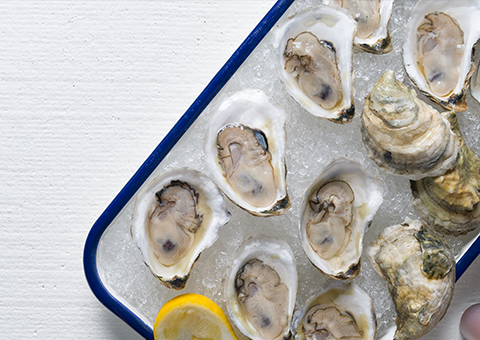
Duxbury Harbor easterns come off Duxbury Bay farms where nine-foot tides flood tray-and-bag gear with nutrient-rich Atlantic water. The cups read briny first, then buttery-sweet with deep shells built over eighteen to twenty-four months. I reach for them when I want a reliable Massachusetts raw-bar eastern near 28 ppt with meaty liquor and a crisp maritime finish.
Flavor chart
Chef palate read
Shuckability
Shell & line performance
When I buy it
I look for Duxbury Harbor bands from Island Creek, Duxbury Oyster Company, or Standish Shore lines — confirm Massachusetts origin and 3–4 inch tray-grown cups at roughly 28 ppt. Winter and early spring glycogen often reads sweetest after cold bay water firms the meats.
How I serve it
Raw on crushed ice with virgin liquor intact. Duxbury Harbor cups read briny and buttery with mineral lift — lemon only, no heavy mignonette that masks the bay finish.
What to watch for
Spawn-season milky liquor in warm months and lots held too long off the tide. Deep Duxbury Bay cups should present plump white meats — reject gaping shells or cracked hinges from rough tray handling.
My read
Duxbury Harbor is a Massachusetts benchmark — tray-grown easterns with clean brine, buttery finish, and the deep cups Duxbury Bay tides build year-round.
What Are Duxbury Harbor Oysters?
Duxbury Harbor Oysters are renowned for their clean, briny flavor and meaty texture. These oysters grow in the cold, nutrient-rich waters of Duxbury Bay. They develop a distinctive taste that captures the essence of the Atlantic coastline. The careful farming techniques and pristine environment ensure consistent quality and freshness.
What sets Duxbury Harbor Oysters apart is their deep-cupped shells, which provide a satisfying, plump bite. The balance of salinity and sweetness makes them a favorite among chefs and seafood enthusiasts. Each oyster offers a burst of ocean flavor, reflecting the purity of their habitat.
Harvested year-round, Duxbury Harbor Oysters are a staple for raw bars and upscale dining. Their reliable quality and rich flavor profile make them a standout choice for oyster lovers everywhere. Farmed eastern oysters here typically reach 3 to 4 inches after 18–24 months in floating trays and bags.
How Did Duxbury Harbor Oysters Get Their Name?
Duxbury Harbor Oysters are named after Duxbury Bay, a historic and picturesque location in Massachusetts. The harbor has been a hub for shellfish harvesting since the colonial era. The cold, clean waters of this bay create the ideal conditions for oyster farming, making the region synonymous with high-quality oysters.
The name reflects not only the geographic origin but also the legacy of sustainable aquaculture practiced in Duxbury. Local farmers have honed their craft over generations, ensuring the harbor’s reputation for exceptional oysters endures. That bond between place and product still defines the Duxbury Harbor oyster on menus today.
About Duxbury Oyster Company
Duxbury Oyster Company, established in 2000 by John and Patrick McCluskey, produces the distinctive Prince Caspian oyster variety 1. The father-son duo chose their farming site with great care. They wanted to maximize the benefits of fresh and salt water mixing. This ensures optimal nutrient conditions for oyster growth 1.

Duxbury Oyster Company’s rich history showcases its evolution from a family venture to a thriving aquaculture business. The McCluskeys had an initial “whim” to start an oyster farm. This whim transformed into a sophisticated operation through strategic site selection and dedication to quality 1.
Business Evolution
Kevin Thomson’s arrival in 2014 marked a pivotal moment, bringing new energy and expertise to the operation. John McCluskey retired during the 2022 transition. Joe Wendel’s cross-country move from California formed a new partnership. This partnership maintains the farm’s original vision while introducing modern innovations 1.
Operational Structure
The company maintains a diverse business model that includes direct-to-consumer shipping, local farm pickup, and wholesale partnerships across New England. Educational starter kits and shucking instructions help home customers handle Duxbury Bay oysters with confidence. Social channels keep the farm visible when harbor harvest schedules shift with tides and season.
- Direct-to-consumer shipping nationwide
- Local farm pickup options
- Wholesale partnerships with distributors
- Educational components through starter packages and shucking instructions
- Active social media presence for community engagement 1
Sustainable Growth
The farm operates within Duxbury’s comprehensive aquaculture management framework, which balances commercial interests with environmental stewardship. This structured approach helps ensure the long-term sustainability of their operations while contributing to the local economy2. Tray-and-bag grow-out in the harbor lease stays aligned with town aquaculture plans that protect water quality for Duxbury Harbor easterns.

Follow Them
Follow Duxbury Oyster Company for Prince Caspian and Duxbury Bay harvest updates direct from the McCluskey farm site. Their Instagram and Facebook channels post grow-out photos from the harbor lease. Chef buyers can coordinate wholesale POs through the farm shop when Duxbury Harbor bands are on the sheet.
Duxbury Harbor Oysters Information

Eastern oyster
If you like Duxbury Harbor Oysters, then check out these similar varieties!
Location
Duxbury Bay, a three-mile-long bay with an average width of two miles, provides an ideal environment for oyster cultivation. The bay features shallow sand and mud flats. These are exposed at low tide. They are interwoven with winding channels.
This creates perfect growing conditions 5. Several farms operate in different areas of the bay. This includes the elbow/bend where fresh water springs mix with salt water 7.
The bay’s environmental conditions create exceptional growing circumstances. Massive 9-12 foot tides flood the area with nutrient-rich waters twice daily, providing abundant food for the oysters 2. The water temperature maintains a perfect balance. It is warm enough to supply adequate nutrition.
It is also cold enough to keep oysters plump throughout the year. The bay experiences almost full ocean salinity, distinguishing it from the typical brackish environments of many oyster farms 6. That salinity profile aligns with the 28 ppt range noted for this oyster.
The location’s unique geography and water dynamics support optimal oyster growth. Adult oysters in Duxbury Bay filter approximately 50 gallons of water daily, contributing to their own ecosystem’s health 6. The constant water flow is essential for oyster feeding. It combines with the bay’s natural mixing of fresh and salt water.

Together, these factors create ideal growing conditions. The mudflats and natural habitat provide additional benefits, particularly in areas where freshwater springs blend with bay water, enhancing the oysters’ flavor profile. Shallow flats and channel edges give farmed stock steady access to the tides that feed them.
Suggested Beverage Pairings
Victory Prima Pils brings citrus-lemony hop notes that sharpen Duxbury Harbor’s clean brine without masking the buttery close. The crisp lager finish rinses between deep-cupped Duxbury Bay meats on a raw-bar flight. American pilsner keeps the pairing approachable beside Massachusetts easterns.
Billecart-Salmon Champagne adds fine bubbles and yeasty lift beside Duxbury Harbor’s plump, creamy liquor. The mousse contrasts the oysters’ meaty texture while framing their sweet-buttery finish from tray-grown stock. Classic sparkling for Duxbury Bay half shells served ice-cold.
Domaine de la Bregeonette Folle Blanche delivers tangy Loire acidity that cuts through Duxbury Harbor richness on the half shell. Salty-mineral white wine mirrors the bay’s near-ocean salinity near 28 ppt. The pour keeps focus on briny attack and crisp maritime finish.
Cellar Pardas ‘Rupestres’ Xarel-lo shows dry Catalan minerality that echoes Duxbury Harbor’s ocean-fresh salinity. Light body and saline edge complement plump Duxbury Bay cups without heavy oak. A steely still white for year-round Massachusetts easterns.
Mollusca Martini layers celery gin and pickled ramp brine beside Duxbury Harbor’s sweet-briny profile. Smoky floral aromatics add herbaceous contrast to buttery Duxbury Bay liquor on the half shell. A savory cocktail option when wine service stays off the raw bar.
Where Can I Buy Duxbury Harbor Oysters?
You can buy Duxbury Harbor Oysters from the following sources:
- Island Creek Oysters — Grows oysters in Duxbury Bay and ships overnight direct from their online shop.
- Duxbury Oyster Company — Freshly harvested Duxbury Bay oysters delivered tide to table from the farm.
- Pangea Shellfish — Lists Duxbury Standard oysters from Standish Shore Oyster Farm in Duxbury Bay.
- Wulf’s Fish — Boston-area seafood merchant; specify Duxbury Harbor or Duxbury Bay live oysters when listed.
Stay Connected with The Oyster Encyclopedia!
Follow us on social media to get the latest updates, oyster recipes, and behind-the-scenes glimpses into the world of oysters:
Stay tuned for exclusive content, oyster trivia, and more! Engage with our vibrant community of oyster enthusiasts by liking, commenting, and sharing our posts. Your support helps us continue providing valuable oyster knowledge to fellow seafood lovers worldwide.
References
- “Duxbury Oyster Company – Fresh Oysters from Tide to Table.” Duxbury Oyster Company, duxburyoystercompany.com.
- “About Standish Shore Oysters.” Standish Shore Oysters, standishshoreoysters.com/about.
- “Cape Cod Oyster Tour: A New Class of Duxbury Oysters.” In A Half Shell, 4 Mar. 2015, inahalfshell.com/journal/duxbury-oysters.
- “Standish Shore Oysters | Premium Oysters From Duxbury Bay, MA.” Standish Shore Oysters, standishshoreoysters.com.
- “About – Pangea Shellfish Company.” Pangea Shellfish Company, pangeashellfish.com/about.
Discover more from The Oyster Encyclopedia
Subscribe to get the latest posts sent to your email.