

Quick Facts
- Species: Pacific oyster (Crassostrea gigas)
- Cultivation method: Farmed in mesh bags, matured 30-60 months
- Size: Typically 2-4 inches
- Seasonality: Year-round
- Flavor profile: Sweet, slightly briny with melon and herbaceous notes
What Are Poget Oysters?
Poget oysters stand apart due to their unique life cycle that spans multiple regions in France. They begin their growth in the nutrient-rich waters of Charente-Maritime, mature further in deep sea environments, and finally finish their development in the plankton-rich tidal waters off Normandy’s Utah Beach. This movement through varied marine environments gives them a complex flavor and pronounced plumpness not found in oysters cultivated in a single location.
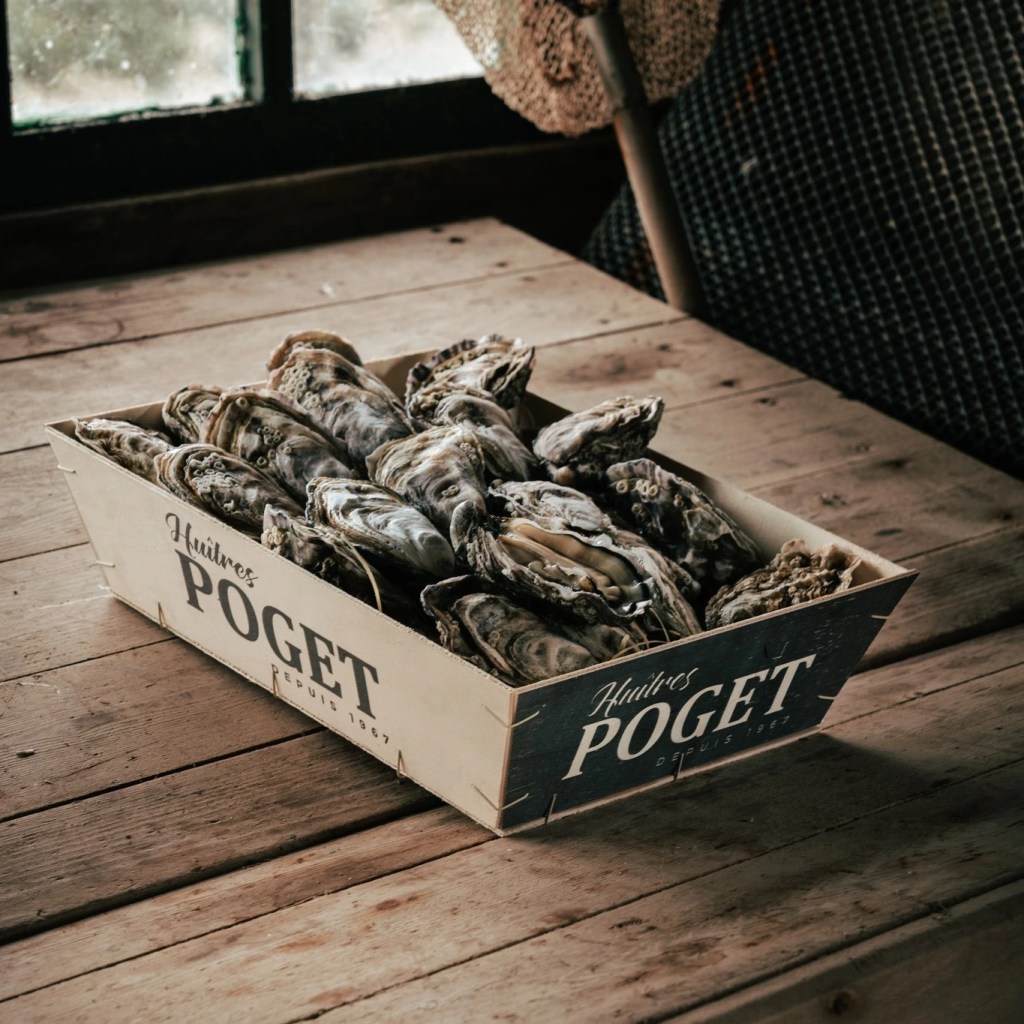
These oysters exhibit a particularly high fleshiness, typically ranging from 17% to 19% of their total weight, indicating robust and generous meat content. The flesh is known for its sweet, delicate, and refined profile, coupled with a nuanced balance of saltiness and subtle seaweed notes. The texture remains firm yet tender, making Poget oysters particularly desirable for those seeking both flavor depth and texture quality.
Moreover, Poget oysters undergo a meticulous, multi-stage farming process that highlights artisanal care. Farmers transfer the oysters at least three times in their lifecycle to expose them to optimal environmental conditions for slow and steady growth. They are then refined in saltwater basins for weeks to develop their final nuanced flavor. This extended and complex cultivation approach ensures Poget oysters stand out with exceptional taste, fleshiness, and freshness compared to other oysters.
How Did Poget Oysters Get Thier Name?
Poget oysters are named after the Poget family, a French oyster farming family with a long tradition dating back to 1947. The name “Poget” reflects both the family and the brand that has become synonymous with high-quality oysters cultivated in the coastal waters of Normandy and Charente-Maritime, France. This name honors the family’s dedication to sustainable oyster cultivation and their expertise in producing oysters with distinctive flavor and texture.
Unlike oysters named after geographic regions or indigenous terms, Poget oysters carry the family name as a mark of both heritage and craftsmanship. The name signifies a combination of traditional oyster farming know-how, passed through generations, and the specific terroirs where the Poget family farms their oysters. This association emphasizes the artisanal nature and regional identity embedded in the product.
About Huitres Poget
Huîtres POGET cultivates Poget oysters, a family-owned oyster farming business based in La Tremblade, France, with a rich history dating back to 1947. The company began its oyster farming legacy when Guy Poget purchased its first oyster park in 1967, marking a turning point in establishing high-quality oyster cultivation in the iconic Marennes-Oléron basin. The basin is renowned for its ideal environmental conditions, including nutrient-rich tidal waters and balanced salinity, which support oyster growth. Huîtres POGET blends this natural terroir with traditional oyster farming know-how handed down through generations.

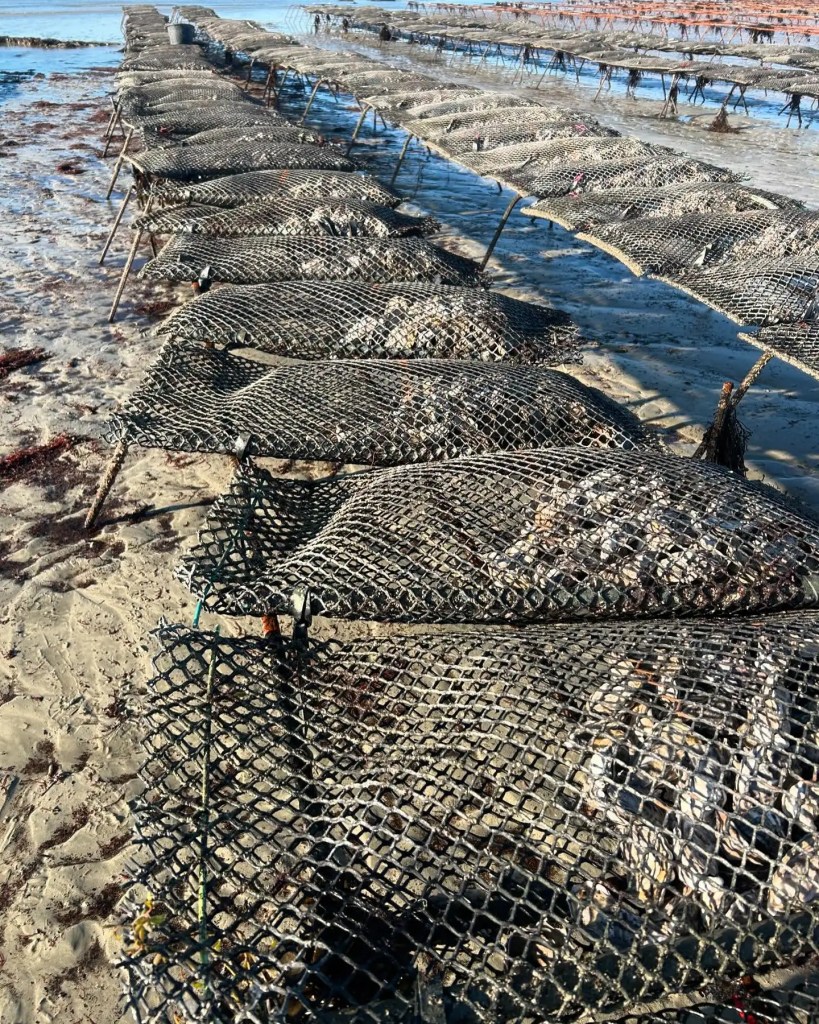
Huîtres POGET operates with a firm commitment to sustainable and reasoned aquaculture. They grow Pacific oysters (Crassostrea gigas) in mesh bags submerged in estuarine waters, where tidal flows provide continuous exchange of clean seawater rich in plankton. The oysters mature slowly over 30 to 60 months. Monthly turning of the oysters ensures even meat development and firm texture, a labor-intensive process requiring daily vigilance. This careful stewardship reflects the family’s dedication to quality and environmental balance, making Poget oysters a prized product in French and international markets.

The company operates at the intersection of tradition and innovation, maintaining long-standing cultivation practices while ensuring environmental responsibility. Their farms are situated within the largest oyster refining marshes in Europe near La Tremblade, a hub of oyster heritage. Huîtres POGET manages all stages of cultivation and refinement, with an emphasis on artisan methods that amplify the oysters’ flavor and texture unique to the Marennes-Oléron terroir. The business actively promotes its heritage and quality, contributing to the region’s reputation for exceptional oysters.
Follow Them
Discover more about Poget Oysters by visiting their official website and following their social media profiles. Explore their heritage, sustainable farming practices, and exceptional oyster varieties directly from the source. Don’t miss the chance to experience these premium oysters straight from France’s finest oyster producers!
Poget Oysters Information
Oyster: Poget Oysters
Species: Pacific oyster (Crassostrea gigas)
Cultivation Method: Farmed for 30 to 60 months
Size: Typically 2 to 4 inches
Seasonality: Year-round availability
Culture Method: Grown in estuaries within the Marennes-Oléron basin and Normandy coasts, suspended in mesh bags in nutrient-rich tidal waters
Salinity (ppt): Approximately 25 to 32 ppt
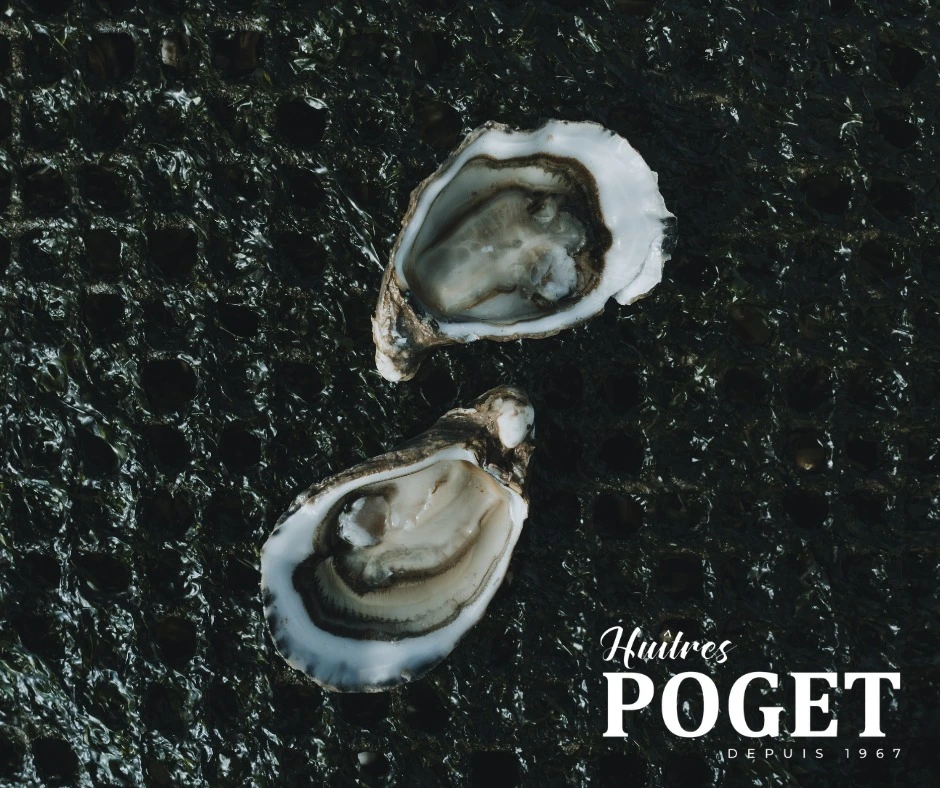
Appearance: A compact and regular shell shape that is generally more uniform than many wild oysters. Their shells are white to off-white in color with a smooth to slightly textured surface. The oysters have firm, crunchy flesh inside.
Flavor Profile: A sweet and slightly briny taste with subtle melon and herbaceous notes. Their flavor is delicate yet complex, featuring hints of creamy smoothness and a clean finish. The texture is firm and crisp, enhancing the overall flavor experience.
If you like Poget Oysters, then check out these similar varieties!
Location
Farmers cultivate Poget oysters primarily in two distinct coastal regions of France: the Normandy shores and the Charente-Maritime area, particularly near La Tremblade and the Marennes-Oléron basin.
These areas are renowned for their oyster farming heritage and offer optimal conditions for oyster growth. The Marennes-Oléron basin, Europe’s largest oyster refining marsh, plays a significant role in cultivating Poget oysters with its vast, protected estuaries and tidal influence. The Normandy coasts provide a complementary environment with clean, nutrient-rich waters supporting oyster maturation.
Environmental Factors
Several environmental factors make these locations ideal for oyster farming. The waters here have a balanced salinity range of approximately 25 to 32 parts per thousand, which is essential for oyster health and flavor development. The estuaries and tidal marshes offer a mixture of fresh and saltwater that enriches the nutrients available, such as plankton, which is the oysters’ primary food source. The strong tidal currents also ensure thorough flushing of the oyster beds, maintaining water quality and providing oxygen, which facilitates healthy oyster growth.
Moreover, the temperate climate of these coastal zones supports year-round oyster cultivation, reducing stress on the oysters and encouraging steady growth. The combination of Atlantic ocean currents and freshwater river inflows creates a rich terroir that influences the oysters’ flavor profile, providing a balanced sweetness and brininess unique to this region. These environmental conditions, combined with traditional oyster farming techniques and careful oyster husbandry, allow Poget oysters to develop their characteristic firm texture and complex taste. Sustainability and reasoned farming strategies further enhance the quality and viability of oyster production in these areas.

In summary, Poget oysters thrive in the nutrient-rich, well-oxygenated tidal estuaries of Normandy and Charente-Maritime. The natural balance of salinity, temperature, currents, and food availability in these waters creates an ideal ecosystem for oyster growth, making these locations particularly beneficial for producing premium oysters known for their distinctive flavor and texture.
Suggested Beverage Pairings
- Guinness Stout (Beer) – The smooth, creamy texture and roasted malt flavors create a delightful contrast to Poget oysters’ sweet and briny notes. Its bitterness balances the oyster’s salinity while enhancing subtle sweetness.
- Negroni Sbagliato (Cocktail) – This sparkling cocktail made with Carpano Antica Formula, Campari, and Prosecco offers a bitter-sweet balance that brings out the oysters’ briny and sweet flavors. The bubbles refresh the palate, while citrus elements elevate their creamy texture.
- Boon Oude Geuze (Belgian Lambic Beer) – The funky, tart, and effervescent character adds complexity to the oysters’ sweetness and brininess. Its acidity and bubbles cleanse the palate between bites, keeping the tasting experience lively and fresh.
- Hakutsuru Junmai Ginjo Sake (Sake) – This sake’s delicate floral notes and subtle sweetness complement the nutty undertones and fresh briny character. Its clean, crisp finish highlights the oysters’ freshness and balances natural salinity.
- Creature Comforts Tropicália IPA (Craft Beer) – This tropical IPA bursts with bright notes of passionfruit, papaya, and grapefruit. Its fruity hops enhance the oysters’ brininess while the effervescence cleanses the palate, creating a refreshing and vibrant pairing.
Where to Buy Poget Oysters
- Huitres POGET Official Website – Purchase Poget oysters directly from the farm’s official site. They offer fresh packaging and prompt delivery, ensuring oysters arrive in optimal condition.
- Royan Atlantique – A regional distributor specializing in local products, including Poget oysters harvested from La Tremblade. They focus on freshness and connecting consumers with trusted oyster producers.
Stay Connected with The Oyster Encyclopedia!
Follow us on social media to get the latest updates, oyster recipes, and behind-the-scenes glimpses into the world of oysters:
Stay tuned for exclusive content, oyster trivia, and more! Engage with our vibrant community of oyster enthusiasts by liking, commenting, and sharing our posts. Your support helps us continue providing valuable oyster knowledge to fellow seafood lovers worldwide.
References
- “Our Oysters – Huîtres POGET.” huitres-poget.com, 2025, www.huitres-poget.com.
- “Our « Savoir Faire » – Huîtres POGET.” huitres-poget.com, 2025, www.huitres-poget.com/notre-savoir-faire/?lang=en.
- “Marennes-Oléron Excellence Since 1967 – Huîtres POGET.” huitres-poget.com, 2025, www.huitres-poget.com.
- “Poget Oysters – Oysters / Mussels / Seafood Products in La Tremblade.” Guide Charente Maritime, 2021, guide-charente-maritime.com/en/charente-maritime-17/la-tremblade.htm.
- “Poget Oysters in La Tremblade – Royan Atlantique.” royanatlantique.fr, 2024, www.royanatlantique.fr/en/producteurs-locaux/huitres-poget-la-tremblade/.
- “Oyster Flavor Profiles: A Guide to Understanding the Taste of Oysters.” globalseafoods.com, 2023, www.globalseafoods.com/oyster-flavor-profiles.
- “Domaine William Fèvre Chablis – Oyster Encyclopedia.” oysterencyclopedia.com/wine-pairings/chablis.
- “Pierre Peters Blanc de Blancs Champagne – Oyster Encyclopedia.” oysterencyclopedia.com/wine-pairings/pierre-peters-champagne.
- “Kronenbourg 1664.” Wikipedia, 2023, en.wikipedia.org/wiki/Kronenbourg_1664.
- “Dry Martini Cocktail – Oyster Encyclopedia and The Botanist.” oysterencyclopedia.com/cocktails/dry-martini.
- “Domaine Vacheron Sancerre – Oyster Encyclopedia and Merchant of Wine.” oysterencyclopedia.com/wine-pairings/sancerre.
- “Dodge Cove Oysters – Oyster Encyclopedia.” oysterencyclopedia.com/oysters/dodge-cove.
- “Utah Beach Oysters – Oyster Encyclopedia.” oysterencyclopedia.com/oysters/utah-beach.
- “Treasure Cove Oysters – Oyster Encyclopedia.” oysterencyclopedia.com/oysters/treasure-cove.
- “Kiku Kumamoto Oysters – Oyster Encyclopedia.” oysterencyclopedia.com/oysters/kiku-kumamoto.
- “Exploring Virginia’s Oyster & Craft Beer Pairings.” Virginia Oyster Trail, 2023, virginiaoystertrail.net.
- “Rubric for Encyclopedia Entries.” PPL-AI File Upload, 2025.
- “Oyster farming techniques.” France Naissain, 2024, www.francenaissain.com.
- “Oyster farming.” Wikipedia, 2005, en.wikipedia.org/wiki/Oyster_farming.
- “History – Huîtres POGET.” huitres-poget.com, 2025, www.huitres-poget.com/history.
Discover more from The Oyster Encyclopedia
Subscribe to get the latest posts sent to your email.