


Chef’s Notes
Mason Bostwick · Executive Chef
Pacific oyster
Fine de Claire is the benchmark Marennes-Oléron grade—sea-grown Pacific finished weeks in claires until brine, cucumber, and iodine-mineral notes align. Light liquor, crisp texture, and optional green gill from Navicula mark a proper claire lot.
Flavor chart
Chef palate read
Shuckability
Shell & line performance
When I buy it
I look for Marennes-Oléron Fine de Claire tags with firm claire-strengthened shells, not generic French creuses. Green-tinged gills from Navicula finishing and tight closes after chilled freight tell me the pond refine held.
How I serve it
Raw on the half shell so claire iodine and cucumber-mineral notes stay clean. Skip heavy mignonette; Fine de Claire cups are built for light, oceanic service.
What to watch for
Reject Fine de Claire lots with cracked hinges, milky liquor, or meats that pulled off the shell. Claire-finished Pacifics should stay plump with clear liquor after the cold chain.
My read
Fine de Claire is the French reference grade for claire finishing: light brine, crisp texture, and a mineral-vegetal close from Marennes-Oléron ponds. The shell I reach for when I want textbook claire character on the raw bar.
What Are Fine de Claire Oysters?
Fine de Claire oysters are among the most recognizable names in French oyster culture. Unlike typical oysters grown entirely at sea, these oysters go through an additional finishing process. They spend several weeks in nutrient-rich salt ponds, called “claires,” before reaching market. This process enhances their flavor and presentation.

These oysters are prized for their refined, oceanic taste with a clean finish. They are not as meaty or plump as some deep-water varieties. Instead, Fine de Claires offer a light, briny bite with more shell liquor and a slightly crisp texture. Their flavor suits oyster beginners and connoisseurs alike.
Fine de Claires are not a specific breed but a label of refinement. Farmers select oysters from Marennes-Oléron Bay and refine them using traditional methods. The controlled salinity and algae content of the ponds help shape both their taste and green-hued gills, making them a standout on seafood menus worldwide.
How Did Fine de Claire Oysters Get Their Name?
The term “Fine de Claire” comes from the French word “claire,” meaning a shallow salt pond used for oyster finishing. These man-made basins were originally salt pans converted into maturation beds for oysters. They became essential to the Marennes-Oléron oyster refinement industry in southwestern France.
“Fine” in this context indicates the oyster’s classification based on size and flesh index. French oyster grading standards assign the “Fine” label to oysters with a moderate meat content. When combined with the “de Claire” finishing method, the name “Fine de Claire” signifies both size and refinement process.
The Cultivation Process
Fine de Claire oysters are farmed oysters, but their hallmark lies in their post-harvest refinement. Farmers typically grow them in the Atlantic Ocean near the Marennes-Oléron basin. Once matured to market size, the oysters are transferred to the claires for final refinement.
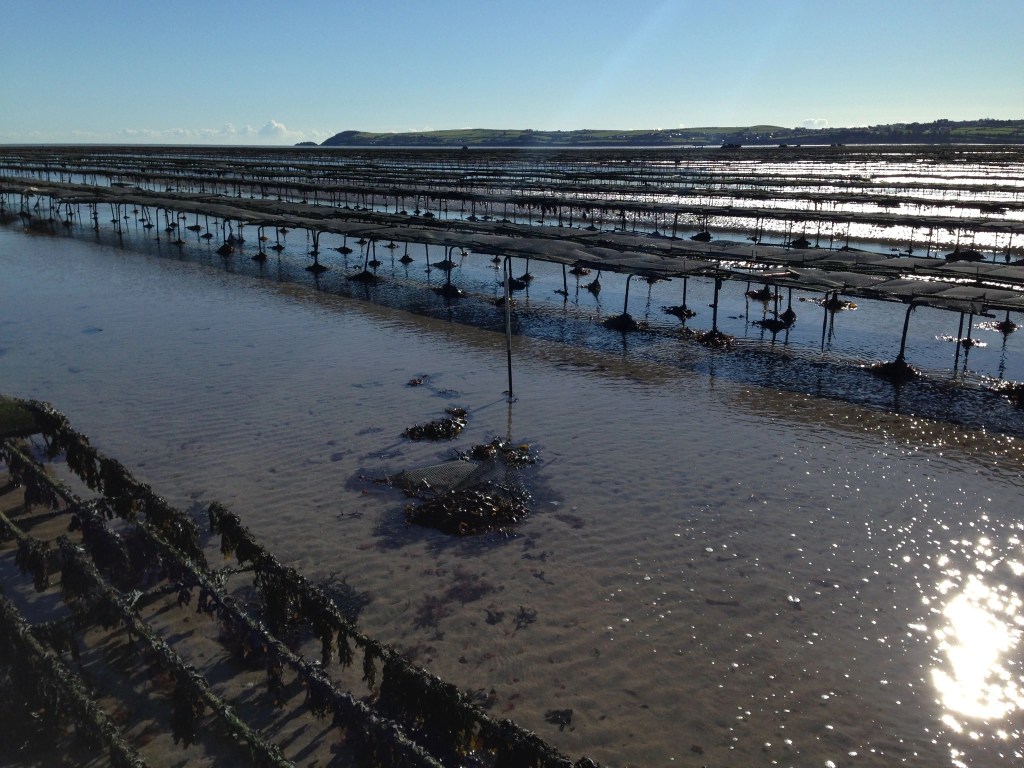
These claires are ancient salt ponds with controlled salinity and rich microalgae populations. Farmers like David Hervé and the Gillardeau family have perfected this process over generations. The oysters remain in the claires for 2 to 4 weeks, allowing them to filter the pond water and absorb flavor.
Farmers monitor the ponds carefully. The salinity, algae levels, and water quality are adjusted as needed to ensure consistency. Some claires encourage Navicula bluephila algae growth, which can tint the oyster’s gills green—a mark of premium quality in France.
Follow Them
Follow Huîtres Hervé for David Hervé claire-affinage notes from the Marennes-Oléron marshes. Gillardeau posts harvest and finishing updates at gillardeau.fr when Bourcefranc-le-Chapus claire lots ship. Regional grading and PGI context for Fine de Claire labels is published by Maison Huîtres Marennes Oléron. Plan basin visits and claire routes through Marennes-Oléron tourism when you want to see salt-pond finishing in person.
Fine de Claire Oysters Information

Pacific oyster
If you like Fine de Claire Oysters, then check out these similar varieties!
Location
Fine de Claire growers cultivate oysters primarily in the Marennes-Oléron basin, located on the southwest coast of France in the Charente-Maritime region. The basin stretches across coastal marshlands tied to centuries of salt-making and oyster refinement. Many producers finish their harvest in historic claire ponds before oysters ship to markets across Europe. For another farmed Pacific with a distinct regional profile, see L’Ultime Oysters.
This area is one of the most famous oyster-farming zones in the world and holds France’s only Label Rouge and Protected Geographical Indication (PGI) for refined oysters. Gillardeau raises its oysters in offshore nurseries before transferring them to claires, or shallow salt ponds, for finishing. These claires are located in Bourcefranc-le-Chapus, near the mouth of the Seudre River.
The Marennes-Oléron basin is uniquely suited to oyster cultivation due to its mix of fresh and saltwater. The Seudre River provides consistent freshwater flow, which blends with nutrient-rich Atlantic tides. This brackish water environment promotes strong shell growth and allows oysters to feed on a variety of phytoplankton. The changing tides flush and oxygenate the area naturally, reducing the risk of disease and supporting sustainable farming practices.
Another critical environmental factor is the clay-rich soil lining the claires. This mineral-rich substrate imparts trace elements into the oysters, which subtly influence their flavor and help build stronger shells. The shallow depth of the ponds allows sunlight to warm the water, encouraging the bloom of beneficial algae like Navicula bluephila. These algae feed the oysters and often give their gills a prized green hue.
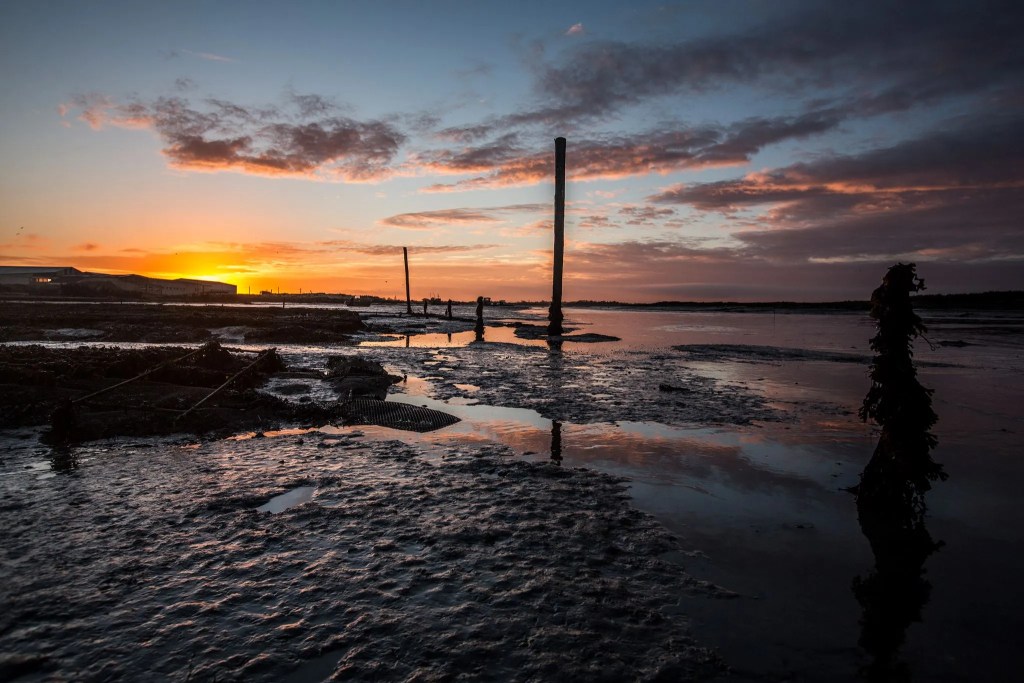
The temperate oceanic climate of the region ensures mild winters and warm summers. These conditions support year-round oyster farming without extreme temperature fluctuations. Combined with centuries of traditional farming knowledge and modern sustainability practices, the Marennes-Oléron basin remains one of the most productive and ecologically balanced oyster habitats in Europe.
Suggested Beverage Pairings
Dagueneau Blanc Fumé de Pouilly frames Fine de Claire brine with flint and citrus lift. Loire Sauvignon mirrors the cucumber-mineral arc from Marennes-Oléron claires. Serve cold between half-shell trays.
Ruinart Blanc de Blancs adds fine bubbles that scrub Fine de Claire liquor without sweetening the cup. Chardonnay brightness matches the light, oceanic close from claire finishing. Classic pour for French raw-bar service.
The Botanist Martini highlights vegetal notes on Fine de Claire meats finished in Navicula-rich ponds. Herbal gin keeps Marennes-Oléron minerality forward between shells. Keep the pour icy so botanicals stay subtle.
Dupont Cidre Triple cuts salt on Fine de Claire oysters with dry apple sparkle. Normandy cider echoes the French Atlantic roots of claire-grade Pacific cups. Easy regional match for holiday seafood platters.
Saison Dupont refreshes the palate between Fine de Claire half shells. Peppery farmhouse ale balances mild claire brine and clean mineral finish. Low bitterness keeps the Seudre basin character readable.
Where Can I Buy Fine de Claire Oysters?
You can buy Fine de Claire Oysters from the following sources:
- Maison Huîtres Marennes Oléron — Regional producer hub for PGI Marennes-Oléron oysters, including Fine de Claire grades finished in basin claires.
- The Oyster Gourmet — Lists live Fine de Claire oysters with Marennes-Oléron claire finishing notes for retail and chef orders.
- Rockfish — UK retailer shipping 12-piece Fine de Claire trays when in stock, with next-day chilled delivery.
- The Artisan Food Company — Sells 12-piece Fine de Claire packs from Marennes-Oléron with live delivery across the UK.
References
- “Marennes Oléron Oysters.” Maison Huîtres Marennes Oléron, https://huitresmarennesoleron.com/en/. Accessed 15 July 2025.
- “Fine de Claire Oysters.” The Oyster Gourmet, https://theoystergourmet.com/products/fine-de-claire-oysters. Accessed 15 July 2025.
- “French Oysters – A Guide to Marennes-Oléron Oysters.” France Today, 15 May 2021, https://www.francetoday.com/food-drink/french-oysters-a-guide-to-marennes-oleron-oysters/.
- “Oysters of Marennes-Oléron.” France.fr, https://www.france.fr/en/travel-guide/experience/marennes-oleron-oysters. Accessed 15 July 2025.
- “Buying Guide: French Oysters.” Fulton Fish Market, https://www.fultonfishmarket.com/blog/french-oysters-guide. Accessed 15 July 2025.
- “Fine de Claire Oyster.” Culinary Lore, https://www.culinarylore.com/food-science:fine-de-claire-oyster/. Accessed 15 July 2025.
- “La Route de l’Huître: Oysters, Claires and Salt Marshes.” Marennes-Oléron Tourism, https://www.oleron-marennes.com/en/taste/discover-our-oysters.
Discover more from The Oyster Encyclopedia
Subscribe to get the latest posts sent to your email.