


Chef’s Notes
Mason Bostwick · Executive Chef
Pacific oyster
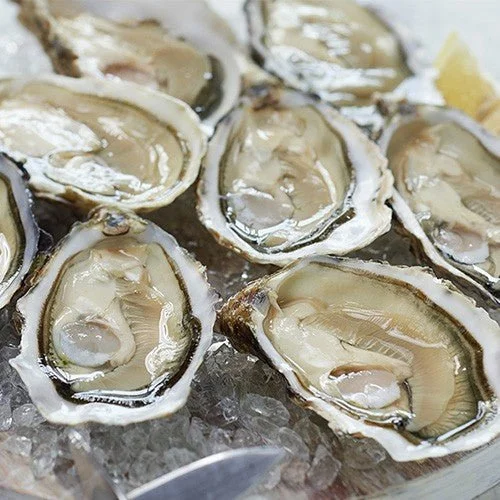
Fine de Bretagne is Cadoret’s Brittany Pacific—deep-water grow-out finished with six months of Carantec park refining. Crisp brine opens, cucumber-mineral mid-palate follows, and a clean sweet close suits raw-bar trays.
Flavor chart
Chef palate read
Shuckability
Shell & line performance
When I buy it
I look for Cadoret Fine de Bretagne tags from Carantec refining lots, not generic Brittany creuses. Shells should read N°2 or N°3 with firm cups, clean liquor, and tight closes after cold Chronopost or chilled wholesale packs.
How I serve it
Raw on the half shell so the cucumber-mineral arc from Bay of Carantec stays clear. Keep mignonette light; crisp Fine meats do not need heavy sauce.
What to watch for
Reject Fine de Bretagne lots with cracked hinges, milky liquor, or meats that pulled away from the cup. Rack-and-bag shells should close tight after the cold chain.
My read
Fine de Bretagne is a clean Brittany Pacific from Cadoret Carantec parks: crisp brine, cucumber-mineral mid-palate, and a sweet finish. Reliable Fine cup when you want Atlantic mineral character on the raw bar.
What Are Fine de Bretagne Oysters?
Fine de Bretagne oysters stand out because of their deep connection to Brittany’s natural surroundings. The area’s combination of wild tides, mineral-rich waters, and cool temperatures gives these oysters a special character. They grow in locations that blend sea and river influences. This process makes the oysters firmer and gives them a flavor that you can’t find elsewhere.
The way local farmers raise and refine Fine de Bretagne oysters also makes them unique. Many families have passed down their knowledge for generations, combining old traditions with thoughtful innovation. Farmers pay close attention to each step, from sorting and refining to handling every oyster with care. This commitment brings out the best taste and texture in each batch, making Fine de Bretagne oysters a point of pride in the region.
Beyond technique and environment, Fine de Bretagne oysters play a bigger role in their ecosystem. As filter feeders, they help keep the water clean wherever they are grown. Their health signals the quality of their coastal habitat. By choosing these oysters, people support a cycle that respects both tradition and nature
How Did Fine de Bretagne Oysters Get Their Name?
The designation “Fine de Bretagne” highlights the oysters’ origins and refinement process in Brittany, a region known for its dramatic tides and legendary seafood traditions. The term “fine” indicates a balance between texture and flavor, marking these oysters as especially well-formed and delicate. Local farming families, some with roots stretching back centuries, maintain ancestral techniques that give Fine de Bretagne oysters their specific crunch and wild flavor.
Bretagne is the French name for Brittany, where dramatic tides shape coastal aquaculture. The Fine label marks oysters graded for cup depth, meat fill, and a clean mineral finish. Regional families have guarded these naming standards across generations of tidal farming.
The Cultivation Process
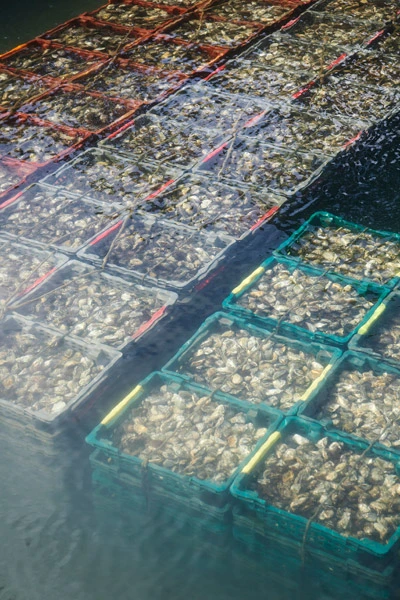
Fine de Bretagne oysters start their journey as tiny “spat,” which are collected and placed in mesh bags or pockets by farmers. These bags are carefully arranged on elevated racks or tables positioned above the seabed in the nutrient-rich, tidal waters of Brittany. Farmers choose locations with a steady flow of clean, plankton-rich water, which helps oysters grow strong shells and healthy meat. The rack-and-bag system keeps oysters safe from mud, predators, and overcrowding, promoting even growth and clean flavor.
As the oysters develop, farmers keep a close eye on them for up to 3–4 years. They regularly turn and shake the bags to prevent barnacle and algae buildup, ensuring the shells are well-shaped and avoiding stunted growth. This hands-on management helps the oysters filter plenty of plankton and nutrients from the water, which not only makes them grow faster but also enhances their texture.
Close to harvest, farmers sort and refine the oysters to boost their taste and remove impurities like mud and sand. They briefly store the oysters in basins, allowing them to purge and rest before heading to market. Each step, from spat collection to final sorting, reflects tradition and careful stewardship, resulting in Fine de Bretagne oysters with signature flavor and quality.
Follow Them
Follow Huîtres Cadoret on their company website for Fine de Bretagne harvest notes, calibers, and Brittany farm contacts. Read the La Fine de Bretagne product page for Carantec refining detail and pack sizes. English oyster descriptions and Belon-line context are posted at huitres-cadoret.fr/our-oysters when Cadoret updates grow-out and affinage notes.
Fine de Bretagne Oysters Information

Pacific oyster
If you like Fine de Bretagne Oysters, then check out these similar varieties!
Location
Farmers cultivate Fine de Bretagne oysters along Brittany’s coast, especially in shallow bays and estuaries like the Bay of Carantec. The intertidal rack-and-bag parcs sit where Atlantic water meets estuary influence each tide cycle. Sites such as the Bay of Carantec rank among the region’s best-known Fine de Bretagne growing grounds.
These locations are famous for their wide tidal ranges, expansive oyster parks, and clean, nutrient-rich waters. Brittany’s coastline includes dozens of renowned growing areas, each offering unique qualities to the oysters raised there. Farmers rely on generations of local expertise to select sites that favor healthy oyster development.
A major environmental factor benefiting oyster growth here is the tidal flow. Brittany’s tides are among the strongest in continental Europe, often moving over 10 meters between low and high tides. These regular tidal cycles bring an endless supply of fresh seawater, which is packed with plankton and oxygen.
This nutrient flow not only feeds the oysters but also flushes out waste, helping maintain water quality and supporting clean development. The gentle mixing of ocean and river water keeps salinity levels stable and ideal for oyster health. Salinity in these parks typically holds in the 30–35 ppt range suited to Pacific oysters.
Another important factor is the local climate. The region’s mild maritime weather protects oysters from sharp temperature swings that cause stress or disease. Sunlight warms the shallow ponds and estuaries, encouraging plankton blooms and supporting rapid oyster growth during warmer months. The clay and mineral-rich seabeds further enhance flavor and shell quality, giving Fine de Bretagne oysters their distinct mineral touch.
Protected inlets, careful site management, and low pollution combine to make Brittany’s coast a premier site for oyster prosperity. Stewardship by local families ensures these benefits last through every season. As a result, Fine de Bretagne oysters thrive in an environment that naturally encourages clean, flavorful, and healthy shellfish.
Suggested Beverage Pairings
Laurent-Perrier Ultra Brut cuts Atlantic brine on Fine de Bretagne oysters from Carantec parks. Dry bubbles clear cucumber-mineral notes without sweetening the cup. Serve ice-cold between Brittany half-shell trays.
Pépière Clos des Briords echoes flinty minerality on Fine de Bretagne meats. High acid lifts melon-cucumber mid-palate from Bay of Carantec refining. Classic Loire pour for Cadoret Fine lots.
Kerisac Brut cider matches regional roots with Fine de Bretagne oysters. Dry apple sparkle resets clean mineral finish after each Brittany shell. Easy local pour for Carantec raw-bar service.
Hendrick’s with tonic amplifies cucumber notes on Fine de Bretagne oysters. Botanicals frame briny Atlantic cups without burying sweet meat. Keep the pour cold so gin stays light between shells.
Txomin Etxaniz Txakolina lifts salt and mineral close on Fine de Bretagne oysters. Light fizz refreshes between crisp Brittany cups from Cadoret. Bright Basque white for high-tide Pacific meats.
Where Can I Buy Fine de Bretagne Oysters?
You can buy Fine de Bretagne Oysters from the following sources:
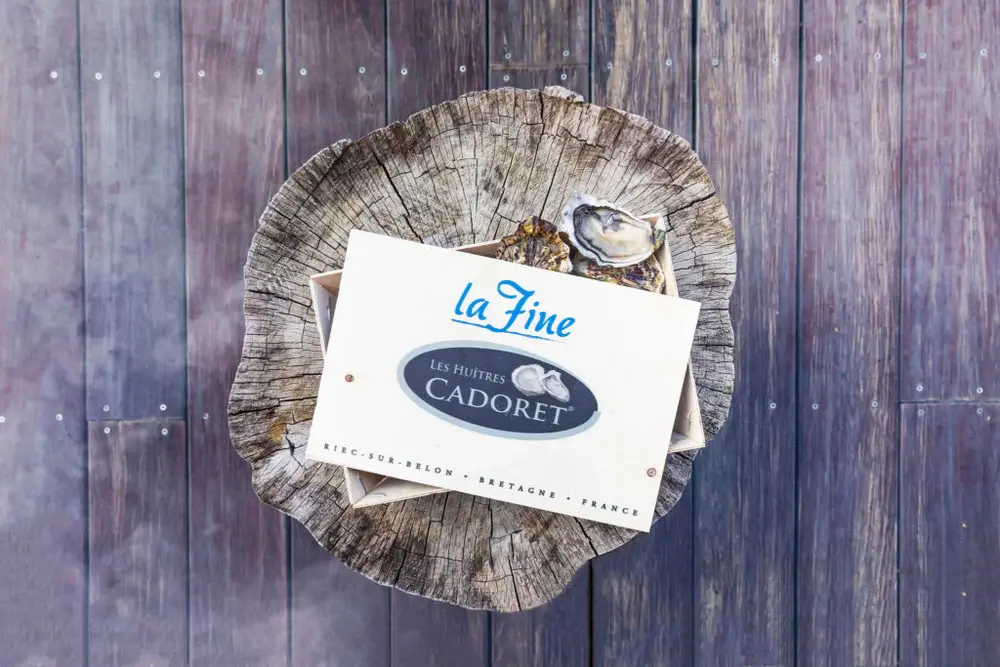
- Huîtres Cadoret — Producer page for La Fine de Bretagne; 3-year oysters refined six months in Carantec, sold in N°2 and N°3 packs from Riec-sur-Bélon.
- Lou Lou Food Market — Lists Cadoret Fines de Bretagne Oysters No.3 in 12-piece chilled boxes shipped from Brittany.
- Seafood Society Hong Kong — Offers live Fine de Bretagne oysters with Cadoret Carantec refining notes in N°2 and N°3 sizes.
- Classic Fine Foods — Cadoret brand catalog with Fine Brittany pack sizes for wholesale and chef delivery.
Stay Connected with The Oyster Encyclopedia!
Follow us on social media to get the latest updates, oyster recipes, and behind-the-scenes glimpses into the world of oysters:
Stay tuned for exclusive content, oyster trivia, and more! Engage with our vibrant community of oyster enthusiasts by liking, commenting, and sharing our posts. Your support helps us continue providing valuable oyster knowledge to fellow seafood lovers worldwide.
References
- Huîtres Cadoret. “La Fine de Bretagne – Huître creuse.” Huîtres Cadoret, Riec-sur-Bélon, Brittany. Web. Accessed 17 July 2026. https://huitres-cadoret.fr/produit/la-fine-de-bretagne/
- Huîtres Cadoret. “Our Oysters — Fine de Bretagne.” Huîtres Cadoret. Web. Accessed 17 July 2026. https://huitres-cadoret.fr/our-oysters/
- Lou Lou Food Market. “Fines de Bretagne Oysters No.3 – 12 pcs.” Lou Lou Food Market. Web. Accessed 17 July 2026. https://www.louloufm.com/product/fine-de-bretagne-oyster-n3-x-12-pieces/
- Seafood Society. “Live Oysters Fine de Bretagne.” Seafood Society Hong Kong. Web. Accessed 17 July 2026. https://seafoodsociety.hk/oysters_hong-kong_hk/oysters_fine_de_bretagne_fresh_hong-kong_hk/
Discover more from The Oyster Encyclopedia
Subscribe to get the latest posts sent to your email.