


Chef’s Notes
Mason Bostwick · Executive Chef
Eastern oyster
Moondancer — Moondancer — Strong minerality — briny and mineral finish. A solid farmed eastern oyster.
Flavor chart
Chef palate read
Shuckability
Shell & line performance
When I buy it
Look for Moondancer Oysters in peak season when salinity peaks.
How I serve it
On the half shell with minimal garnish — let the oyster speak.
What to watch for
Full brine with clean finish. Reject any with broken shells or milky liquor.
My read
Strong minerality — briny and mineral finish. A solid farmed eastern oyster.
In 1985, an individual named Bill Mook commenced the establishment of Moondancer oysters on the Damariscotta River in Maine. With the implementation of Mook Sea Farm, Bill Mook set the golden standard for the Maine Oyster Industry. Interestingly, Bill Mook’s significant other was the one who had creatively coined the name. “Moondancer” for the oysters due to their striking resemblance to how they sway. and move when illuminated by the glimmering moonlight.
Mook Sea Farm has perfected the science of growing oysters on the surface beds. along the Damariscotta River for many years, producing Moondancer oysters known for their salty. flavor and plump meat.
What Are Moondancer Oysters?
Moondancer Oysters are a farmed Eastern oyster from They are cultivated in the Damariscotta. River in Midcoast Maine at Monk Sea farm..
On the half shell the line reads briny, mineral with 28 ppt salinity.
Regional growers harvest under standard shellfish sanitation and tagging rules.
How Did Moondancer Oysters Get Their Name?
Moondancer Oysters take their trade name from Damariscotta River.
The label helps buyers match half-shell tags to the correct farm or bay.
Menus and distributor manifests use the same name for traceability.
Quick Facts about Mook Sea Farm
- Founding : Mook Sea Farm was founded in 1985 by Bill Mook,. an oyster farming pioneer and influential contributor to Maine’s aquaculture industry. Bill Mook has played a significant role in reviving Maine’s American oyster (Crassostrea virginica).
- Location: The farm is on the Damariscotta River, renowned for producing some of the world’s best oysters4. The river’s pristine waters provide an ideal environment for oyster cultivation.
- Oyster Cultivation: Mook Sea Farm specializes in rearing Eastern oysters from egg to market size. They carefully nurture the oysters throughout their growth stages, producing high-quality oysters with desirable flavor profiles.
- Sustainability Efforts: Mook Sea Farm has implemented sustainable practices and innovative technologies. For example, they have installed a solar array and energy-efficient pump system to reduce. environmental impact and build resilience in changing waters.
Mook Sea Farm continues to be a prominent player in the oyster farming industry. in Maine, producing delicious and sustainable oysters enjoyed by seafood enthusiasts.
About Moondancer
Moondancer stock is farmed on regional lease or estuary ground.
Growers use rack, bag, or bottom culture depending on site conditions.
Harvest crews grade, tag, and chill oysters before wholesale shipment.
Moondancer Oysters Information
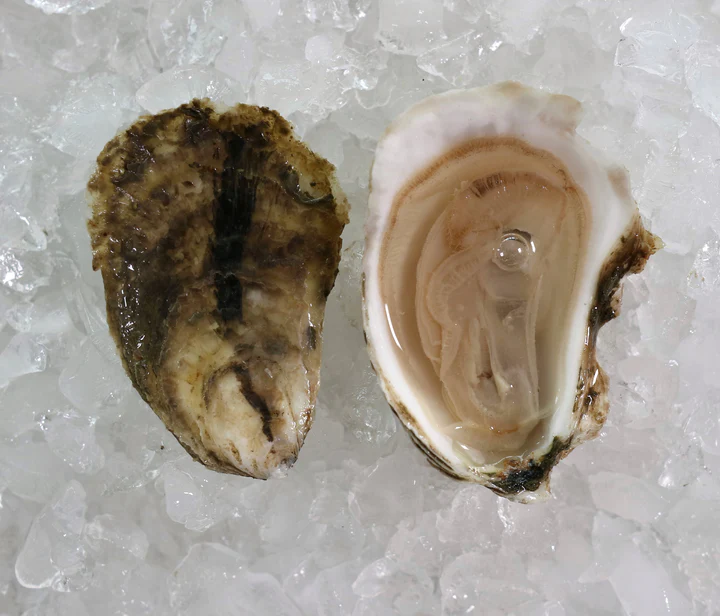
Eastern oyster
Oyster: Moondancer
Culture Method: 2-Stage microalgae culture system hatchery.
Cultivation Method: Raised in surface cages using the suspension method. Then a team of expert quality controllers handpicks them with extreme care and attention to detail.
Season: Year Round.
Size: 3.5″
Salinity: 28-32 ppt
Appearance: White shells with green and brown coloration. Deep Cup rippled shells with black stripe.
Flavor Profile: Distinct flavor profile described as sweet, salty, and delicious minerality. The oysters start with a big salty kiss and finish with a sweet glow, providing a sweet-salty taste profile duality
Location
They are cultivated in the Damariscotta River in Midcoast Maine at Monk Sea farm.
Suggested Beverage Pairings
These white wines pair well with their sweet-salty taste profile.
Exceptionally well-paired with a crisp pale ale or IPA.
Pretty damn good with a dry Hendricks gin.
can be paired with a dry martini with a twist.
Citrus acidity lifts brine without masking sweet meat.
Where Can I Buy Moondancer Oysters?
- Oysters XO — You can purchase Moondancer oysters online from Oysters XO.
- Mook Sea Farm — Moondancer oysters are available for farm pick up by the dozen from Mook Sea Farm.
- SoPo Seafood – SoPo Seafood sells Moondancer oysters online.
- FreshDirect — FreshDirect sells Moondancer oysters in boxes or by the piece.
References
- NOAA Fisheries. “Oyster Aquaculture.” fisheries.noaa.gov.
- State shellfish sanitation program — harvest area classification records.
- Regional sea grant extension — grow-out and lease overview publications.
Discover more from The Oyster Encyclopedia
Subscribe to get the latest posts sent to your email.