


Chef’s Notes
Mason Bostwick · Executive Chef
Pacific oyster
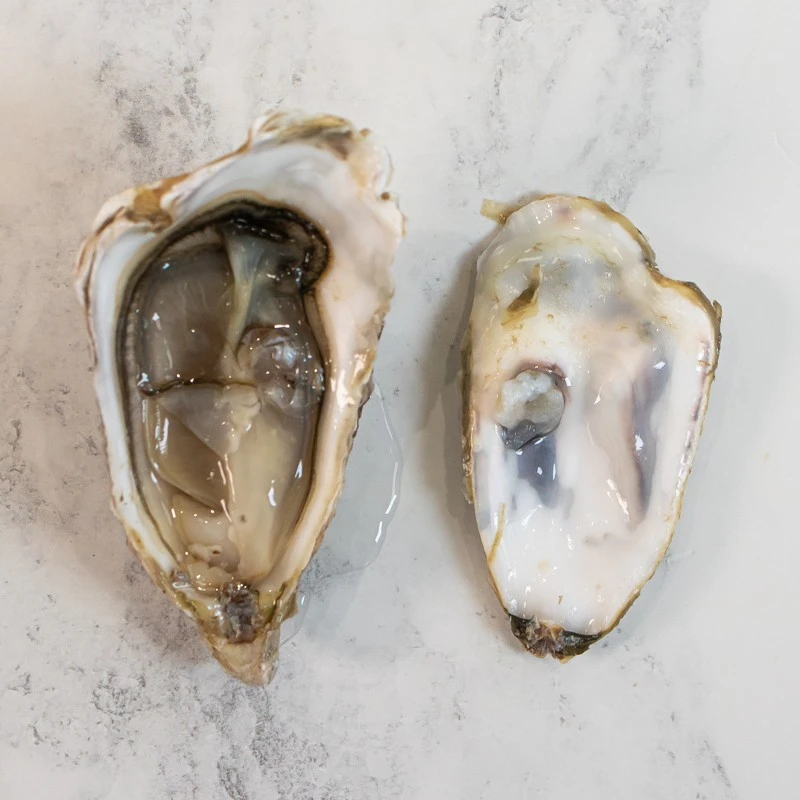
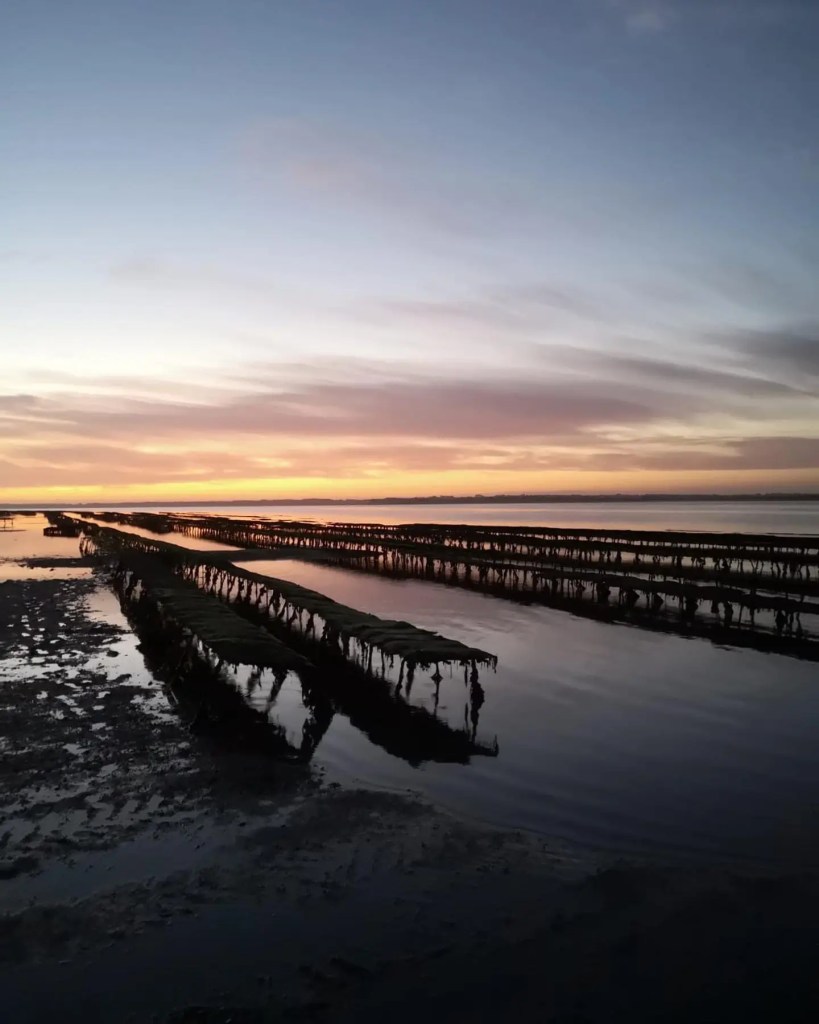
Maldon — Pacific rock oysters grown in bags on trestles in Goldhanger Creek. Expect a brackish nose, firm meat, and a metallic finish that keeps building.
Flavor chart
Chef palate read
Shuckability
Shell & line performance
When I buy it
Maldon Rock sells year-round in three weights: small 60–80 g, medium 80–110 g, large 110–140 g. Simply Oysters packs them live to order for next-day UK delivery.
How I serve it
Raw on the half shell with lemon or mignonette. Give the long metallic finish time to land before the next one.
What to watch for
Shells should be shut and unbroken. The farm says to discard dry-looking oysters and never store them on ice or in water.
My read
A brackish, firm Pacific whose finish builds instead of fading. It grows on trestles in an estuary farmed since Roman times.
What Are Maldon Oysters?
Maldon oysters are Pacific rock oysters, Crassostrea gigas, from the Blackwater Estuary in Essex, England. The Maldon Oyster Company grows them on its beds in Goldhanger Creek. Most oysters on those beds are rock oysters, though the company also works to restore the native fishery. Retailers sell them as Maldon Rock or Maldon Pacific oysters.
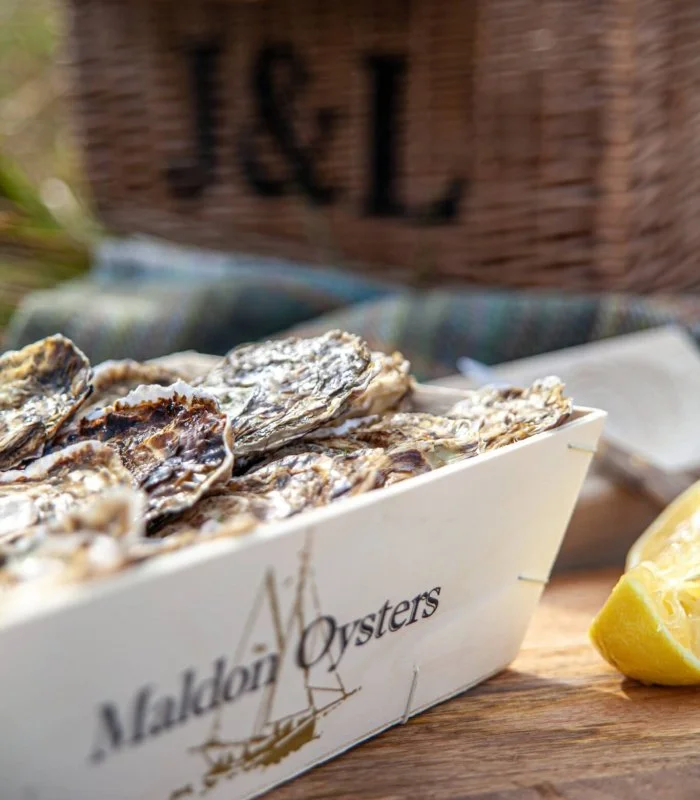
Each oyster starts as seed no bigger than a thumbnail. The crew sets the seed in bags on trestles above the ground. Over two to three years, they hand-turn, split and grade each oyster more than six times. Harvest happens by hand between tides, and every oyster then passes through the company’s depuration plant.
Sustainability is central to how the company describes its oysters. Farmed oysters need no feeding and no chemicals, because they filter nutrients from the water. Their shells also give a home to many sea creatures and plants. The company powers its plant with solar panels.
How Did Maldon Oysters Get Their Name?
Maldon oysters take their name from the town of Maldon in Essex. The town sits at the head of the Blackwater Estuary, where the company grows its oysters. Oyster cultivation here dates back to the Romans, according to the company. King Henry II later granted oyster rights in the estuary in the twelfth century.
The company calls its beds one of the oldest oyster layings in the kingdom. It credits the estuary’s salty water and shallow, marshy landscape for the oysters’ flavour. It also bills them as the famous “Essex Gold.” Today the business trades simply as Maldon Oysters.
About Maldon Oyster Company
The Maldon Oyster Company began in 1962 as a cooperative of local fishermen. Clarrie Devall started and managed it, later joined by David Coward-Talbot. Richard Emans took over the Goldhanger beds when Coward-Talbot retired. Emans grew up in Maldon, and his family runs the company today.
The company manages about 3,500 acres of the estuary, a Site of Special Scientific Interest. Simply Oysters lists it among the largest Pacific oyster producers in the UK. Over two decades it has introduced millions of oysters into the estuary. It has also worked to reinstate the native oyster fishery alongside its rock oysters.
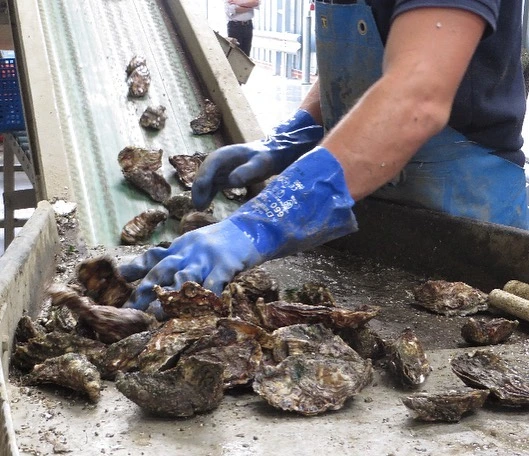
Chris Hadfield leads sales and production, and Waldek Babicz keeps daily operations running. The crew plans each day around the tide and tends the beds at low water. Back at the plant, staff wash, purify, hand-sort and pack the oysters. Maldon oysters appear on menus at restaurants, oyster bars and hotels in the UK and overseas.
Follow Them
Maldon Oysters explains its history, cultivation and storage advice on its official website. You can follow the company on Instagram. It also keeps a Facebook page for news from the farm. Trade buyers can reach the head office at Birchwood Farm, Cock Clarks, near Chelmsford.
Maldon Oysters Information

Pacific oyster
If you like Maldon Oysters, then check out these similar varieties!
Location
Maldon oysters grow in the Blackwater Estuary on the south-east coast of England. The company’s beds lie in Goldhanger Creek, on the estuary’s north shore below Maldon. Its head office sits inland at Birchwood Farm in Cock Clarks, marked on the map below.
The estuary covers about 13,700 acres between Maldon and West Mersea. It is a Site of Special Scientific Interest and a Special Area of Conservation. Much of it is also a Ramsar wetland and a Special Protection Area for birds. In 2013 it became part of the Blackwater, Crouch, Roach and Colne Marine Conservation Zone.
Environment Agency samples from 2008 to 2012 put mean salinity in the Blackwater zone at 32.1 ppt. Readings ranged from 22.2 to 36.3 ppt, with the lowest values in winter. Streams off Essex farmland carry silt into the estuary, and the tides wash it across the mudflats. The company credits these salty waters and shallow marshes for its oysters’ flavour.
The Blackwater also holds one of the few surviving native oyster populations in England. In the severe winter of 1962–63, the rivers of Essex froze and the native beds collapsed. A Blackwater study found that native oysters raised species richness by 87 percent. Maldon Oysters grows its rock oysters alongside a native fishery it is helping to reinstate.
Suggested Beverage Pairings
This dry, saline sherry from Sanlúcar de Barrameda matches the brackish nose of Maldon oysters. Its nutty edge sits well beside the subtle driftwood note. The light body keeps pace with the long metallic finish.
Stiegl’s low-alcohol radler brings sweet blood-orange acidity to a Maldon oyster. The fruit softens the brackish brine without hiding it. Its bubbles cut cleanly through the firm, chewy meat.
Pimm’s, soda water and citrus give this spritz a light, herbal sweetness. That sweetness echoes the gentle aftertaste the farm describes in Maldon oysters. The fizz resets the palate between each one.
This gin martini, with citrus and floral aromas, suits the clean, brackish start of Maldon oysters. Its spirit-forward body stands up to the strong metallic finish without masking it.
Château de Selle is a dry Côtes de Provence rosé with crisp acidity and delicate red fruit. Those flavours meet the sweet aftertaste of Maldon oysters. Its light body lets the slow metallic finish come through.
Where Can I Buy Maldon Oysters?
You can buy Maldon oysters from the following sources:
- Simply Oysters — Sells Maldon Pacific oysters in three sizes, packed live for next-day delivery in mainland UK.
- Classic Fine Foods UK — Supplies Maldon Rock oysters to businesses and individuals, with delivery options.
- Fine Food Specialist — Sells Maldon oysters in packs of 25, shipped from Essex with storage instructions.
- Maldon Oysters — Sells direct from Birchwood Farm in Cock Clarks and at Billingsgate Market in London.
Stay Connected with The Oyster Encyclopedia!
Follow us on social media to get the latest updates, oyster recipes, and behind-the-scenes glimpses into the world of oysters:
Stay tuned for exclusive content, oyster trivia, and more! Engage with our vibrant community of oyster enthusiasts by liking, commenting, and sharing our posts. Your support helps us continue providing valuable oyster knowledge to fellow seafood lovers worldwide.
References
- Maldon Oyster Company. “Our Oysters.” Maldon Oysters, 12 June 2024, maldonoyster.com. Accessed 4 April 2025.
- Simply Oysters. “Maldon Pacific Oysters (S-L).” Simply Oysters, simplyoysters.com/maldon-oysters. Accessed 4 April 2025.
- SeafoodSource Staff. “Oyster Guide Highlights London Offerings.” SeafoodSource, 4 July 2011, seafoodsource.com/news/supply-trade/oyster-guide-highlights-london-offerings. Accessed 4 April 2025.
- Maldon Oyster Company Ltd. “Cultivating an Essex Delicacy.” Maldon Oysters, maldonoyster.com/our-oysters/. Accessed 4 April 2025.
- Maldon Oyster Company Ltd. “Tradition Meets Innovation.” Maldon Oysters, maldonoyster.com/about-us/. Accessed 4 April 2025.
- Maldon Oyster Company Ltd. “Where to Buy.” Maldon Oysters, maldonoyster.com/where-to-buy/. Accessed 2 October 2026.
- Allison, Sarah, et al. “Strongholds of Ostrea edulis Populations in Estuaries in Essex, SE England and Their Association with Traditional Oyster Aquaculture: Evidence to Support a MPA Designation.” Journal of the Marine Biological Association of the United Kingdom, vol. 100, no. 1, 2020, pp. 27–36.
- Dykes, Jacob. “Restoring Oyster Reefs to Protect English Waters.” Geographical, 16 Aug. 2022, geographical.co.uk/wildlife/oyster-reef-restoration. Accessed 2 October 2026.
- “To Live, the Oyster Must Die.” Roads & Kingdoms, 2013, roadsandkingdoms.com/2013/to-live-the-oyster-must-die/. Accessed 2 October 2026.
- Find and Update Company Information Service (UK). “Maldon Oyster Company Ltd.” Companies House, find-and-update.company-information.service.gov.uk/company/04657058. Accessed 4 April 2025.
- Shellfish Association of Great Britain (SAGB). “Oyster Tasting Guide.” Shellfish Association of Great Britain, November 2023, shellfish.org.uk/wp-content/uploads/2023/11/6723SAGB20oyster20guide20final4.pdf. Accessed 4 April 2025.
Discover more from The Oyster Encyclopedia
Subscribe to get the latest posts sent to your email.