


Chef’s Notes
Mason Bostwick · Executive Chef
Eastern oyster
Narragansett Bay — Narragansett Bay — Strong minerality — clean and creamy. A solid wild eastern oyster.
Flavor chart
Chef palate read
Shuckability
Shell & line performance
When I buy it
Look for Narragansett Bay Oysters in peak season when conditions are optimal.
How I serve it
On the half shell with minimal garnish — let the oyster speak.
What to watch for
Mild salinity with creamy finish. Reject any with broken shells or milky liquor.
My read
Strong minerality — clean and creamy. A solid wild eastern oyster.
Narragansett Bay oysters are wild oysters harvested from the waters of Narragansett Bay,. a large estuary in Rhode Island and Massachusetts. The oysters have a long and rich history, dating back to the Native Americans. who used them as a food source and a currency. The colonists also prized Narragansett Bay oysters, which were exported to Europe and other parts of America.
Narragansett Bay oysters are known for their mild flavor and low salinity, which reflect the conditions of their habitat. Narragansett Bay is influenced by freshwater and saltwater sources, creating a brackish environment. that varies in temperature and salinity throughout the year. These oysters tend to be long and flat, with shallow cups,. due to the challenges of growing on the bottom of the bay.
Narragansett Bay oysters are available year-round but are especially abundant in the fall. and winter when the water is colder and cleaner. They harvested by local diggers and farmers, who use dredges or hand-picks to collect them from the bay. Narragansett Bay Lobsters, Inc. is one of the leading seafood providers in the area,. offering fresh lobster and shellfish, including our oysters, to restaurants. and markets that demand the highest quality and service.

Eastern oyster
If you like Narragansett Bay Oysters, then check out these similar varieties!
What Are Narragansett Bay Oysters?
Narragansett Bay oysters are wild and farmed Eastern oysters from Narragansett Bay. The stock is Crassostrea virginica, the classic Atlantic species. The bay is a large estuary shared by Rhode Island and Massachusetts shores. Native Americans harvested them for food and trade long before colonists arrived.
These oysters are known for mild flavor and salinity tied to their habitat. Freshwater and saltwater sources mix across the bay through the seasons. Shells tend to be long and flat with shallow cups from bottom culture. The info card notes light brown or gray shells with green or purple hues.
Tags list year-round availability with peak quality in fall and winter. Local diggers and farmers harvest with dredges or hand picks on Rhode Island leases. On the half shell the line reads strong brine with creamy umami finish. Salinity typically runs 32 to 35 ppt on distributor tags and menus.
How Did Narragansett Bay Oysters Get Their Name?
Narragansett Bay Oysters take their trade name from Narragansett Bay itself. The bay honors the Narragansett people who long harvested shellfish here. Distributors and raw bars use the bay name on tags across the Northeast. Chefs list the label when they feature Rhode Island eastern oysters.
European colonists adopted the bay name when exporting local oysters abroad. Historic accounts tie the label to one of New England’s best-known estuaries. The geographic name marks regional stock rather than a single farm brand. Buyers still see Narragansett Bay on cooperative tags from Rhode Island growers.
These oysters can be wild and farmed across Narragansett Bay trade. Search reports note both harvest paths appear in Rhode Island shellfish listings. Wild beds face tight limits while farm leases expand across the estuary. The sections below outline how each path shapes supply today.
About Narragansett Bay Oysters
These oysters can be wild and farmed across the bay trade. Here is what the search results say about the topic. Rhode Island sources describe both harvest paths on menus and tags.
- Wild Oysters: Rhode Island Monthly reported that Narragansett Bay considers wild oysters to be endangered.However, the report notes that wild oysters could thrive again as water quality improves. Another source states that wild oysters no longer exist in Narragansett Bay.
- Farmed Oysters: Oyster farming is a growing industry in Narragansett Bay. Some oyster farms are located in upper Narragansett Bay, while others are in different areas. Oyster farming helps to rebuild oyster populations and improve water quality.
Wild Harvest and Oyster Farming
Rhode Island Monthly reported that Narragansett Bay considers wild oysters endangered. The report notes wild oysters could thrive again as water quality improves. Another source states that wild oysters no longer exist in Narragansett Bay. Commercial wild harvesting was once permitted but is now off limits.
Oyster farming is a growing industry across Narragansett Bay and nearby waterways. Some farms work upper Narragansett Bay while others lease ponds and passages. Growers use mostly suspended bags or cages with some combined methods. Farmed production helps rebuild oyster populations and improve water quality.
Narragansett Bay Oysters Information
Oyster: Narragansett Bay
Species: Crassotrea Virginica
Cultivation Method:
Farmed: mostly suspended bags or cages, but some farm use other methods or a combination.
Wild: Commercial harvesting of them was once permitted, but due to their endangered status, all harvesting is now off limits.
Seasonality: Year Round
Size: 2.5 – 3″
Culture Method: Bottom Culture
Salinity: 32-35 ppt
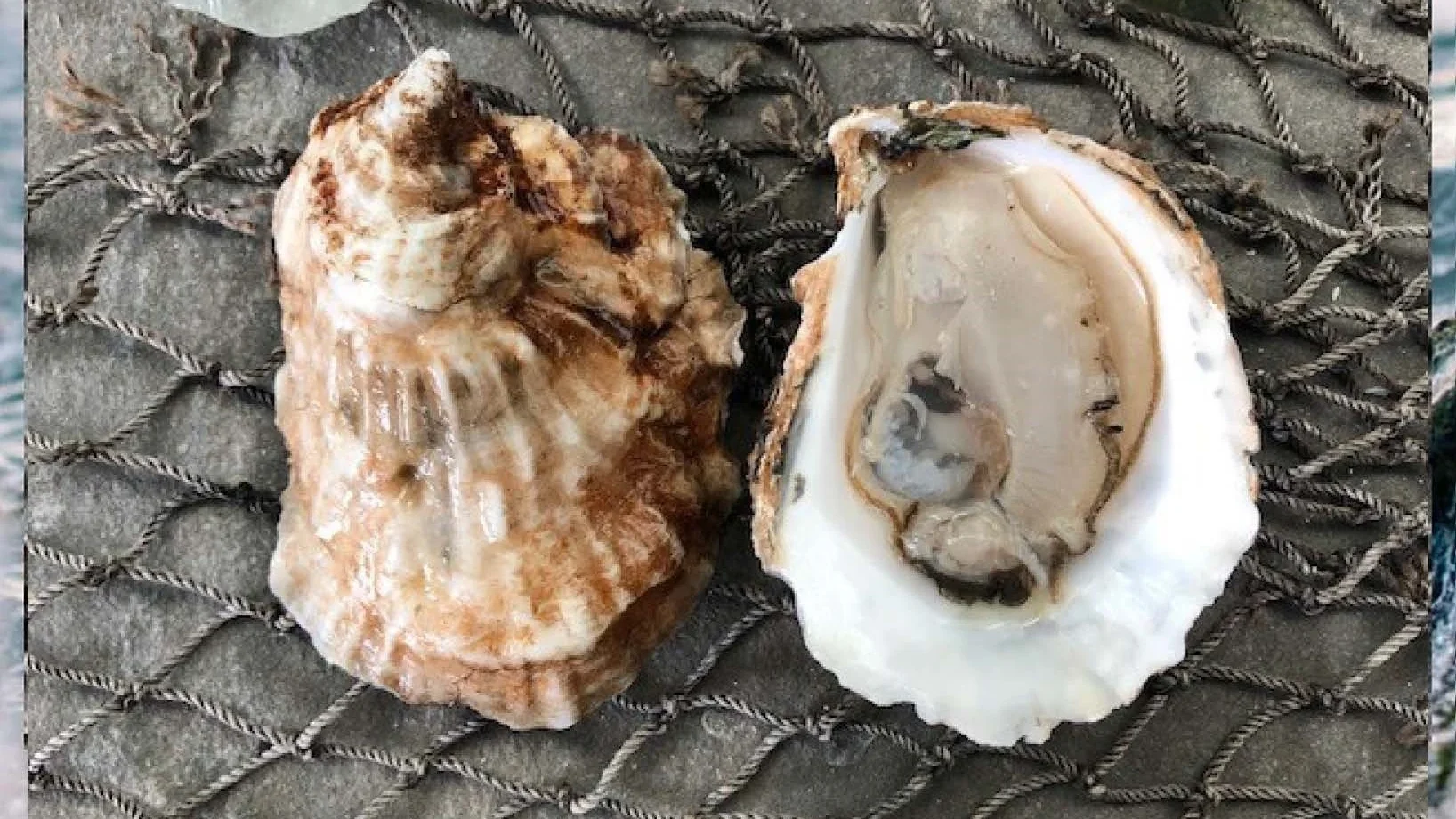
Appearance: long and flat shells with shallow cups due to the challenges of growing on the bottom of the bay. They are light brown or gray, with some green or purple hues.
Flavor Profile: Strong brine with a creamy Umami finish. Tender meat; clean, sweet, and light in flavor
Location
Narragansett Bay oysters grow across Rhode Island’s primary estuary and linked waterways. The bay stretches between Rhode Island and Massachusetts with varying salinity. River inputs create brackish zones that shift through the seasons. Salinity on tags typically runs 32 to 35 ppt across the region.
Several farms grow these oysters across Narragansett Bay and nearby passages. Ocean State Shellfish Cooperative unites thirteen farms in four Rhode Island waterways. Saltwater Farms works in Narragansett Bay and Rhode Island Sound. Bluff Hill Cove Oyster Company farms Point Judith Pond tidal waters near Narragansett.
- Ocean State Shellfish Cooperative – This cooperative consists of thirteen oyster farms based in four distinct waterways in Rhode Island, including Narragansett Bay.
- Saltwater Farms – This farm operates in Narragansett Bay and Rhode Island Sound.
- Bluff Hill Cove Oyster Company – This family-run boutique oyster farm is located in the pristine tidal waters of Point Judith Pond in Narragansett, Rhode Island.
The Jetpack map below marks West Passage Oyster Company in North Kingstown. Salt Pond Oysters and Rocky Rhode Oyster Company hold nearby leases on the chart. Bluff Cove Oyster Company appears on East Shore Road in Narragansett. Chefs source these lots from Boston to New York raw-bar programs.
It’s worth noting that many other farms work beyond these examples. The map below lists additional lease holders across the bay and connected ponds. Rhode Island co-ops ship oysters year-round to restaurants and seafood markets. Regional diggers and farmers keep Narragansett Bay stock on Northeast menus.
Suggested Beverage Pairings
Veuve Clicquot Brut Yellow Label is a classic pairing for Narragansett Bay oysters. Crisp bright flavor complements briny Rhode Island cup taste on half shells.
Domaine de la Pépière Muscadet offers high acidity and minerality beside Narragansett Bay salinity. Loire white suits Atlantic half shells from Rhode Island waters.
Guinness Draught brings roasted malt beside Narragansett Bay briny cups. Dark stout complements Rhode Island oyster flavor at stout-and-oyster festivals.
Classic Margarita brings lime and tequila tang beside Narragansett Bay oysters. Citrus tequila pairing complements briny Rhode Island half-shell service.
Ostreida Oyster Vodka is infused with oysters and complements Narragansett Bay cups directly. Briny spirit echoes Rhode Island half-shell character in one glass.
Where Can I Buy Narragansett Bay Oysters?
- Narragansett Bay Lobsters, Inc.: They have a year-round supply of shellfish and procure directly from local diggers. You can find their products on their website.
- Farm-2-Market: They offer Oysters from East Passage, Narragansett Bay, Rhode Island, in different quantities. You can purchase these oysters from their website.
- American Mussel Harvesters: They offer Oysters, which are delicious Ocean State brine oysters that support a great cause. You can purchase these oysters from their website.
- Matunuck Oyster Bar: They offer West Passage Oysters, farm-raised in West Passage, Narragansett Bay, RI. These oysters have a full oceanic mineral saltiness with a thick umami finish. You can purchase these oysters from their website.
- Ocean State Shellfish Cooperative: They provide the freshest, highest quality Northeast oysters all year round. You can order their oysters on their website, but please note that prices are for pickup only, and delivery orders will include shipping and handling.
References
- Narragansett Bay. Vendor listing referenced in Where Can I Buy section. Accessed 30 May 2026.
Discover more from The Oyster Encyclopedia
Subscribe to get the latest posts sent to your email.