


Chef’s Notes
Mason Bostwick · Executive Chef
Pacific oyster
Fat Bastard — Fat Bastard — Notable sweetness — clean and crisp. A solid tumbled pacific oyster.
Flavor chart
Chef palate read
Shuckability
Shell & line performance
When I buy it
Look for Fat Bastard Oysters in peak season when conditions are optimal.
How I serve it
Raw on the half shell or briefly grilled with compound butter.
What to watch for
Mild salinity with clean finish. Reject any with broken shells or milky liquor.
My read
Notable sweetness — clean and crisp. A solid tumbled pacific oyster.
Fat Bastard Oysters, renowned for their impressive size and distinctive flavor, are a sought-after variety of Pacific oysters. These oysters are grown in spacious mesh bags suspended 3 feet above the tidal floor. They boast a robust brininess, a delightfully sweet finish, and a firm, plump texture. The oysters are meticulously cultivated to ensure their shells are smooth and deep. Fat Bastard Oysters are a premium oyster experience that captivates seafood enthusiasts and culinary connoisseurs alike. They are ideal for enjoying raw on the half-shell or grilled to perfection.
What truly distinguishes Fat Bastard Oysters is their cultivation method in Willapa Bay, Washington, by Taylor Shellfish Farms. Fat Bastard Oysters are tumbled Shigokus allowed to reach sizes of 2.5 to 3.25 inches. This is nearly double the volume of a standard Shigoku oyster. Whether incorporated into gourmet dishes or savored alone, Fat Bastard oysters embody excellence. With incredible size and flavor, they are a prized addition to any seafood lover’s palate.
What Are Fat Bastard Oysters?
Fat Bastard Oysters are premium farmed Pacific oysters from Taylor Shellfish Farms in Willapa Bay, Washington. They belong to the Pacific oyster species Magallana gigas. The line is cultivated for roughly three years before reaching market size. Chefs and distributors recognize them as an oversized cousin to Taylor’s popular Shigoku program.
On the half shell, Fat Bastard oysters deliver a clean, crisp read with salinity near 30–35 ppt. Bold brininess hits first from Willapa Bay’s tide-tumbled floating culture. Sweetness builds mid-palate without muddy notes. Plump, liquor-rich meats offer a satisfying chew typical of the farm’s largest tumbled stock.
Deep cups and smooth, polished shells mirror their smaller Shigoku counterparts—just scaled up noticeably. Shells carry the same stylish, tumbling-hardened finish with heavier weight in the hand. Meats sit generous in the cup with clean liquor when shucked. Typical sizes run 2.75 to 3.75 inches, nearly double the volume of a standard Shigoku.
How Did Fat Bastard Oysters Get Their Name?
Fat Bastard Oysters take their blunt trade name from their oversized profile on the shellfish line. Taylor Shellfish Farms markets them as tumbled Shigokus grown to exceptional size in Willapa Bay. The branding plays on their plump meats and deep cups rather than a geographic label alone. Buyers see the Fat Bastard name on tags, distributor manifests, and Taylor’s retail site.
The name distinguishes this specialty line from Taylor’s standard Shigoku oysters, which share the same floating-bag cultivation method. Where Shigoku stops at a moderate market size, Fat Bastard oysters are held longer to reach 2.5 to 3.25 inches or more. That extra grow-out nearly doubles the cup volume diners notice on the raw bar. The playful moniker has become shorthand among chefs for Taylor’s largest tumbled Pacific stock.
About Taylor Shellfish Farms
Taylor Shellfish Farms has a rich history that dates back to 1890 when the Taylor family began farming shellfish in the waters of the Puget Sound. The family’s legacy started with the tiny Olympia Oyster in Totten Inlet, and every generation since has grown up with a passion for shellfish. That multi-generational commitment shaped one of the most recognized shellfish brands on the U.S. West Coast. Today the farm produces Fat Bastard and other half-shell oysters from tidelands in Washington and British Columbia.
The company, in its current form, was started in 1969 as Taylor United by brothers Edwin and Justin Taylor, grandsons of James Y. Waldrip, an early Washingtonian who came to Seattle to work rebuilding after the Great Seattle Fire of 1889. Justin Taylor, in particular, saw the potential of Puget Sound for a thriving shellfish farming community and was a strong advocate for water quality and an innovator of farming techniques.
Over the last thirty years, the company has expanded its product line to include geoduck, mussels, and a variety of half-shell oysters. Bill and Paul Taylor and their brother-in-law, Jeff Pearson, lead the company with a family-oriented approach. They have built a team of over 500 committed employees, including their children. Taylor Shellfish Farms is now the largest producer of farmed shellfish in the U.S., with over 11,000 acres of tidelands along the Washington and B.C. coasts.
The company protects the waters where its shellfish thrive and supports local farming communities. Fat Bastard oysters are one of several half-shell brands grown under this family operation in Willapa Bay and beyond. You can reach Taylor Shellfish Farms on their company website. You can also contact them on social media: Facebook, X , Instagram, or Pinterest!
Fat Bastard Oysters Information

Pacific oyster
If you like Fat Bastard Oysters, then check out these similar varieties!
Oyster: Fat Bastard
Species: Crassostrea Gigas
Cultivation Method: Farmed for 3 years.
Seasonality: Year-round
Size: 2.75 – 3.75″
Culture Method: They are grown in spacious mesh bags suspended 3 feet above the tidal floor. Each bag attaches to a float. The float then rolls the oysters with the natural ebb and flow of the tide. This causes the bags to flip twice daily.
Salinity:30-35 ppt
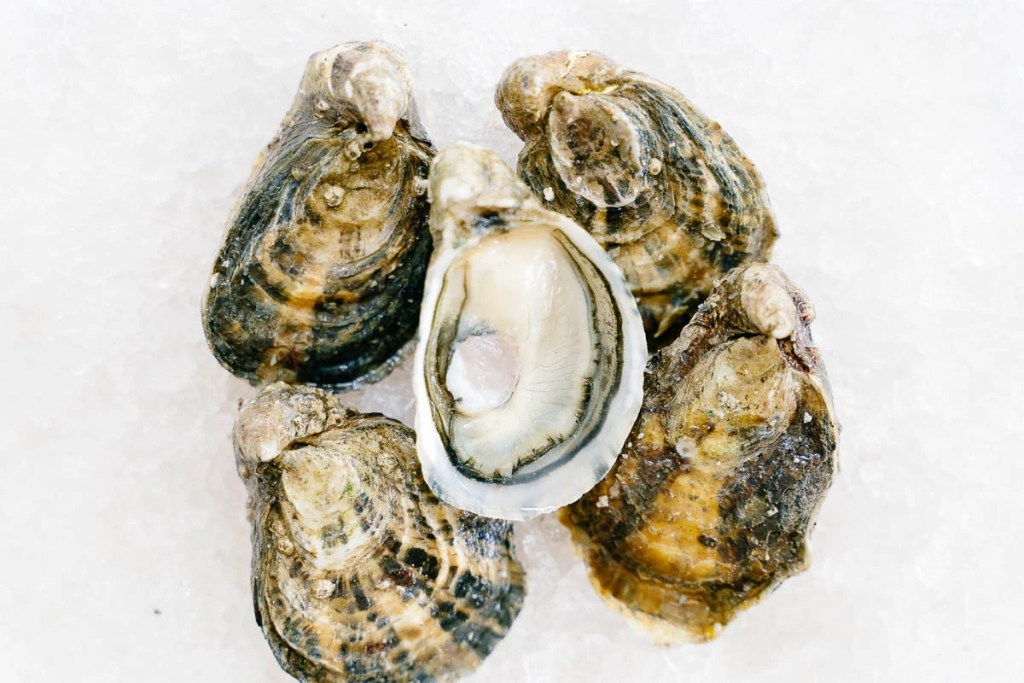
Appearance: Deep cups and smooth shells similar to their smaller counterparts, the Shigoku Oysters. The shells are equally as stylish and smooth, just much larger.
Flavor Profile: A strong brininess, complemented by a sweet finish with an overall clean and crisp nuance. The meat fills the shell and has a plump texture.
Location
Fat Bastard oysters are grown and harvested in Willapa Bay on Washington’s Pacific coast. Taylor Shellfish Farms operates Fat Bastard grow-out from facilities near Ocean Park in Pacific County. The bay’s broad tidal flats and cool, nutrient-rich water suit Pacific oyster cultivation year-round. Shellfish from this estuary reach distributors across the western United States.
Grow-out uses spacious mesh bags suspended about three feet above the tidal floor. Each bag attaches to a float that rolls oysters with the natural ebb and flow of the tide. The float causes bags to flip twice daily, hardening shells and deepening cups. This tumbling method is the same foundation Taylor applies to its Shigoku line—held longer for Fat Bastard sizing.
Willapa Bay is one of the largest estuaries on the U.S. West Coast. Its mix of freshwater inflow and ocean exchange produces the 30–35 ppt salinity reflected in the oyster flavor profile. Taylor Shellfish maintains tideland leases across Washington and British Columbia, with Willapa Bay central to several half-shell brands. The map below marks Taylor’s Fat Bastard location at 3511 273rd Street in Ocean Park.
Suggested Beverage Pairings
This dry sparkling wine offers a delightful contrast to the briny notes of the oysters, enhancing their flavors.
The sweet and fruity notes of this rosé wine complement the oysters, creating a harmonious pairing.
Its balanced flavors enhance the seafood notes of the oysters, providing a refreshing combination.
This red wine can complement the richness of oysters, offering a unique tasting experience.
The crisp and light characteristics of this Chenin Blanc make it an excellent choice to accompany the oysters, enhancing their natural flavors.
Where Can I Buy Fat Bastard Oysters?
- Supreme Lobster: Offers premium oysters delivered straight to your door. You can choose your own pack size to fit any occasion!
- Cali Crab Feeds Inc.: Sells Fat Bastard Oysters at $26.00, providing an opportunity to enjoy these flavorful oysters.
- Pacific Wild Pick: Provides live Fat Bastard Oysters, ideal for grilling, steaming, or enjoying fresh.
- Taylor Shellfish Farms: Offers Fat Bastard Oysters in a pack of 30 pieces.
References
- Cali Crab Feeds Inc. Web. Accessed 30 May 2026. https://calicrabfeedsinc.com/product/fat-bastard-oysters/
- Pacific Wild Pick. Web. Accessed 30 May 2026. https://pacificwildpick.com/products/fat-bastard-oysters
- Taylor Shellfish Farms. Web. Accessed 30 May 2026. https://buy.taylorshellfishfarms.com/oysters/fat-bastard-oysters
Discover more from The Oyster Encyclopedia
Subscribe to get the latest posts sent to your email.