


Chef’s Notes
Mason Bostwick · Executive Chef
Pacific oyster
Wakayama Kaki — Wakayama Kaki — Wakayama kaki oysters give chefs a premium Kinki / Kansai-facing brand story. Diners already associate it with seafood-forward tourism corridors feeding Osaka–Kyoto gastronomy rails. The name lands on menus without translation friction because… “kaki” is the everyday Japanese word for oyster. Wakayama carries pilgrimage-and-coast prestige inland UNESCO trails reinforce. You get Pacific oyster familiarity. Magallana gigas…
Flavor chart
Chef palate read
Shuckability
Shell & line performance
When I buy it
Retail buyers should prefer cold-chain labels distributors publish. These labels align with Japanese raw-oyster sanitary ordinances each prefecture adjusts seasonally. Cups clamp tight and feel heavy for their length.…
How I serve it
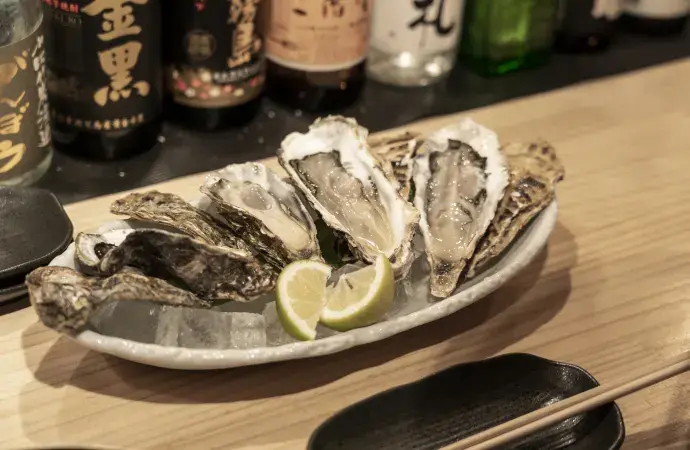
Lay deep cups atop crushed ice. Let guests taste virgin liquor before you add minimal mignonette. Wakayama kaki rewards restraint. A light citrus pinch or ponzu dot preserves the bright brine entry distributors describe…
What to watch for
Monitor milky reproductive liquor during late-summer spawning windows. Distributors flag these region-wide for Pacific stocks. Discard cups with sulfurous or stagnant mud odors after storms stir nearshore silt along the…
My read
Wakayama kaki oysters give chefs a premium Kinki / Kansai-facing brand story. Diners already associate it with seafood-forward tourism corridors feeding Osaka–Kyoto gastronomy rails. The name lands on menus without…
What Are Wakayama Kaki Oysters?
Wakayama kaki oysters name premium Pacific oyster trade from Wakayama Prefecture along Japan’s southern Kī Peninsula maritime economy. They occupy premium half-shell inventories distributors route toward urban Kansai raw programs. Buyers search for brandable Japanese provenance south of Tōkai marketing clusters. On the plate they read as bright brine entry with a subdued sweet mid palate.
Restrained minerality tails often carry a vegetal seaweed echo when winter plankton runs strong. The trade name functions as an umbrella for *Magallana gigas* grown across Pacific-facing embayments and sheltered coves. Chefs encounter them beside other regional kaki in Osaka, Kyoto, and Kobe receivers. Kī Peninsula origin tags separate this coast from inland-sea styles.
Suspended rope or rack mantle culture is the predominant engineering model nationwide. Wakayama farms adapt depth ladders and grid layouts to local bay energy. Visitors encounter oysters inside wet markets, resort towns, and festival rows along the Pacific peninsula. Wakayama kaki ties seafood-forward tourism to Kansai raw bars.
How Did Wakayama Kaki Oysters Get Their Name?
“Kaki” transliterates the Japanese カキ, the everyday word for oyster on domestic menus. Exporters flip between romanizations such as kaki or Japanese oyster depending on the label. English-facing cards often leave kaki untranslated and lean on prefecture geography instead. That linguistic split explains why encyclopedia entries keep kaki in the title.
“Wakayama” locks administrative geography honoring historic Kishū domain littoral naming. The prefecture name tells buyers exactly which Pacific-facing coast produced the oyster. Tourism boards pair Wakayama with kaki to link coastal seafood to inland pilgrimage routes. The combined name is culinary shorthand and regional brand architecture rather than a proprietary farm trademark.
About Wakayama Prefecture Oyster Aquaculture
Prefecture fisheries teams publish aquaculture modernization narratives marrying young fishers onboarding with equipment subsidies. Investment frames oysters as premium export-adjacent SKUs supporting cluster port economies. Technical offices coordinate monitoring programs distributors mirror when prepping raw oyster retail licensing bundles. Hatch collaborators supply Pacific spat collectors tethered during midsummer adhesion windows.
Regional offices monitor harmful algae programs tethered to chlorophyll anomaly triggers. Distributors trust these before suspending harvest windows. VISIT WAKAYAMA and fisheries promotion channels push marine tourism itineraries showcasing fresh landings. Wakayama-origin tags imply participation in a monitored, modernization-oriented supply chain.
Follow Them
The Cultivation Process
Hatch collaborators supply Pacific spat collectors tethered during laminar midsummer tides. Once spat set, juveniles graduate toward suspended ropes, lantern nets, or bottom racks. Single-seed tending deepens cups and improves hinge consistency compared with clustered legacy shells. Farmers adjust depth ladders so oysters pass through ebb-flood stressing.
Harvest teams purge in filtered seawater, chill rapidly, then move product on cold-chain truck routes toward Osaka, Kyoto, and Kobe. Triploid lines and wet-holding protocols extend market windows beyond the cold-month glycogen peak. Prefecture sanitary ordinances for raw oyster retail adjust seasonally with harvest pauses following algae advisories. Oysters should show ivory fluted valves and bright brine profile at Kansai counters.
Wakayama Kaki Oysters Information

Pacific oyster
If you like Wakayama Kaki Oysters, then check out these similar varieties!
Location
Embayments fringe Pacific-side Kī Peninsula coastline where Kuroshio-influenced water exchanges freshen offshore leases. Tanabe–Shirahama watersheds drain steep valleys into sheltered coves. Salinity oscillates between oceanic highs during swell months and brackish plateaus after typhoon runoff. High-energy channels expose rope grids to stronger current and firmer snap texture.
Inner cove ropes sit in comparatively sheltered water that skews creamier on the plate. Tourism corridors along the Pacific coast sit close enough to landing sites that fresh landing optics stay central to prefecture marine itineraries. For Kansai receivers, Wakayama kaki arrive as a Kinki-sourced Pacific oyster distinct from inland-sea Hiroshima lines. That geography explains the mineral tail and seaweed echo buyers expect.
Steep sandstone geology riddles valleys along the Pacific-facing peninsula and limits persistent mega-river plumes. Localized freshets after typhoons can flatten salinity and stir nearshore silt. The same topography concentrates oysters in sheltered embayments rather than vast open-coast racks. Baseline salinity stays moderately seawater for much of the year.
Humid subtropical summers can soften meats while mild winters deepen sweetness and pull tourists toward hot kaki stalls. Cold-month glycogen peaks align with domestic kiosk calendars prefecture promoters feature on winter festival routes. Summer heat and typhoon runoff demand tighter sanitary vigilance and transparent harvest advisories. Winter showcases sweetness and tourism energy on raw and grilled programs.
Environmental Factors
- Regional offices monitor harmful algae programs tethered to chlorophyll anomaly triggers. Distributors trust these before suspending harvest windows when thresholds trip.
- Storm-driven freshets from Tanabe–Shirahama watersheds can stir nearshore silt and depress salinity even when algae counts remain acceptable.
- Ocean acidification risk intersects warming Kuroshio eddies in long-horizon prefecture dashboards linking oyster aquaculture to climate-facing fisheries planning.
- *Magallana gigas* remains the dominant cultivated stock nationwide with hatch-supplied spat and careful grow-out timing.
Suggested Beverage Pairings
Silky rice polishing and clean daiginjo aromatics counter the sweet brine midpoint. They do not mask the vegetal seaweed echo winter oysters often show. Pour lightly chilled alongside virgin liquor sips before any mignonette.
Chalky minerality mirrors Pacific shell tannins and restrained minerality tails from Kī Peninsula landings. Fine mousse cleanses bright brine entry between bites without flattening cup depth. Works especially well on raw programs that highlight single-seed deep cups.
Farmhouse phenolics flirt with the vegetal seaweed echo finish without overpowering delicate liquor. Saison carbonation scrubs salinity gently after firm snap bites from high-energy channel lots. Serve in small pours so fermentation character stays secondary to the oyster.
Brambly spice offsets chill sweet liquor diners sip first on cold-month platters. The wine’s fruit weight meets glycogen peak sweetness while acid keeps brine entry from reading cloying. Better for seated pairings than high-volume raw-bar pours.
Bitter tonic architecture trims residual glycogen when guests want a long drink between oysters. Grapefruit peel lifts bright brine similarly to a minimal citrus garnish chefs already favor. Low-alcohol format suits festival-style grilled kaki courses as well as raw service.
Where Can I Buy Wakayama Kaki Oysters?
Wakayama kaki oysters reach buyers through prefecture fisheries desks, tourism gateways, Kansai wholesale hubs, and specialty importers abroad. Domestic cold-chain routes remain the most reliable path for raw-service quality. Export availability stays seasonal and channel-specific compared with Osaka or Kyoto wholesale buying.
- Prefecture Fisheries Promotion Division – Trade desks steer buyers toward distributors and cooperatives tagging Wakayama-origin oysters with monitoring advisories and landing-calendar context.
- VISIT WAKAYAMA – Resort seafood counters, wet markets, and coastal festival stalls sell oysters when licensing allows, especially during winter tourism peaks.
- Osaka, Kyoto, and Kobe wholesale hubs – Central receivers rotate Kinki-sourced oysters flagged with Wakayama or Kī Peninsula origin through ferry-linked cold chain.
- North America and Europe specialty importers – Japanese oyster importers carry seasonal lines from Kansai logistics chains when export supply opens with matching health paperwork.
References
- Wakayama Prefecture Agriculture, Forestry and Fisheries Department. Fisheries Promotion Division. Official prefecture fisheries portal landing (Japanese). Accessed 20 May 2026. http://www.pref.wakayama.lg.jp/prefg/071000/index.html
- Wikipedia contributors. “Kī Peninsula.” *Wikipedia*. Accessed 20 May 2026. https://en.wikipedia.org/wiki/Kii_Peninsula
- FAO Fisheries and Aquaculture Department. Cultured Aquatic Species Information Programme — *Magallana gigas*. Accessed 20 May 2026. https://www.fao.org/fishery/en/caaspecies/1497/en
Discover more from The Oyster Encyclopedia
Subscribe to get the latest posts sent to your email.