

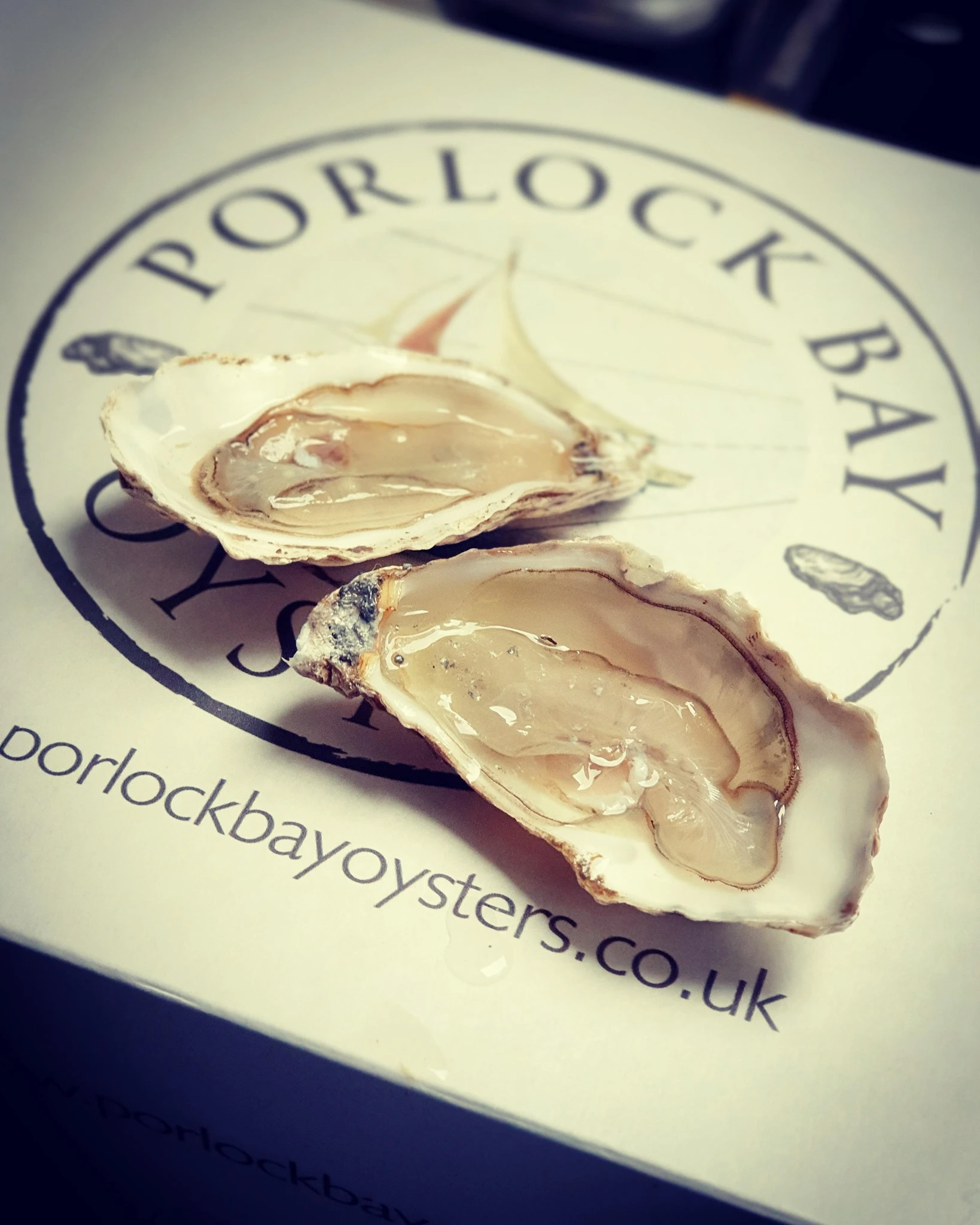
Quick Facts
- Location: Porlock Bay Oysters are cultivated in the pristine waters of Porlock Bay, Somerset, England, within the Exmoor National Park.
- Classification: They hold the top Category A classification from the Food Standards Agency, being the only site in England and Wales with this distinction for Pacific oysters.
- Flavor Profile: Porlock Bay Oysters are known for their clean, fresh taste with balanced brine, notes of honeydew melon, and a silky finish.
- Availability: These oysters are available year-round, even during months with an ‘R’, thanks to the use of Pacific triploid oysters that rarely spawn.
- Sustainability: Porlock Bay Oysters are farmed responsibly, feeding on natural filtered products from the sea and helping to purify the water they grow in.
What Are Portlock Bay Oysters?
Porlock Bay Oysters stand out as a unique culinary gem, reviving a centuries-old tradition of oyster farming in the historic harbor of Porlock Weir. These Pacific oysters thrive in the pristine waters of Porlock Bay, which boasts the coveted Category A classification from the Food Standards Agency – a distinction held by only a handful of sites in the UK 12.
The oysters’ exceptional quality stems from their cultivation in semi-oceanic conditions, where they filter-feed on fresh Atlantic plankton carried by the tides. This natural process imparts a clean, fresh flavor that has garnered appreciation from top chefs across the country 7. The strong currents and daily tidal surges in Porlock Bay contribute to the oysters’ distinctive characteristics, creating a deep cup and dense shell 6.

What sets Porlock Bay Oysters apart is their year-round availability, even during months with an ‘R’ 4. This is made possible by using Pacific triploid oysters, which rarely spawn, ensuring consistent quality throughout the year 2. The oysters’ unique flavor profile includes a balanced brine, exceptional clarity, and subtle notes of honeydew melon, culminating in a silky finish that truly captures the essence of Porlock Bay 7.
How did Porlock Bay Oysters Get Thier Name?
Porlock Bay Oysters derived their name from their cultivation location, Porlock Bay, situated in Somerset, England 12. The bay’s oyster farming history dates back to the 1830s when oysters were first discovered there 3.
The name “Porlock” itself has historical significance, as it refers to the nearby village and the bay where the oysters are grown. The addition of “Bay” in the company name emphasizes the unique geographical feature that contributes to the oysters’ distinctive characteristics
About Porlock Bay Oysters
Porlock Bay Oysters has a rich history dating back to the 1830s when oysters were first discovered in the bay. The industry flourished for several decades. The company gained a nationwide reputation for quality in the process7. In 1874, the opening of the railway in Minehead provided fast access to London. This would allow oysters caught in the morning to be served in top London restaurants the same evening 7.
However, the thriving oyster industry faced a sudden demise in the 1890s. Fleets from Colchester and Whitstable, facing failing oyster beds, stripped the Bristol Channel clean7. This abrupt end to oyster fishing at Porlock Weir lasted for over a century.
In 2013, the Porlock Futures group, initiated by Porlock Parish Council, revived oyster farming in the area 7. Their initial trials with Pacific oysters were highly successful. Achieving an A Classification from the Food Standards Agency – the first site in England and Wales to attain this for Pacific oysters 7.
The project transitioned into a commercial venture. As a result, gaining national and international recognition for the high quality and unique flavor of their oysters. In 2019, local businessman Mark Pendarves acquired the business to ensure its financial stability and continued benefits to the local community 7.
Today, Porlock Bay Oysters operates as an independent oyster farm, cultivating Pacific oysters in the pristine waters of Porlock Bay. The company uses innovative farming methods. Techniques including: trestles with open mesh plastic sacks, and hand-picks oysters at low tide 8. Their commitment to sustainability and community involvement has garnered attention from several organizations. The Shellfish Association of Great Britain, positioning Porlock Bay Oysters as a pioneering example of small-scale, artisanal fishery revival 8.

Follow Them
Discover the exquisite taste of Porlock Bay Oysters for yourself! Visit their official website at porlockbayoysters.co.uk to learn more about their award-winning oysters, sustainable farming practices, and the newly opened Kitchen restaurant.
Porlock Bay Oysters Information
Oyster: Porlock Bay Oysters
Species: Pacific oysters (Crassostrea gigas)13
Cultivation Method: Farmed for 3 years.
Size: Medium (80-110g approx)
Seasonality: Available year-round
Culture Method: Farmed in semi-oceanic conditions, filter-feeding on Atlantic plankton
Salinity: 27-30 ppt

Appearance: Elongated, fluted shell with a deep cup, reflecting their growth in strong tidal currents. Their dense shells exhibit a beautiful, off-white color with occasional green or brown hues. The oysters’ meats are plump and creamy-white, filling their deep cups generously.
Flavor Profile: a clean, fresh sea taste with a balanced brine and exceptional clarity. Their flavor profile includes subtle notes of cucumber and honeydew melon. The oysters have a silky texture and deliver a succession of flavors, starting with a fresh ocean essence and culminating in a smooth, lingering finish
If you like Porlock Bay Oysters, then check out these similar varieties!
- California Kumamoto Oysters
- Jersey Oysters
- Kiku Kumamoto Oysters
- Cumbrae Rock Oysters
- Isle Of Mull Oysters
Location
Porlock Bay’s unique environmental factors create an ideal habitat for oyster cultivation:
The bay experiences a significant tidal range of 12-14 meters, the second-highest in the world3. This extensive tidal movement ensures a constant supply of fresh Atlantic plankton, which the oysters filter-feed on, contributing to their clean, fresh flavor 3.
Strong tidal currents, with peak speeds reaching 2.6 m/s in the outer central part of the bay 2, promote the development of deep cups and dense shells in the oysters 3. These currents also facilitate excellent water exchange and dilution within the bay 1.

The bay maintains full oceanic salinity levels between 27-30 ppt 35, creating optimal conditions for oyster growth and flavor development. This high salinity is consistent, with measurements at Porlock Weir bathing water averaging 31.8 ppt and rarely dropping below 30 ppt 2.
Porlock Bay boasts Category A waters, the highest classification from the Food Standards Agency 13. This pristine water quality is crucial for oyster development and ensures the oysters’ safety for consumption.
The bay’s location within Exmoor National Park 5 contributes to the minimal urban development in the catchment area, with less than 5% being urbanized 2. This low level of urbanization helps maintain the bay’s water quality and reduces potential pollution sources.
Suggested Beverage Pairings
- Domaine de la Pepiere La Pepie Muscadet de Sevre et Maine Sur Lie 2022: This crisp white wine’s refreshing acidity and subtle mineral notes complement the oysters’ clean, briny flavors. Its citrusy undertones of lemon and green apple add a zesty contrast that enhances the oysters’ natural taste.
- Legras & Haas Grand Cru Champagne Blanc de Blancs Brut: The effervescence of this Champagne creates a sensational textural contrast with the oysters. Its bright acidity, coupled with subtle notes of apple, pear, and toast, beautifully complements the oysters’ intricate flavors.
- Pilsner Urquell: This crisp, light lager pairs well with oysters due to its clean flavor profile and bright carbonation. The beer’s subtle hop bitterness and malty sweetness balance the oysters’ brininess without overpowering their delicate flavors.
- Oystertini (made with Hendrick’s Gin): This creative twist on a martini incorporates the oyster itself into the drink. The gin’s botanical notes, particularly the subtle cucumber flavor of Hendrick’s, complement the oysters’ briny character while the cocktail’s chill refreshes the palate.
- Brocard Chablis Sainte Claire Vieilles Vignes: This Chablis’ remarkable minerality and flinty character, derived from Kimmeridgian soil containing fossilized seashells, create a captivating match with the oceanic essence of oysters. Its steely acidity and notes of green apple and white peach provide an elegant accompaniment to the briny oyster flavors.
Where Can I Buy Porlock Bay Oysters?
- Online: Visit www.porlockbayoysters.co.uk to order oysters for delivery via overnight courier service5.
- Click & Collect: Order online and pick up your oysters at the fishery in Porlock Weir5.
- The Kitchen @ Porlock Bay Oysters: This restaurant, opened in Autumn 2023, serves Porlock Bay Oysters and other locally sourced seafood. It’s open Wednesday to Sunday from 12pm to 4pm, with additional evening hours on Friday and Saturday4.
- Takeaway: Visit their location at Ship Stables, Porlock Weir, TA24 8PB. Takeaway oysters are available Monday to Friday from 10am to 2pm, and Saturday to Sunday from 12pm to 3pm (by appointment)4.
- Local Restaurants: Porlock Bay Oysters are served in fine restaurants across the country, particularly in the village of Porlock and the town of Taunton, Somerset.
Stay Connected with The Oyster Encyclopedia!
Follow us on social media to get the latest updates, oyster recipes, and behind-the-scenes glimpses into the world of oysters:
Stay tuned for exclusive content, oyster trivia, and more! Engage with our vibrant community of oyster enthusiasts by liking, commenting, and sharing our posts. Your support helps us continue providing valuable oyster knowledge to fellow seafood lovers worldwide.
References
- “About Us.” Porlock Bay Oysters, http://www.porlockbayoysters.co.uk/about-us. Accessed 6 Mar. 2025.
- “Our Oysters.” Porlock Bay Oysters, http://www.porlockbayoysters.co.uk/our-oysters. Accessed 6 Mar. 2025.
- “The Kitchen @ Porlock Bay Oysters.” Porlock Bay Oysters, http://www.porlockbayoysters.co.uk/the-kitchen. Accessed 6 Mar. 2025.
- Uncles, R. J., and J. A. Stephens. “The Structure of Vertical Current Profiles in a Macrotidal, Partially-Mixed Estuary.” Estuaries, vol. 13, no. 4, 1990, pp. 349-361.
- “Bathing Water Profile for Porlock Weir.” Environment Agency, environment.data.gov.uk/bwq/profiles/profile.html?_search=porlock&site=ukk1200-12400. Accessed 6 Mar. 2025.
- “Exmoor National Park Local Plan 2011-2031.” Exmoor National Park Authority, http://www.exmoor-nationalpark.gov.uk/__data/assets/pdf_file/0030/257815/Local-Plan-2011-2031-for-Web.pdf. Accessed 6 Mar. 2025.
Discover more from The Oyster Encyclopedia
Subscribe to get the latest posts sent to your email.