


Quick Facts
- Species: Eastern oyster (Crassostrea virginica), known for robust growth in cold waters.
- Cultivation Method: Farmed using rack-and-bag techniques, ensuring consistent shell quality and flavor.
- Flavor Profile: Sweet and briny with a clean, cucumber-like finish.
- Salinity: Approximately 28-30 ppt, influenced by the pristine waters of Scarborough, Maine.
- Seasonality: Available year-round, with peak flavor during colder months.
What Are Pine Point Petites Oysters?
Pine Point Petite oysters stand out for their distinctive cultivation environment and flavor profile. Grown by Nonesuch Oyster Farm in Scarborough, Maine, these oysters develop in a unique ecosystem where the Nonesuch and Scarborough Rivers converge 1. This location, adjacent to one of Maine’s largest salt marshes, imparts a special character to the oysters.
The farm’s proximity to a nature preserve ensures minimal pollution and human interference, contributing to the oysters’ exceptional quality 5. Nonesuch Oyster Farm employs a floating bag system, allowing the oysters to feed on nutrient-rich phytoplankton at the water’s surface2. This method, combined with the natural ebb and flow of tides, creates optimal conditions for oyster growth.

Pine Point Petites boast a unique appearance with tan and purple shells adorned with mossy green patches 2. Their flavor profile offers a delightful combination of prominent brine and sweetness, complemented by distinct notes of seagrass 2. This complex taste sets them apart from other oyster varieties, making them a favorite among oyster enthusiasts seeking a truly distinctive experience.
How Did Pine Point Petites Get Their Name?
The name “Pine Point Petites” reflects their origin near Pine Point, a picturesque coastal area in Scarborough, Maine. This region is famous for its pine tree-lined shores and pristine waterways, which provide ideal oyster farming conditions.
“Petites” emphasizes their small, delicate size, perfect for those who appreciate refined and manageable portions. The name captures the essence of their elegance and their deep connection to their Maine heritage.

The farmers chose this name to honor the local environment, highlighting the importance of sustainability and tradition in the region.
The Cultivation Process
Pine Point Petites are meticulously farmed by local aquaculture experts using the rack-and-bag method. This involves suspending oysters in mesh bags above the seabed, protecting them from predators and promoting even shell growth.
Farmers regularly tumble the oysters to strengthen their shells and ensure uniform shapes. The process minimizes environmental impact and maximizes oyster health, reflecting the farm’s commitment to sustainability.
The nutrient-rich waters of Scarborough provide a perfect habitat for these oysters, enhancing their natural flavor and texture. Local farming traditions and modern techniques make Pine Point Petites truly exceptional.
About Nonesuch Oyster Company
Nonesuch Oyster Farm, founded by Abigail Carroll in 2008, cultivates Pine Point Petite oysters in Scarborough, Maine. Carroll, a former investment banker, started the farm with no prior aquaculture experience, driven by a desire for a career change and a passion for sustainable food production.
The farm’s location at the confluence of the Nonesuch and Scarborough Rivers provides a unique ecosystem. Tidal flows from the Gulf of Maine mix with freshwater from the rivers, creating ideal conditions for oyster growth. This environment contributes to the oysters’ distinctive flavor profile, combining brine, sweetness, and seagrass notes.
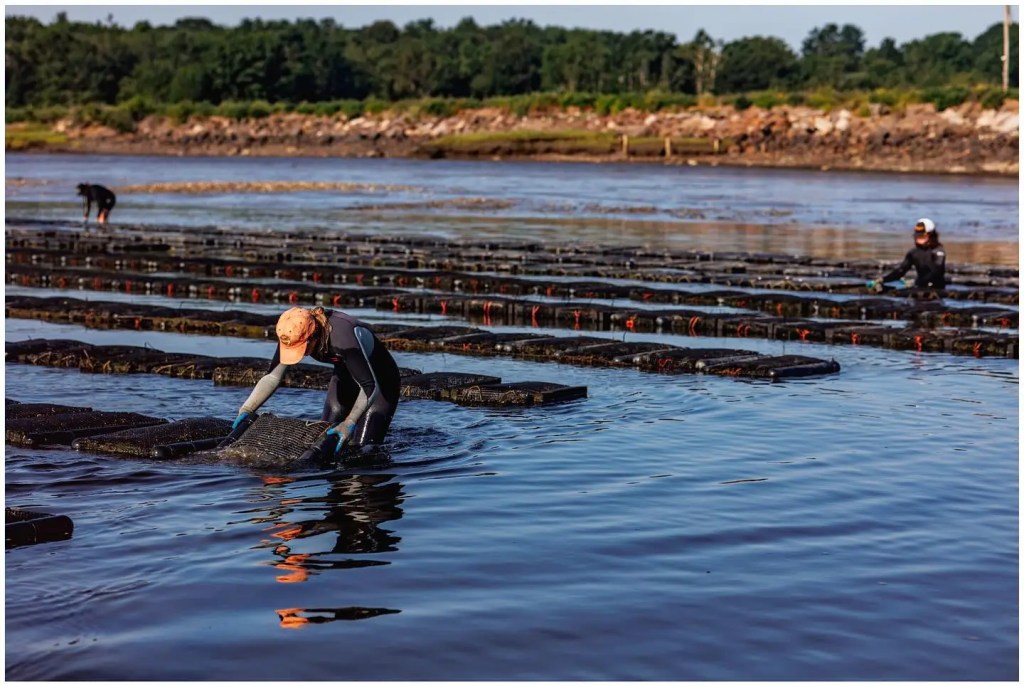
Nonesuch uses a floating bag system for oyster cultivation. They suspend mesh bags containing young oysters at the water’s surface, allowing the oysters to feed on nutrient-rich phytoplankton. During winter, they move the oysters to submerged crates to protect them from ice.
The farm faces challenges typical to Maine aquaculture, including harsh winters and predators like green crabs. Despite these obstacles, Nonesuch has grown into a successful operation, supplying Pine Point Petites to restaurants and markets along the East Coast.
Nonesuch Oyster Farm emphasizes sustainable practices and environmental stewardship. Their oysters help filter water, improving local ecosystem health. The farm also participates in community outreach, offering tours and educational programs to promote understanding of aquaculture and marine conservation.
Follow Them
Oyster enthusiasts, dive into the world of Nonesuch Oyster Farm! Get a behind-the-scenes look at their sustainable farming practices in Scarborough, Maine, and discover the rich flavors of these exceptional oysters.
Pine Point Petite Oysters Information
Oyster: Pine Point Petite
Species: Crassostrea virginica (Eastern oyster)
Cultivation Method: Farmed, with a grow-out period of 12-18 months.
Size: 2.5-3 inches (Petite grade)
Seasonality: Year-round
Culture Method: Floating bags at the surface, moved to crates in winter
Salinity: 25-28 ppt.

Appearance: smooth, light-gray shells with subtle ridges and a deep, well-defined cup. Their compact size measures around 2-3 inches, making them visually delicate and appealing. The interior shell reveals a creamy white nacre that contrasts beautifully with the oyster meat.
Flavor Profile: A prominent dash of brine and sweetness with distinct notes of seagrass. Their flavor profile combines a crisp saltiness upfront, followed by a subtle sweetness that lingers on the palate. The finish is clean and refreshing, with a delicate essence reminiscent of their coastal environment.
If you like Pine Point Petites, then check out these similar varieties!
Location
Nonesuch Oyster Farm cultivates Pine Point Petite oysters at the confluence of the Nonesuch and Scarborough Rivers in Scarborough, Maine. The farm operates within a nature preserve, specifically in the Scarborough Marsh area near Nonesuch Point. This unique location provides a sandy, shallow environment adjacent to one of Maine’s largest salt marshes 45.
The environmental factors at this site create ideal conditions for oyster growth. The mixing of tidal flows from the Gulf of Maine with freshwater from the rivers creates a dynamic ecosystem rich in nutrients. This blend of waters contributes to the oysters’ distinctive flavor profile, combining brine, sweetness, and seagrass notes 15. The shallow waters allow for warmer temperatures, which promote oyster growth, while maintaining a high salinity level that enhances flavor.
The farm’s proximity to the salt marsh plays a crucial role in the oysters’ development. The marsh ecosystem provides a constant supply of nutrients and phytoplankton, which are essential for oyster feeding and growth. Additionally, the marsh environment contributes to the unique “grassy” flavor notes found in Pine Point Petites 35. The natural ebb and flow of tides in this area ensure a consistent supply of fresh nutrients and oxygen, creating optimal conditions for oyster cultivation.

Nonesuch Oyster Farm utilizes floating bags at the river’s surface to grow their Pine Point Petites, moving them to crates during winter months 45. This cultivation method takes advantage of the nutrient-rich surface waters while protecting the oysters from predators. The farm’s location within a preserve also ensures minimal pollution and human interference, further contributing to the oysters’ quality and the sustainability of the operation.
Suggested Beverage Pairings
- Manzanilla Sherry: This dry, saline-driven sherry complements the oysters’ briny profile. Its crisp, mineral notes enhance the oysters’ natural flavors without overwhelming them.
- Cru Beaujolais: Surprisingly, this light red wine pairs well with oysters, especially when served with a balsamic mignonette. The wine’s fruit notes create an unexpected but delightful combination.
- Porter Beer: Historically paired with oysters in 18th-century taverns, a rich porter offers a deep, roasted flavor that contrasts beautifully with the oysters’ brininess. The beer’s smooth texture complements the oysters’ delicate nature.
- Field Stone California Syrah: A smooth, fruit-forward Syrah can create an interesting pairing with Pine Point Petites. The wine’s full-bodied character provides an unexpected but harmonious match.
- Spanish Cava: This sparkling wine offers crisp bubbles and mineral notes that enhance the oysters’ seagrass and briny characteristics. Its effervescence provides a refreshing counterpoint to the oysters’ smooth texture.
Where Can I Buy Pine Point Petite Oysters?
- Glidden Point Oyster Farms: Directly sells Pine Point Petites online, offering the oysters at $75.00 per order. They ship oysters via FedEx Priority Overnight Shipping.
Stay Connected with The Oyster Encyclopedia!
Follow us on social media to get the latest updates, oyster recipes, and behind-the-scenes glimpses into the world of oysters:
Stay tuned for exclusive content, oyster trivia, and more! Engage with our vibrant community of oyster enthusiasts by liking, commenting, and sharing our posts. Your support helps us continue providing valuable oyster knowledge to fellow seafood lovers worldwide.
References
- Carroll, Abigail. Personal communication and Nonesuch Oyster Farm website. 2008-2025.
- Glidden Point Oyster Farms. Online Seafood Sales Platform. Accessed January 20, 2025.
- Global Seafoods. Online Seafood Marketplace. Accessed January 20, 2025.
- Maine Oyster Company. Online Oyster Sales Platform. Accessed January 20, 2025.
- Nonesuch Oyster Farm. Company Website and Digital Resources. Scarborough, Maine. 2008-2025.
Discover more from The Oyster Encyclopedia
Subscribe to get the latest posts sent to your email.