


Chef’s Notes
Mason Bostwick · Executive Chef
Eastern oyster
Olde Salt — Olde Salt — Strong minerality — clean finish. A solid farmed eastern oyster.
Flavor chart
Chef palate read
Shuckability
Shell & line performance
When I buy it
Look for Olde Salt Oysters in april when salinity peaks.
How I serve it
On the half shell with minimal garnish — let the oyster speak.
What to watch for
Full brine with creamy finish. Reject any with broken shells or milky liquor.
My read
Strong minerality — clean finish. A solid farmed eastern oyster.
Olde Salt oysters originate from Chincoteague, Virginia, and are a product of the Rappahannock Oyster Co. They are grown in the nutrient-rich marshlands of Chincoteague Bay. The bay is fed almost exclusively by the Atlantic Ocean. That flow creates a high salinity environment.
The name Olde Salt likely comes from the oyster line’s high salinity. The label also reflects the region’s long-standing tradition of oyster farming. Rappahannock Oyster Company produces Olde Salt oysters as a multi-generational company. That heritage dates back to the Civil War era.
People often use the term old salt to describe an experienced sailor. The company’s maritime roots and the oysters’ intense salty taste support that reference. The salty seas of Virginia’s Eastern Shore grow these oysters. That geography further reinforces the salt in their name.
These oysters are typically served on the half shell. Chefs often add acid to balance the salinity. Lemon wedges or a mignonette of red wine vinegar, shallots, and black pepper are common choices.
The Rappahannock Oyster Co. is known for its eco-friendly farming practices and has been recognized by publications such. as Travel & Leisure and Food & Wine.
What Are Olde Salt Oysters?
Olde Salt Oysters are farmed Eastern oysters grown and harvested in Chincoteague, Virginia. Rappahannock Oyster Company raises the line on Virginia’s Eastern Shore. They are cultivated in the salty seas around Chincoteague Bay.
On the half shell the line reads clean finish with salinity near 28–33 ppt. That range reflects Atlantic-fed marshlands around Chincoteague. The cups deliver bold seaside brininess with a smooth, clean follow-through. Chefs often serve them raw with minimal garnish.
The shells of Olde Salt oysters are typically white to gray. They have a rough texture and deep cups that hold the oyster meat. Inside, the oyster meat is plump and springy. The natural liquor adds briny depth to the oyster’s flavor.
How Did Olde Salt Oysters Get Their Name?
Olde Salt Oysters take their trade name from Chincoteague Bay. Buyers see that origin on tags and distributor manifests. The label signals a salt-forward cup from Virginia’s Eastern Shore.
The Olde Salt name also nods to maritime language on the Chesapeake. People call an experienced sailor an old salt. Rappahannock Oyster Company’s multi-generational roots echo that phrase.
The intense brininess in each cup reinforces the salt reference. Virginia’s salty Eastern Shore waters shape the flavor profile. Together, place and taste explain why the line carries the Olde Salt name.
About Rappahannock Oyster Company
Rappahannock Oyster Company dates to 1899, when James Arthur Croxton founded it. Croxton unofficially began when he leased 2 acres of Rappahannock River bottom. Hurricane Hazel destroyed oyster beds in 1954. Connie and Diane brought further damage in 1955.
After William Croxton passed in 1991, the company ceased operations. In 2001, cousins Ryan and Travis Croxton, the founder’s great-grandsons, learned about their family’s century-old oyster leases. They took over the leases and revived the company. On March 23, 2002, Rappahannock Oyster Company was reborn with 3,000 oyster seeds.
The Croxton cousins introduced sustainable aquaculture practices at the farm. Those methods helped build one of the first commercially viable aquaculture operations on the bay. They opened a tasting room in Topping, Virginia, in 2011. An oyster bar followed in Washington, DC, in 2012.
The company now harvests Rappahannock, Rochambeau, and Olde Salts, plus Olde Salt Clams. National acclaim followed as restaurants celebrated the Chesapeake Bay and its native shellfish. Rappahannock ships more than 180,000 oysters per week from its farms. The company runs six restaurants across Topping, Richmond, Charleston, Los Angeles, and Washington, D.C.
The Rappahannock Oyster Bar stands out among those locations. It has been featured in the Wall Street Journal as one of the Five Outstanding. Esquire also named it one of the Best New Restaurants. For more information on Rappahannock Oyster Company or any other inquiries, visit their company website or Instagram.
Olde Salt Oysters Information

Eastern oyster
If you like Olde Salt Oysters, then check out these similar varieties!
Oyster: Olde Salts
Species: Crassostrea Virginica
Cultivation Method: Farmed for approx. 6 months.
Seasonality: year-round availibility, but peak season is September-April.
Size: 3″
Culture Method: Cultured using a method known as off-bottom farming, specifically in off-bottom trays or cages. This method involves growing the oysters in mesh cages or bags staked about one to two feet off the bottom of the bay.
Salinity: 28-33 ppt
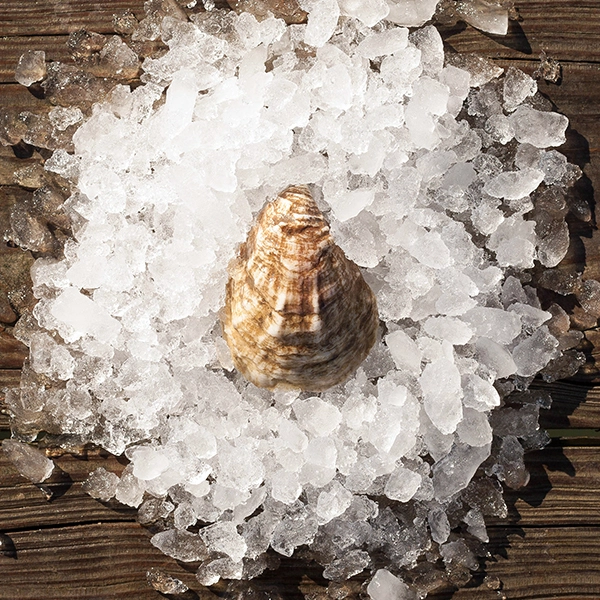
Appearance: The shells of Olde Salt oysters are typically white to gray, with a rough texture and deep cups that hold the oyster meat. Inside, the oyster meat is plump and springy, sitting in its natural liquor, the briny water that adds to the oyster’s flavor.
Flavor Profile: A distinctive flavor profile that reflects their high-salinity growing environment. They have a bold seaside brininess, a true taste of fresh seawater, with a smooth, clean follow-through.
Location
Olde Salt oysters are grown and harvested in Chincoteague, Virginia. Rappahannock Oyster Company tends the line on Virginia’s Eastern Shore. The harvest centers on Chincoteague Bay.
Chincoteague Bay sits in nutrient-rich marshlands fed by the Atlantic Ocean. That influence drives the 28–33 ppt salinity listed for this line. Off-bottom mesh cages sit one to two feet above the bay bottom.
Virginia’s Eastern Shore supplies a distinctive high-salinity growing environment. Farm crews at Rappahannock Oyster Company work the beds year-round. The geography ties the oyster name to salt-forward cups on the half shell.
Suggested Beverage Pairings
These wines have a brightness that complements the oyster’s briny flavor. A good choice would be a Louis Roederer Brut Premier Champagne bottle, known for its structured, radiant, and complex taste.
These wines match the oyster’s minerality, crispness, and slight fruitiness. Try Domaine de la Pepiere Muscadet Sevre et Maine, which has a mineral-driven and citrusy profile.
cocktail blends bourbon with fino Sherry, apples, lemon, and honey. The sweetness of the honey and the tartness of the apples and lemon help mellow out the intense salinity of the Olde Salt oysters.
Stouts pair well with the salty and creamy flavors of the oysters. Guinness Draught Stout is a good choice, known for its smooth and creamy taste.
This varietal retains acid, bright fruit, and a rocky, stony quality, which are awesome with oysters, especially East Coast varieties like Olde Salt. Try Domaine Felines Jourdan Picpoul de Pinet for its crisp, citrusy, and mineral-driven profile.
Where Can I Buy Olde Salt Oysters?
- Rappahannock Oyster Co.: They offer Olde Salt oysters directly from their website.
- WebstaurantStore: They sell a 50 count of live Olde Salt oysters from Rappahannock Oyster Co.
- Seacore Seafood Inc.: They offer Olde Salt oysters, highlighting their consistent quality and size.
References
- Rappahannock Oyster Co. Web. Accessed 30 May 2026. https://www.rroysters.com/olde-salt-oysters-briny.html
- WebstaurantStore. Web. Accessed 30 May 2026. https://www.webstaurantstore.com/rappahannock-oyster-co-50-count-olde-salt-oysters/872OYSHVY50.html
- Seacore Seafood Inc. Web. Accessed 30 May 2026. https://www.seacoreseafood.com/product/olde-salts-oysters
Discover more from The Oyster Encyclopedia
Subscribe to get the latest posts sent to your email.