


Chef’s Notes
Mason Bostwick · Executive Chef
Eastern oyster
Norumbega — Norumbega — Strong minerality — sweet finish and zinc minerality. A solid farmed eastern oyster.
Flavor chart
Chef palate read
Shuckability
Shell & line performance
When I buy it
Look for Norumbega Oysters in peak season when salinity peaks.
How I serve it
On the half shell with minimal garnish — let the oyster speak.
What to watch for
Full brine with creamy finish. Reject any with broken shells or milky liquor.
My read
Strong minerality — sweet finish and zinc minerality. A solid farmed eastern oyster.
Norumbega oysters are a type of oyster that are grown in the Damariscotta River in Maine. They are known for their big, sweet, and incredibly tender meat. The liqueur is pleasantly salty, but the smoky sweetness of the oyster quickly washes. out the flavor of the salty brine.
The long grow method and cold Maine waters create a beautifully strong shell. Scuba divers. harvest these oysters, and they have a fine, smooth texture. Norumbega oysters initially have a. sweet, buttery taste, which soon turns into a briny finish. .
What Are Norumbega Oysters?
Norumbega oysters are farmed Eastern oysters from the Damariscotta River in mid-coast Maine. The stock is Crassostrea virginica, the classic Atlantic species raised on the Peters family farm. Tags and distributor manifests list Norumbega as a distinct brand from Norumbega Oyster, Inc.
These oysters are known for big, sweet, and incredibly tender meat with a high burst of salt upfront. Cold Maine waters and a long grow cycle create a beautifully strong shell and a fine, smooth texture. The liqueur reads pleasantly salty, while smoky sweetness quickly washes out the brine on the finish.
Norumbega oysters start in suspended bags, then transfer to the bottom for bag-to-bottom culture. Scuba divers swim down with rakes and harvest when the shells reach market size. On the half shell the line reads sweet finish with zinc minerality at salinity near 20 to 30 ppt.
How Did Norumbega Oysters Get Their Name?
Norumbega Oysters take their trade name from the historic Norumbega identity tied to the Damariscotta River region. Maine maps and local lore long used Norumbega for this stretch of mid-coast estuary country. Distributors and raw bars see the name on tags alongside Damariscotta River origin lines.
Eric and Kellie Peters chose Norumbega Oyster Farm as the company brand when they launched in 2006. The label marks their family-run lease rather than a generic river designation alone. Chefs order Norumbega when they want a named Damariscotta River eastern oyster from this grower.
The farm name honors the river’s deep aquaculture history in Newcastle and nearby communities. Growing up surrounded by oyster farms, Eric pursued aquaculture from high school forward. Norumbega Oyster, Inc. has expanded its lease footprint every year since launch.
About Norumbega Oyster Farm
Norumbega oysters come from the Damariscotta River in Maine and are grown by Kellie and Eric Peters. The Peters family owns Norumbega Oyster, Inc. and operates a family-run shellfish business. Eric Peters is a Bates College alumnus who started the company to diversify clientele and boost revenues.
The Damariscotta River is known for its oysters and for a long regional aquaculture history. Eric and Kellie bring over twenty years of expertise in growing and harvesting shellfish on their farm. Norumbega Oyster Farm was started in 2006 and has grown in size every year since.
This family-owned business pays close attention to careful growing and harvesting while respecting the river’s environment, animals, and waters. Oysters start in suspended bags, then move to bottom culture before divers harvest with rakes. The method yields some of the larger oysters you will find on New England raw bars.
Norumbega Oysters Information

Eastern oyster
If you like Norumbega Oysters, then check out these similar varieties!
Oyster: Norumbega
Species: Crassostrea Virginica
Cultivation Method: Divers swim down with rakes and harvest when ready.
Seasonality: Fall through Spring
Size: 3-4″
Culture Method: Bottom cultured. These oysters do the opposite of other farms and start in suspended bags. Then, they transfer to the bottom.
Salinity: 20-30 ppt

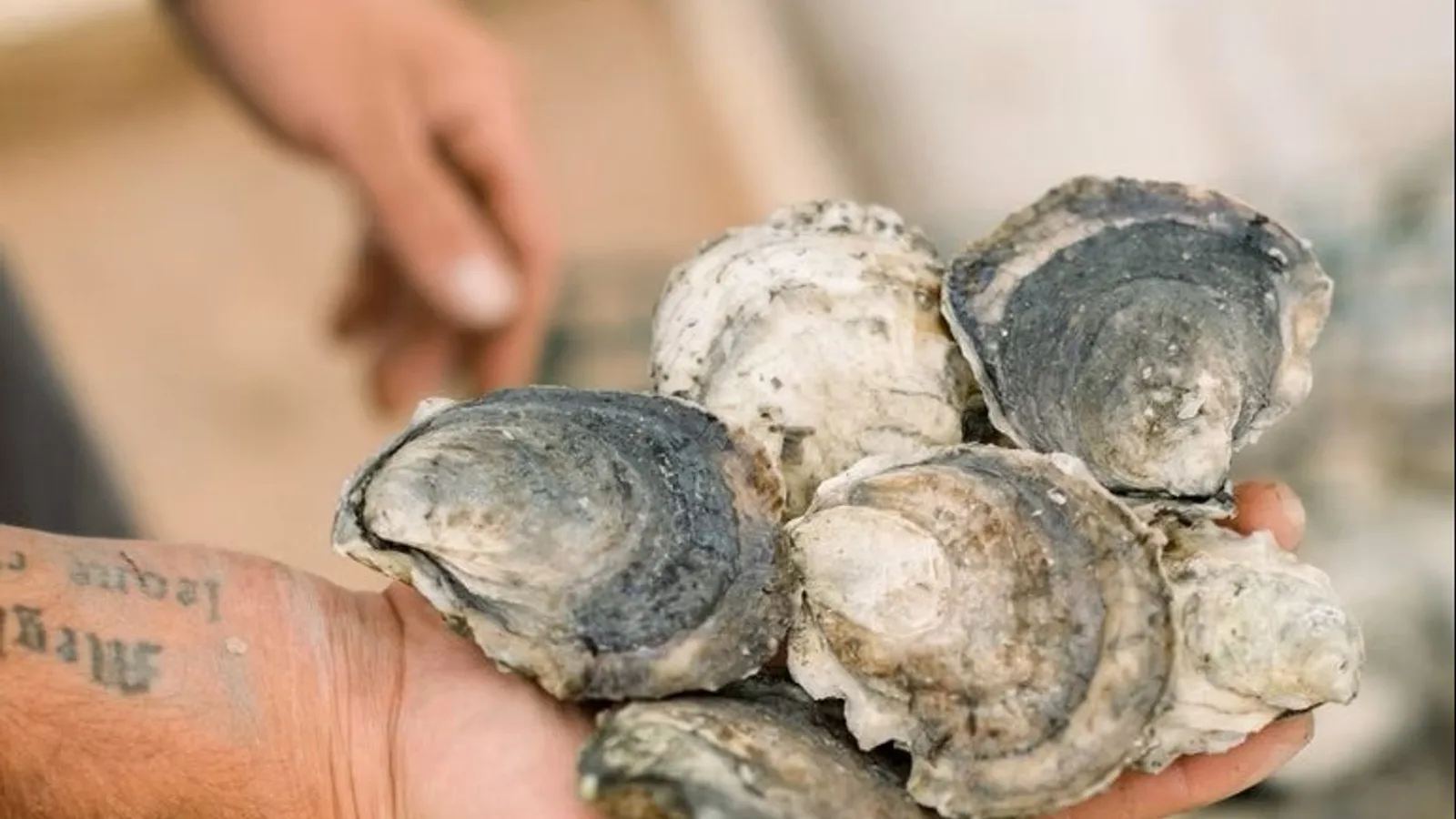
Appearance: Have a variable tear-drop appearance. They are some of the larger oysters you’ll find anywhere. The oysters have a delicate, smooth shell.
Flavor Profile: Big, sweet, and incredibly tender. They have a high burst of salt upfront with sugar and zinc. The liqueur is pleasantly salty, but the smoky sweetness of the oyster quickly washes out the flavor of the salty brine.
Location
Norumbega oysters are grown in the Damariscotta River in mid-coast Maine. The river runs through Lincoln County and is one of the Northeast’s best-known oyster estuaries. Farm operations center near Newcastle at the Peters family lease on River Road.
The Damariscotta carries a mix of Gulf of Maine saltwater and colder freshwater influence through the seasons. That exchange shapes the 20 to 30 ppt salinity range listed on Norumbega tags. Bottom placement and long grow times reflect the deep, cold channel conditions here.
Mid-coast Maine’s tight-knit grower community ships Norumbega oysters to raw bars across the region. Island Creek Oysters, Graffam Bros Seafood, and The Maine Oyster Company list the brand alongside other Damariscotta names. Local buyers also find Norumbega at Harbor Fish Market, Eventide Oyster Co., and Bow Street Market.
Suggested Beverage Pairings
Billecart-Salmon Brut Réserve adds crisp acidity and fine bubbles beside Norumbega salinity. Effervescence refreshes the palate between Maine half shells without masking delicate sweetness. Serve ice-cold for classic raw-bar service.
Domaine de la Pépière Muscadet frames Norumbega brine with mineral citrus and lees texture. High acidity balances the oyster’s sweet finish on the half shell. A textbook Atlantic pairing for mid-coast cups.
Guinness Draught brings creamy roasted malt beside Norumbega oysters. The stout’s gentle sweetness complements brine while carbonation cleanses between bites. Serve cold for a hearty beer-and-oyster match.
Allagash True Pilsner offers crisp Maine craft malt without overpowering delicate liquor. Light hop bitterness and clean carbonation refresh the palate between Norumbega slurps. Ideal for guests who prefer lager over wine.
Natalie’s Orchid Island Lemonade adds bright citrus acidity beside Norumbega sweetness. The non-alcoholic pairing keeps service inclusive while echoing lemon garnish on raw bars. Serve well chilled between shells.
Where can you Buy Norumbega Oysters?
Norumbega oysters can be purchased from various locations in Maine, as well as online. Here are some places where you can buy Norumbega oysters. Island Creek Oysters, Graffam Bros Seafood, and The Maine Oyster Company all list Norumbega on their storefronts.
- Island Creek Oysters: You can buy Norumbega oysters online from Island Creek Oysters. They ship using FedEx Overnight service and offer free shipping on orders over $99. The oysters come from four lease sites totaling 11 acres, growing from 5 feet at the shallowest to 28 feet.
- Graffam Bros Seafood: You can buy Norumbega oysters from Graffam Bros Seafood, which is located in Rockport, Maine. The oysters are bottom-grown in the Damariscotta River and harvested by scuba divers. They cost $1.85 each.
- The Maine Oyster Company: You can buy Norumbega oysters online from The Maine Oyster Company. They offer free overnight shipping and sell Norumbega oysters in quantities ranging from 12 to 200. The oysters are medium-sized and have a moderate salinity and sweetness.
- Norumbega Oyster: You can find a list of locations that sell Norumbega oysters on the Norumbega Oyster website. Some places include Bow Street Market in Freeport, Eventide Oyster Co., and Harbor Fish Market in Portland.
Where Can I Buy Norumbega Oysters?
Norumbega — Contact the grower or regional seafood distributor for current availability.
References
- Norumbega. Vendor listing referenced in Where Can I Buy section. Accessed 30 May 2026.
Discover more from The Oyster Encyclopedia
Subscribe to get the latest posts sent to your email.