

Quick Facts
- Species: Eastern oyster (Crassostrea virginica)
- Habitat: Chesapeake Bay, Virginia and Maryland
- Filtration capacity: Up to 50 gallons of water per day per adult oyster
- Flavor Profile: Mild, meaty texture with low salinity and subtle sweet finish
- Current status: Population at about 1% of historic levels
What Are Chesapeake Bay Oysters?
Chesapeake Bay oysters once formed massive underwater cities. They created skyscraper-like reef structures that served as the foundation for the entire bay’s ecosystem 5. These reefs were immense. Ships had to navigate around them. They played a crucial role in protecting coastlines from erosion and sea-level rise.
The unique merroir of Chesapeake Bay shapes these oysters into distinctly mild and meaty specimens. They have high yields but low salt content 1. They grow in the bay’s distinctive environment. It is characterized by large flushing tides and significant freshwater input. This growth process creates a product that pairs exceptionally well with American lagers.
These remarkable bivalves serve as natural water purifiers. A single adult oyster can filter up to 50 gallons of water daily 2. This filtering capacity once allowed the bay’s oyster population to clean the entire Chesapeake Bay. The bay holds approximately 19 trillion gallons. They accomplished this feat in just one week. Today, it would take the diminished population more than a year to complete this process.
How Did Chesapeake Bay Oysters Get Their Name?
Chesapeake Bay oysters derive their name from their native habitat, the Chesapeake Bay. The word “Chesapeake” originates from the Algonquian word “Chesepiooc,” meaning “great shellfish bay.” This name aptly reflects the historical abundance of oysters in the region. Oysters have been an integral part of the bay’s ecosystem and human culture for thousands of years.
Native Americans harvested these oysters for millennia before European colonization. The name “Chesapeake Bay oyster” became widely used in the 18th and 19th centuries. The bivalves gained commercial importance during this time. They became synonymous with the region’s rich maritime heritage and culinary traditions 7.
The Cultivation Process
Chesapeake Bay oysters are both wild-caught and farmed. Historically, wild oysters grew on natural reefs, forming complex three-dimensional structures on the bay floor. These reefs developed over thousands of years, with new oysters setting on the shells of previous generations 2.
Today, due to population decline, restoration efforts combine wild harvesting with aquaculture. Oyster farmers use various methods, including bottom culture and off-bottom techniques like floating cages or suspended bags. These methods help protect young oysters from predators and siltation. They allow the oysters to benefit from the bay’s nutrient-rich waters 8.
The cultivation process typically takes 24 to 36 months for wild oysters to reach market size 2. Farmers and conservationists work together to balance harvesting with restoration. They often recycle shells to create new habitats for oyster larvae to settle on. This supports both the industry and ecosystem recovery 8.
Chesapeake Bay Oysters Information
Name: Chesapeake Bay
Cultivation Method: Farmed and Wild caught, 24 to 36 months
Seasonality: Year Round
Size: 3.5″+
Culture Method: Wild Set
Salinity:
Lower Bay (Virginia): 16-30 ppt
Middle Bay: 16-18 ppt
Upper Bay (Maryland): 10-17 ppt
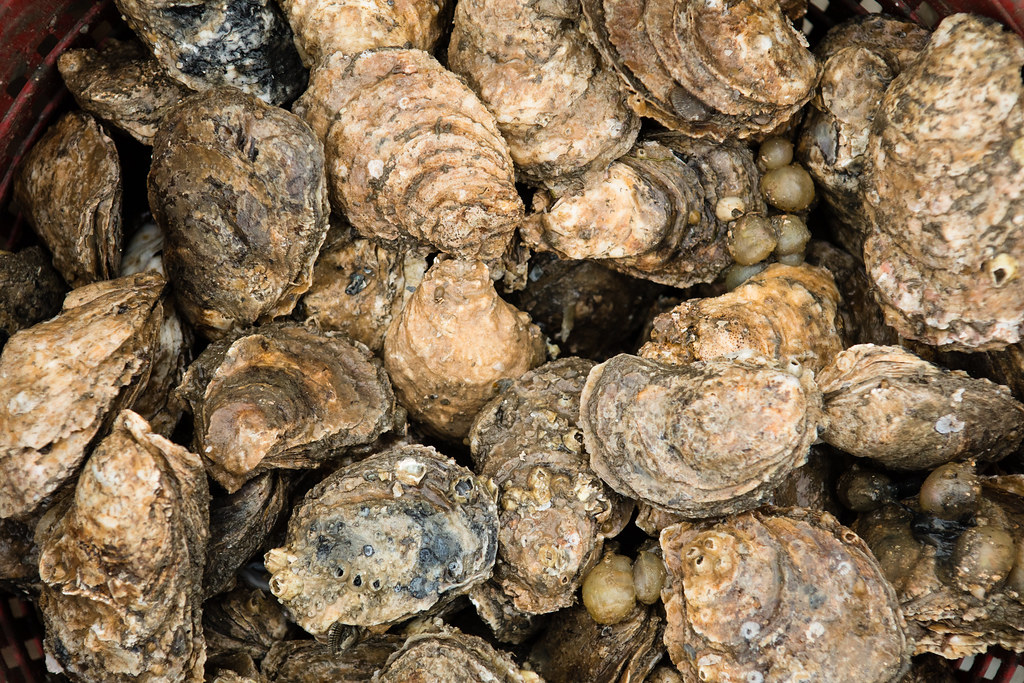
Appearance: Shells have rugged and irregular texture. They often showcase pronounced ridges, bumps, or growth rings.
Flavor: The flavor can be described as briny, savory, and slightly sweet. However, it’s important to note that the specific flavor profile can vary. It depends on factors such as the oyster’s location within the Chesapeake Bay, the season, and the environmental conditions.
If you like Chesapeake Bay oysters, then check out these similar varieties!
- Copps Island Oysters
- Dodge Cove Oysters
- Fiddler’s Cove Oysters
- Flying Point Oysters
- Katama Bay Oysters
Location
Oyster farmers in Chesapeake Bay cultivate their oysters throughout various tributaries and regions of the bay. These areas range from Virginia’s Piankatank River to Maryland’s Chester River and Eastern Bay. Major cultivation areas include the Lynnhaven River near the bay’s mouth, Windmill Point, and the upper bay tributaries 23.
The bay’s unique environmental conditions create ideal growing conditions. The mixing of fresh and salt water creates varying salinity levels. These levels support oyster growth. This is particularly true in areas where salinity measures above 5 parts per thousand. Water currents and wave action help to naturally tumble the oysters. This tumbling is especially effective in areas using surface float systems. It contributes to deeper cup development and consistent shell formation 23.
The Ecosystem
The Chesapeake Bay’s ecosystem provides rich nutrients and optimal water quality conditions for oyster growth. The presence of underwater grasses and sandy shorelines contributes to the oysters’ distinctive flavor profile. The bay’s natural flushing action helps distribute phytoplankton, the oysters’ primary food source, throughout the growing areas 25.
The Chesapeake Bay’s ecosystem provides rich nutrients and optimal water quality conditions for oyster growth. The presence of underwater grasses and sandy shorelines contributes to the oysters’ distinctive flavor profile. The bay’s natural flushing action helps distribute phytoplankton, the oysters’ primary food source, throughout the growing areas 25.
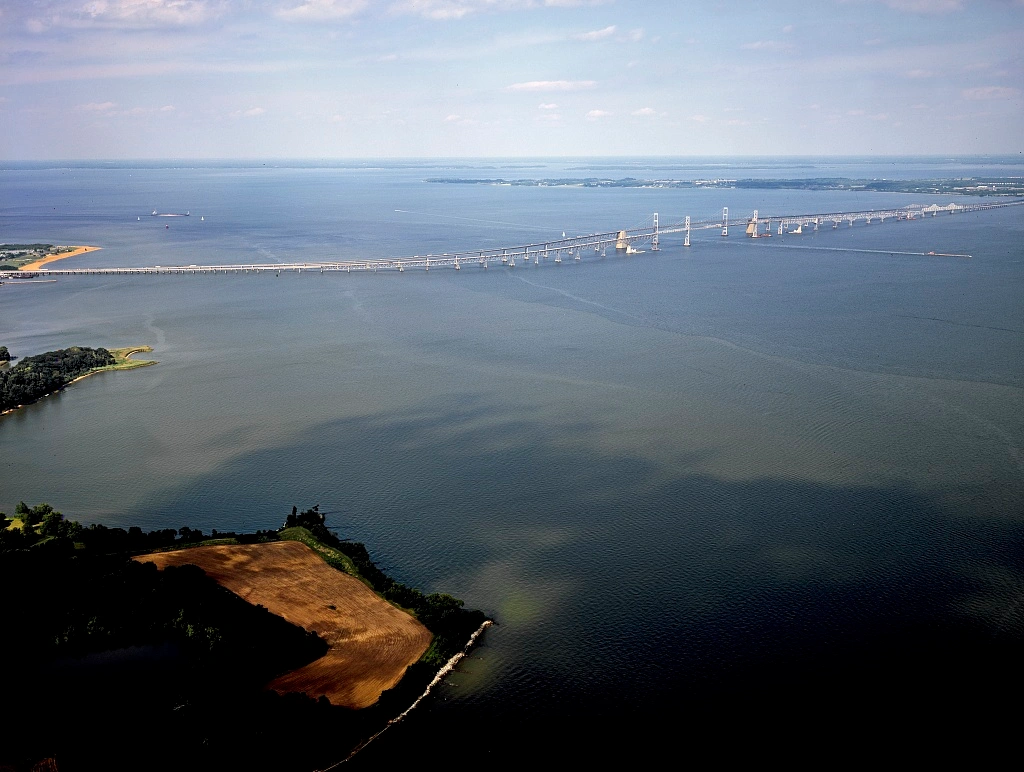
Recent environmental conditions have particularly favored oyster growth, with above-average salinity levels due to below-average rainfall in the watershed. This has led to remarkable spatfall success. Juvenile oysters are appearing in unprecedented numbers. They are also showing up in locations throughout the bay, including areas where they are rarely observed 6. Each adult oyster filters 30-50 gallons of water daily. The bay’s ecosystem also benefits from oyster cultivation. This creates a symbiotic relationship between the farmers and the environment.
Suggested Pairings
- Dogfish Head SeaQuench Ale – This crisp, tart ale perfectly complements the mild flavor of Chesapeake Bay oysters. It offers subtle saltiness and citrus notes.
- Veuve Clicquot Brut Champagne – The effervescence of this classic champagne enhances the oysters’ subtle sweetness. Its acidity ensures a clean finish.
- Catoctin Creek Watershed Gin Martini – This locally-produced gin creates a crisp martini. It brings out the briny notes of the oysters. It also adds herbal complexity.
- Barboursville Vineyards Viognier Reserve – This Virginia white wine has floral aromatics. Its full body pairs well with the meaty texture of Chesapeake Bay oysters.
- Flying Dog Pearl Necklace Oyster Stout – Brewed with Chesapeake oysters. This stout’s roasted malt flavors create a unique contrast to the oysters’ mild taste.
Check Out Some Other Chesapeake Bay Oysters!
Where Can I Buy Chesapeake Bay Oysters
- Rappahannock Oyster Co. – Offers farm-raised Chesapeake Bay oysters, shipped fresh in counts of 50 or 100, with overnight delivery options.
- Chesapeake Bay Oyster Company – Offers a range of Chesapeake Bay oyster varieties. They are sold by the dozen or in larger quantities for events.
- Harris Seafood Company – Sells wild-caught Chesapeake Bay oysters, available in bushel quantities for bulk orders.
Stay Connected with The Oyster Encyclopedia!
Follow us on social media to get the latest updates, oyster recipes, and behind-the-scenes glimpses into the world of oysters:
Stay tuned for exclusive content, oyster trivia, and more! Engage with our vibrant community of oyster enthusiasts by liking, commenting, and sharing our posts. Your support helps us continue providing valuable oyster knowledge to fellow seafood lovers worldwide.
References
- Chesapeake Bay Foundation. “Oyster Fact Sheet.” Chesapeake Bay Foundation, 2023, www.cbf.org/about-the-bay/chesapeake-wildlife/eastern-oysters/oyster-fact-sheet.html.
- Chesapeake Bay Program. “Environmental and Ecological Benefits and Impacts of Oyster Aquaculture.” Aquaculture Science, 27 June 2018.
- Hollywood Oyster Company. “About Us.” Hollywood Oyster Company, 2023, www.hollywoodoyster.com.
- Nature Conservancy. “Aquaculture by Design Chesapeake Bay.” The Nature Conservancy, 30 Apr. 2019.
- Oceanside Seafood. “Wild Caught Chesapeake Bay Oysters.” Oceanside Seafood, 28 Jan. 2020.
- Pangea Shellfish Company. “Chesapeake Bay Oyster — Oysterology Online.” Pangea Shellfish, 2023, www.pangeashellfish.com/oysterology/chesapeake-bay-oyster.
- Rappahannock Oyster Co. “Our Story.” Rappahannock Oyster Co., 2023, www.rroysters.com.
- Sandaway. “Chesapeake Bay Oysters – Delicious Maryland Seafood.” Sandaway, 26 Nov. 2023.
- The Oyster Recovery Partnership. “Oyster Facts.” Oyster Recovery Partnership, 2023, www.oysterrecovery.org/news/oyster-facts.
- White Stone Oysters. “Best Chesapeake Oyster.” White Stone Oysters, 2023, www.whitestoneoysters.com.
Discover more from The Oyster Encyclopedia
Subscribe to get the latest posts sent to your email.