

Chef’s Notes
Mason Bostwick · Executive Chef
Eastern oyster
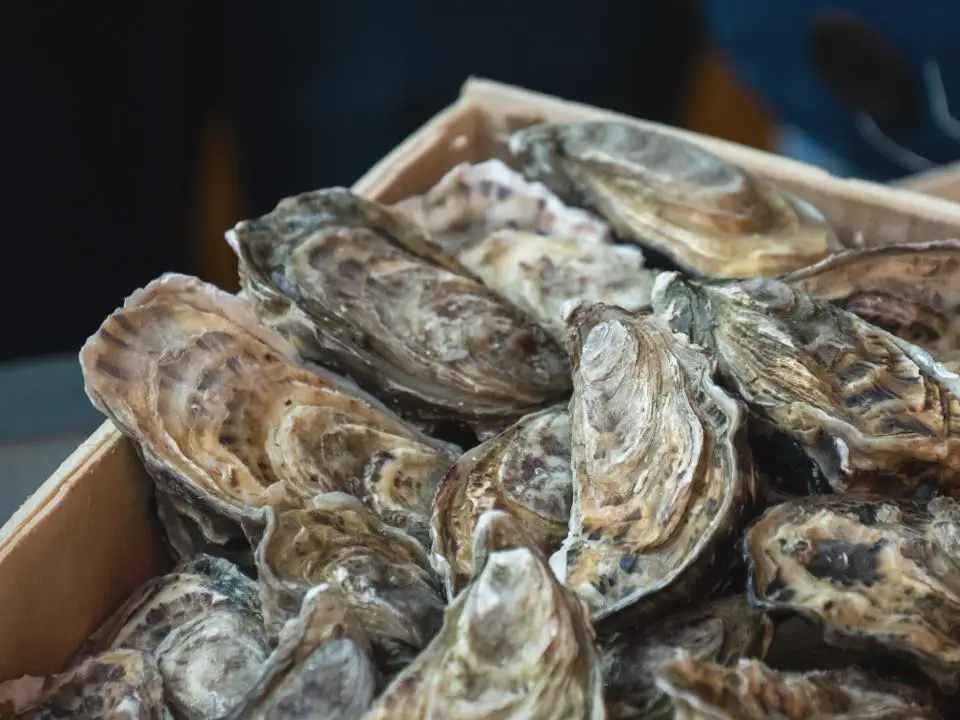
Blue Island — Blue Island — Strong minerality — clean finish and crisp texture. A solid farmed eastern oyster.
Flavor chart
Chef palate read
Shuckability
Shell & line performance
When I buy it
Look for Blue Island Oysters in peak season when salinity peaks.
How I serve it
On the half shell with minimal garnish — let the oyster speak.
What to watch for
Full brine with creamy finish. Reject any with broken shells or milky liquor.
My read
Strong minerality — clean finish and crisp texture. A solid farmed eastern oyster.
What Are Blue Island Oysters?
Blue Island oysters stand out in the world of bivalves for their exceptional quality and unique origin. These oysters are cultivated in the Great South Bay of Long Island, New York. The pristine waters and ideal conditions there contribute to their distinctive flavor profile 6. Unlike many generic “Blue Point” oysters, Blue Island oysters are true to their name and heritage.
They offer a taste that hearkens back to the original Blue Points of the 1800’s 8. Blue Island oysters are unique. They have a consistently fresh, crisp texture. Their flavor balances sweetness with a sparkling salinity 8.
This unique taste comes from the careful cultivation methods by Blue Island Shellfish Farms. They have successfully revived the authentic Blue Point oyster experience 8. The company’s commitment to quality extends beyond taste, as they prioritize responsible farming practices and sustainability in their operations 6. Blue Island oysters also benefit from the company’s innovative approach to distribution.
Blue Island Oyster Company focuses on delivering oysters from harvest to plate within 1-2 days. This ensures that restaurants across the country can offer the freshest possible product to their customers 8. This dedication to freshness and quality has made Blue Island oysters a favorite among chefs and oyster enthusiasts. They have cemented their reputation as a premium choice in the competitive world of oysters 6.
How Did Blue Island Oysters Get Their Name?
Blue Island Oysters got their name from their connection to the historic Blue Point oysters and the company’s location. The name combines two key elements that tie the brand to Long Island’s Great South Bay. Together, “Blue” and “Island” honor the Blue Point tradition and the farm’s coastal roots.
- Blue Point heritage: Blue Point oysters originated near the town of Blue Point. This town is located on Long Island, situated on Great South Bay, New York 1. In the early 1800s, these oysters were famous for their robust, wild flavor and became Queen Victoria’s favorite 1.
- Blue Island Shellfish Farms: In 1995, Chris Quartuccio established Blue Island Shellfish Farms. He successfully revived the authentic Blue Point oyster experience 13. The company’s farm is located in the Great South Bay. It is near the Fire Island Inlet. This location is close to the original Blue Point oyster grounds 34.
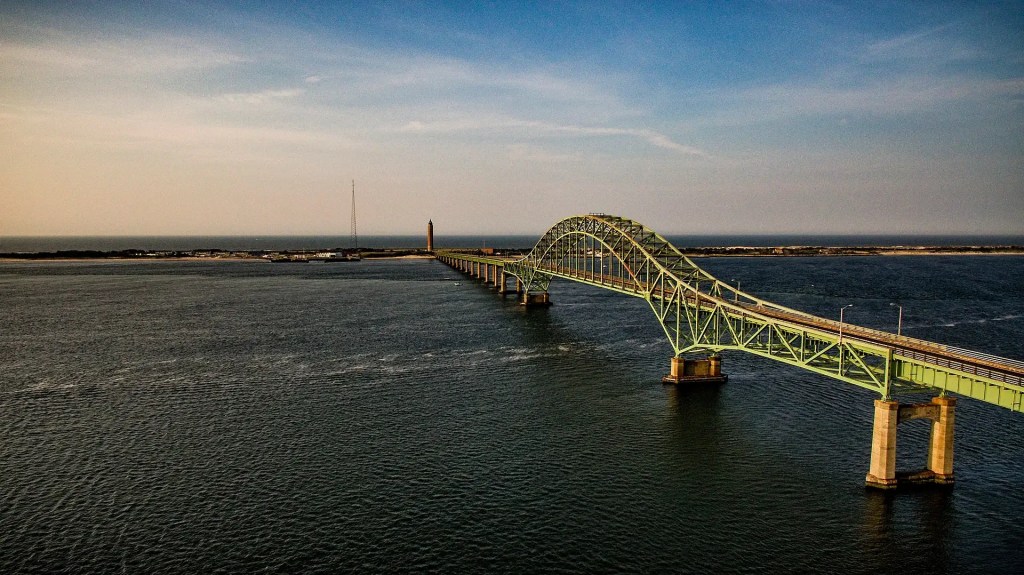
The name “Blue Island” shows the company’s commitment to preserving the legacy of genuine Blue Point oysters. It also distinguishes itself as a modern, high-quality oyster producer. They use “Blue” in their name to maintain a connection to the Blue Point tradition. “Island” emphasizes their Long Island roots and location 3.
About Blue Island Oyster Company
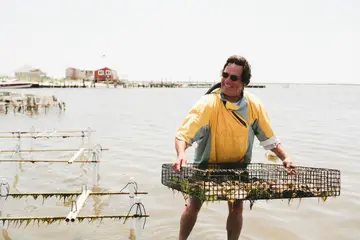
Blue Island Oyster Company cultivates Blue Island oysters. Chris Quartuccio founded the company in 1995. He initially dived for wild oysters in the Long Island Sound.
Then, he delivered them to New York City chefs 2. The company has since grown to become the leading oyster and clam distributor in the New York area 2. That chef-focused supply chain still defines how Blue Island Shellfish Farms reaches restaurants today.
In 2004, Blue Island Oyster Farm was established in the Great South Bay, near the Fire Island Inlet 2. This location provides ideal conditions for oyster cultivation due to its strong currents, abundant algae, and mineral-rich waters 9. The farm was the first to grow oysters in the Great South Bay. This was after the closure of the original Blue Point Oyster Co.10.
Chuck Westfall joined as a partner in 2012, contributing his expertise in oyster growing techniques 2. His involvement has led to significant expansion. It has transformed the boutique operation into one of New York State’s largest oyster-producing farms 9.
Blue Island Oyster Company now operates on a national scale, with offices in Miami, Las Vegas, and Los Angeles 6. They distribute shellfish across the United States. They even opened a farm-to-table restaurant in Denver, called Blue Island Oyster Bar 6.
The company’s success comes from its commitment to quality. It engages in sustainable practices. It can meet the growing demand for fresh shellfish in the farm-to-table movement 6.
Follow Them
Dive into the world of Blue Island Oysters! Visit their official website to explore their farm-fresh offerings, learn about oyster farm tours, and discover their commitment to sustainability. Farm tours and local pick-up in West Sayville let visitors connect directly with shellfish from the Great South Bay.
For a daily dose of oyster inspiration, follow them on social media. Don’t miss out on the chance to experience the finest shellfish straight from the Great South Bay. Make sure to check out Blue Island Oysters today!
Blue Island Oysters Information

Eastern oyster
If you like Blue Island oysters, then check out these similar varieties!
Location
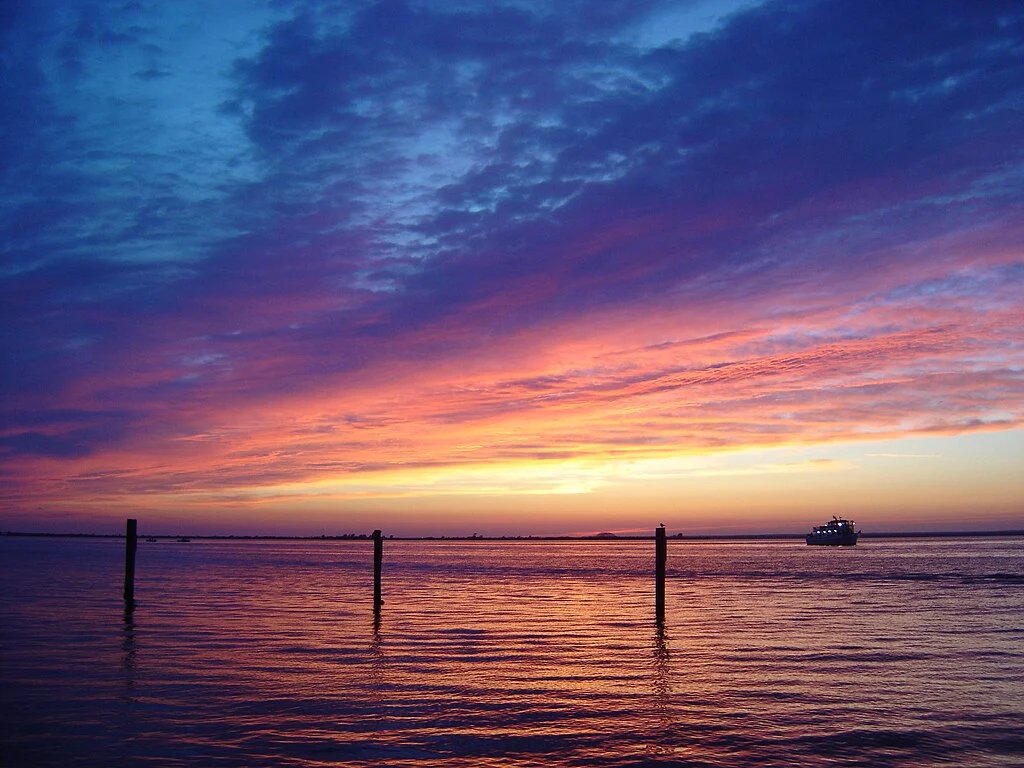
Blue Island Oyster Farm cultivates oysters in the Great South Bay of Long Island, New York. The farm is strategically located near the Fire Island Inlet, in close proximity to the Atlantic Ocean. This location was chosen because of its ideal conditions for raising oysters. It was the first operation to grow oysters in the Great South Bay after the original Blue Point Oyster Co. closed.
Environmental Factors
Several environmental factors in this location support oyster growth and prosperity. The strong currents in the area provide a constant flow of water, which is essential for oyster development. This water movement ensures a steady supply of oxygen and food while carrying away metabolic waste products.
The Great South Bay also has many algae and phytoplankton. These organisms serve as the primary food source for oysters. Additionally, the bay contains select minerals that contribute to the optimal growing conditions for these bivalves.
The proximity to the Fire Island Inlet plays a crucial role in maintaining water quality. The inlet allows for a regular exchange of water between the Great South Bay and the Atlantic Ocean. This exchange helps to maintain ideal salinity levels for oyster growth. This connection to the ocean also strengthens the currents.
It brings in nutrient-rich waters, further enhancing the oysters’ growing environment. Strong currents and abundant food sources contribute greatly. Mineral-rich waters and proximity to the ocean enhance the ecosystem further. Together, these create a perfect ecosystem for cultivating high-quality oysters.
This guide is part of the Raw Bar Bible — chef-level technique, safety, and gear so you can shuck and serve oysters with confidence.
Suggested Beverage Pairings
This dry, crisp sherry complements the oysters’ briny flavor while its subtle nuttiness enhances their sweetness. The high acidity and mineral notes in the sherry mirror the oysters’ characteristics, creating a harmonious pairing.
The bright acidity of this New Zealand Sauvignon Blanc cuts through the oysters’ richness. Citrus notes enhance this effect. Its tropical fruit flavors provide a pleasant contrast to the oysters’ salty brine, resulting in a refreshing combination.
The roasted, coffee-like notes of this stout balance the oysters’ sweetness. Its creamy texture complements the plump, salty nature of Blue Island oysters, creating a classic pairing that enhances both flavors.
This light, crisp German-style beer magnifies the subtle flavors of the oysters. Its clean finish and gentle carbonation cleanse the palate, allowing the oysters’ nuanced taste to shine through.
The botanical notes in Hendrick’s Gin are complementary to the oysters. Particularly, the cucumber and rose notes enhance their mineral and sweet flavors. Served ice-cold, this martini’s crispness mirrors the oysters’ brininess, creating an elegant pairing.
Where Can I Buy Blue Island Oysters?
- Blue Island Oysters website – The company’s official website provides local pick-up options for oysters. You can pick them up in West Sayville, New York. You can pre-order online and choose a pick-up day and time during checkout.
- Blue Island Oyster Bar – Their restaurant’s website offers holiday seafood packages. This includes Blue Island Number 9 Oysters. These can be ordered for pick-up or delivery in certain areas.
- Island Creek Oysters – Another reputable online oyster vendor that occasionally offers Blue Island Oysters as part of their selection.
References
- Blue Island Oyster Company. “Blue Island Oysters.” Blue Island Oyster Co., www.blueislandoysters.com. Accessed 6 Jan. 2025.
- Quartuccio, Chris. “Our Story.” Blue Island Oyster Co., www.blueislandoysters.com/our-story. Accessed 6 Jan. 2025.
- Blue Island Oyster Bar & Seafood. “Blue Island Oyster Bar & Seafood.” Blue Island Oyster Bar, www.blueislandoysterbar.com. Accessed 6 Jan. 2025.
- Westfall, Chuck. “Blue Island Shellfish Farms.” Blue Island Shellfish Farms, www.blueislandshellfishfarms.com. Accessed 6 Jan. 2025.
- New York State Department of Environmental Conservation. “Great South Bay.” DEC, www.dec.ny.gov/lands/92370.html. Accessed 6 Jan. 2025.
- National Oceanic and Atmospheric Administration. “What is an Estuary?” NOAA, oceanservice.noaa.gov/education/tutorial_estuaries/est01_whatis.html. Accessed 6 Jan. 2025.
- Fulton Fish Market. “Fulton Fish Market.” Fulton Fish Market, fultonfishmarket.com. Accessed 6 Jan. 2025.
- Island Creek Oysters. “Island Creek Oysters.” Island Creek Oysters, www.islandcreekoysters.com. Accessed 6 Jan. 2025.
Discover more from The Oyster Encyclopedia
Subscribe to get the latest posts sent to your email.