


Quick Facts
- Species: Eastern Oyster (Crassostrea virginica).
- Cultivation: Farmed; 1–2 years grow-out period.
- Salinity: 24–28 ppt (moderate salinity).
- Size: Medium, averaging 3–4 inches.
- Flavor: Balanced brininess with a sweet finish and subtle mineral undertones.
- Seasonality: Available year-round.
Flavor Chart
Mapped to your profile (sweet/buttery + briny finish + mineral)Shuckability
Suspended longline cages + deep cup + pointy tipWhen I buy it
Year-round is fine, but I lean into the peak window (May → February) when the finish stays sweet and the liquor stays clean.
How I serve it
Raw bar rules: taste it naked first. If it needs help, it gets a clean mignonette — not a “kitchen sink” garnish.
What to watch for
Deep cup + pointy tip means you need a confident towel grip. First dozen, slow down and find the hinge rhythm—then you can fly.
My read
Balanced, polished, and easy to love — sweet up front, brine on the back, mineral finish that keeps it from feeling basic.
What Are Beach Plum Oysters?
Beach Plum oysters are a prized and distinctive variety. They are cultivated in the cold and nutrient-rich waters of the Cape Cod region in Massachusetts.
These elongated, plump oysters boast a sweet, buttery flavor with a salty finish balanced by a unique mineral undertone. Their crisp texture and meaty flesh make them popular among oyster enthusiasts and seafood lovers.
Whether enjoyed raw or cooked, these flavorful oysters are a must-try for anyone looking to explore the rich culinary heritage of the New England coast
How Did Beach Plum Oysters Get Thier Name?
Beach Plum Oysters likely derive their name from the coastal region where Riptide Oyster Farm cultivates them. Riptide Oyster Farm raises these oysters in Westport, Massachusetts, an area where beach plums traditionally grow.
By naming their oysters “Beach Plum,” Riptide Oyster Farm nods to the local coastal ecosystem and culture. Beach plums hold significance in the region’s heritage, with generations of East Enders foraging these fruits along the shore. This name evokes a sense of place and tradition.
About Riptide Oyster Farm
Beach Plum Oysters are cultivated by Riptide Oyster Farm, located in Westport, Massachusetts. The farm was established in 2010 by a former commercial lobsterman. He transitioned into oyster farming after studying Aquaculture and Fisheries Technology at the University of Rhode Island. The founders were motivated by a desire for change. They successfully obtained the first aquaculture grants in Westport’s history. This marked the beginning of their oyster farming journey1.

Riptide Oyster Farm operates with a focus on innovation and adaptation. They employ unique techniques tailored to their specific environment. This environment is characterized by strong tidal flows in Buzzards Bay. It also experiences continuous wave action. This setting allows their oysters to grow quickly in deep waters using longline cages. The farm distinguishes itself by evolving independently. It does not receive influence from neighboring farms. This independence enables them to develop specialized methods for cultivating high-quality oysters1.
The farm has grown into a year-round operation with a small team dedicated to producing premium oysters. They succeed because they work with the natural environment instead of against it. This approach allows them to craft oysters with a deep cup.
Follow Them
Discover the taste of Riptide Oysters! Visit Riptide Oyster Farm’s official website. Follow their social profiles. Stay updated on their unique farming techniques and seasonal availability. Learn the story behind these delicious Westport River oysters. Connect with Kerian and Kristin Fenelly’s passion for sustainable aquaculture. Experience the flavors that come from their innovative approach to oyster farming.
Beach Plum Oysters Information
Oyster: Beach Plum
Cultivation Method: Farmed for 18-24 months.
Seasonality: Year round. Peak season is May to February.
Size: 3 – 4″
Culture Method: Suspended longline cages in deep waters of the East Branch of the Westport River, adapting techniques inspired by Australian “Flip Farms”.
Salinity: 24-28 ppt (moderate salinity).
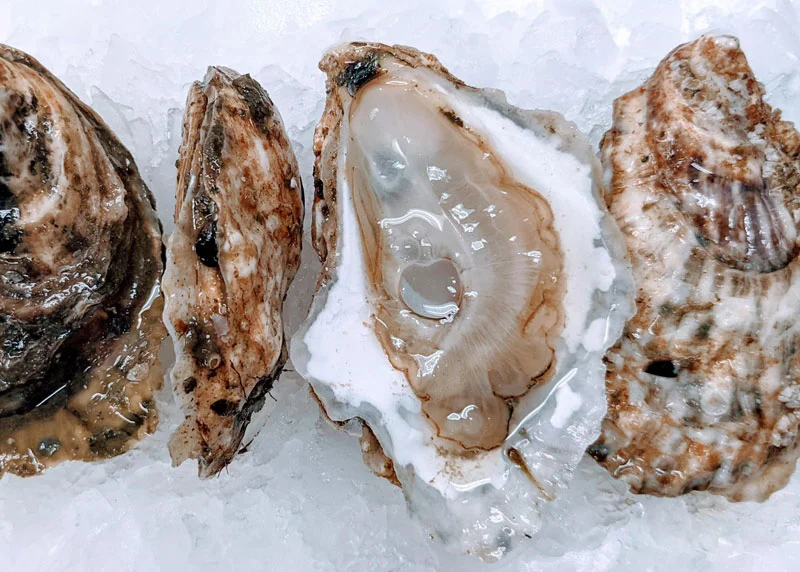
Appearance: Unique shell that is elongated and slightly curved, with a deep cup and a pointy tip. Pale to medium gray color, and may have hints of green or brown. The oysters have a plump, firm meat that is creamy-white in color.
Favor Profile: Sweet, buttery taste that is balanced by a briny, salty finish. The sweetness comes from their diet of phytoplankton, while the brininess is a result of their oceanic environment. Distinct mineral finish, which is influenced by the growing conditions in the Cape Cod region.
If you like Beach Plum Oysters, check out these similar varieties!
Location
Riptide Oyster Farm cultivates Beach Plum Oysters in the East Branch of the Westport River. The farm is located in Westport, Massachusetts, at the entrance of Buzzards Bay. This unique location, situated behind Horseneck Beach, provides an ideal environment for oyster growth by combining river and ocean influences.
Environmental Factors
The Westport River estuary offers a dynamic ecosystem that supports rapid oyster development. Strong tidal flows and continuous wave action contribute to the oysters’ distinctive characteristics and quick growth. These currents ensure a constant supply of nutrient-rich water, essential for filter-feeding oysters. The estuary water is brackish. Here, freshwater meets saltwater from Buzzards Bay. This mix creates an optimal salinity range of 26-30 parts per thousand for the oysters 12.
Riptide Oyster Farm employs suspended longline cages in deep waters, adapting techniques from Australian “Flip Farms.” This method takes advantage of the water column, exposing oysters to consistent water flow and food sources. The sand and mud bottom further enhances the oysters’ environment. It provides additional nutrients as tides and currents stir up the sediment 12.

These environmental factors combine to create ideal conditions for oyster growth and prosperity. Strong currents and wave action naturally tumble the oysters, promoting deep cups and sturdy shells. Nutrient-rich waters support rapid growth, allowing oysters to reach market size in 18-24 months. The pristine conservation land surrounding the farm helps maintain water quality. This contributes to the health and flavor of Beach Plum Oysters 2.
This guide is part of the Raw Bar Bible — chef-level technique, safety, and gear so you can shuck and serve oysters with confidence.
Suggested Beverage Pairings
- J. Lohr Sauvignon Blanc – This bright and zesty white wine offers crisp acidity. It features citrus and green apple notes. These flavors complement the oyster’s briny and sweet profile. The vibrant flavors cut through the oyster’s natural richness, enhancing the freshness.
- Allagash White Ale – This is a classic Belgian-style wheat beer with hints of orange peel and coriander. The ale’s subtle citrus and spice flavors pair beautifully with the sweet and mineral undertones of Beach Plum oysters.
- Grey Goose Martini – A classic vodka martini provides a clean base. It is smooth and highlights the oyster’s natural salinity. This accentuates its delicate sweetness. Add a lemon twist to amplify the freshness.
- Moët & Chandon Brut Champagne – The effervescence of this champagne creates a perfect balance. Its apple and citrus flavors complement the oyster’s briny notes. The bubbles cleanse the palate, making each bite of the oyster even more enjoyable.
- Hendrick’s Gin and Tonic – Hendrick’s is known for its botanical profile with cucumber and rose essences. It pairs well with the oyster’s sweetness. It also complements the oyster’s brininess. The gin’s floral complexity adds a sophisticated layer to the pairing.
- Kim Crawford Rosé – This rosé has a hint of berry sweetness. It offers a crisp finish. This balances the oysters’ salty and mineral qualities perfectly.
- Sierra Nevada Pale Ale – This craft beer has a light hop profile. It also has a subtle malty sweetness. This makes it complement the oysters without overpowering their delicate flavor.
- Patrón Silver Margarita – A fresh margarita comes with lime juice and a hint of orange liqueur. It mirrors the oyster’s clean and refreshing taste. The salted rim adds a playful echo of the oyster’s natural salinity.
Where to Buy Beach Plum Oysters
If you’re looking to buy Beach Plum oysters, here are some options to consider:
- Island Creek Oysters: This company sells online and ships them directly to consumers.
- Seafoods of the World: This company sells fresh oysters online.
- J.J. McDonnell: This company sells Beach Plum oysters and other oyster varieties to wholesale customers.
- Feeser’s: This company sells Beach Plum oyster shells to wholesale customers.
It’s worth noting that availability may vary depending on the season and location. It’s best to check with the seller to confirm availability and pricing.
References
- Island Creek Oysters. Shop Other Oysters. Island Creek Oysters, https://shop.islandcreekoysters.com/collections/other-oysters. Accessed 24 Nov. 2024.
- Fulton Fish Market. Oysters. Fulton Fish Market, https://fultonfishmarket.com/collections/oysters. Accessed 24 Nov. 2024.Seafoods of the World. Fresh Beach Plum Oysters. Seafoods of the World, https://www.seafoodsoftheworld.com/product/fresh-beach-plum-oysters. Accessed 24 Nov. 2024.
- J. Lohr. Sauvignon Blanc Wine Description. J. Lohr Vineyards and Wines, https://www.jlohr.com/. Accessed 24 Nov. 2024.
- Allagash Brewing Company. Allagash White. Allagas Brewing Co., https://www.allagash.com/beer/allagash-white/. Accessed 24 Nov. 2024.
- Moët & Chandon. Brut Imperial Description. Moët & Chandon, https://www.moet.com/. Accessed 24 Nov. 2024.
- Hendrick’s Gin. Hendrick’s Original Gin. William Grant & Sons, https://www.hendricksgin.com/. Accessed 24 Nov. 2024.
- Kim Crawford. Rosé Description. Kim Crawford Wines, https://www.kimcrawfordwines.com/. Accessed 24 Nov. 2024.
Stay Connected with The Oyster Encyclopedia!
Follow us on social media to get the latest updates, oyster recipes, and behind-the-scenes glimpses into the world of oysters:
Stay tuned for exclusive content, oyster trivia, and more! Engage with our vibrant community of oyster enthusiasts by liking, commenting, and sharing our posts. Your support helps us continue providing valuable oyster knowledge to fellow seafood lovers worldwide.
Discover more from The Oyster Encyclopedia
Subscribe to get the latest posts sent to your email.
My real-world read
Beach Plum oysters are what I grab when I want “New England clean” without the aggression. They come in medium (3–4″) with moderate salinity (24–28 ppt), so the brine is present but controlled — then the sweet/buttery part takes over and you get that distinct mineral finish at the end. On a raw bar, this is the kind of oyster that sells itself because nothing fights the palate.