



Chef’s Notes
Mason Bostwick · Executive Chef
Eastern oyster
East Beach Blonde oysters grow in floating cages on Ninigret Pond where breachway tides mix ocean and brackish water. Pale blonde shells and shallow cups carry strong initial salinity into bread-and-butter richness. I reach for them when I want a tumbled Rhode Island eastern from Charlestown at 28–32 ppt with sweet, clean finish.
Flavor chart
Chef palate read
Shuckability
Shell & line performance
When I buy it
I look for East Beach Blonde bands from East Beach Oyster Company or Island Creek — confirm Ninigret Pond floating-cage stock at roughly 2.5–3 inches and 28–32 ppt. Winter through spring often read firmest after cold pond water builds glycogen in the meats.
How I serve it
Raw on crushed ice with virgin liquor intact. East Beach Blonde cups read briny-sweet with mineral lift — lemon only, no heavy mignonette on tumbled blonde-shell meats.
What to watch for
Spawn-season milky liquor in warm months and lots held too long off refrigeration. Shallow blonde-accented shells should present plump white meats — reject gaping cups or cracked hinges from cage handling.
My read
East Beach Blonde is Charlestown’s signature blonde-shell eastern — tumbled Ninigret Pond cups with strong brine, bread-and-butter body, and sweet close Nick Papa and Jim Arnoux market year-round.
What Are East Beach Blonde Oysters?
East Beach Blonde oysters are cultivated in Ninigret Pond, Rhode Island. They stand out for their distinctive pale and golden shells with smooth texture and shallow cup shape. The unique environment of Ninigret Pond creates daily temperature fluctuations of up to 10 degrees.
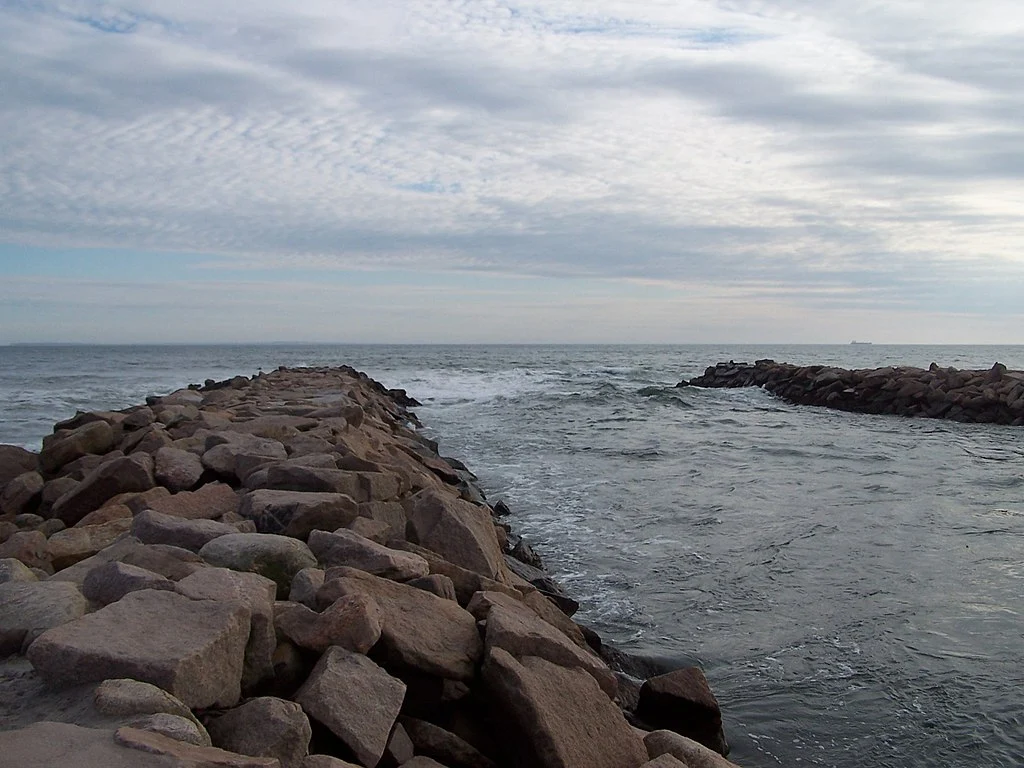
Ocean and brackish waters meet through a thin channel called the Breachway. That exchange shapes the pond’s daily rhythm. This contributes to their complex flavor profile.
Nick Papa and Jim Arnoux founded East Beach Oyster Company in 2003. They transformed what began as a part-time commercial shellfishing venture into a thriving operation. The operation is dedicated to year-round quality oyster production.
Their commitment to meticulous cultivation includes power washing. They also use periodic tumbling. This results in uniform cup shapes and clean, pearly shells.
The shells have characteristic blonde accents. Those golden tones mirror the pale shells described above. Farmers raise them in floating cages on Ninigret Pond.
These oysters deliver a sophisticated taste experience. They feature a strong initial saltiness. This transitions into a distinctive bread and butter flavor.
It concludes with a delicate, sweet finish. Unlike other Rhode Island oysters, East Beach Blondes pack more intense flavors. They maintain a balanced profile.
This makes them particularly noteworthy among East Coast varieties. These varieties typically exhibit higher salinity compared to their West Coast counterparts. That intensity sets East Beach Blondes apart on the raw bar.
How Did East Beach Blonde Oysters Get Their Name?
East Beach Blonde oysters derive their name from the beautiful East Beach in Charlestown, Rhode Island. This area is renowned for its golden sands and clear waters, reminiscent of a blonde hue. The term “Blonde” reflects both the beach’s light-colored sands and the oysters’ pale, golden shells.
The name also signifies their origin in the Ninigret Pond, located near East Beach. The pond’s connection to the Atlantic Ocean ensures that these oysters receive the perfect mix of fresh and saltwater. This unique setting is reflected in their distinctive flavor and clean finish.
About East Beach Blonde Oyster Company
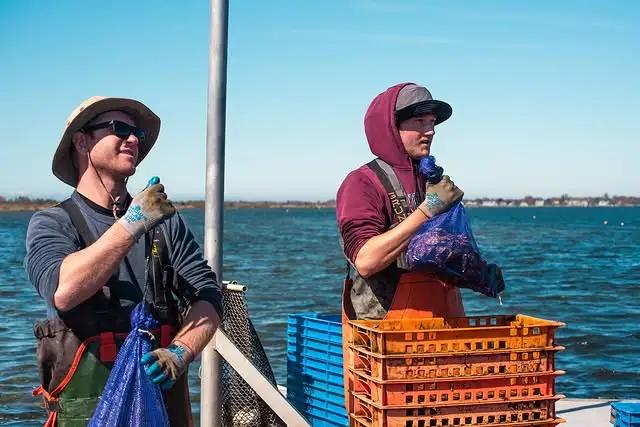
Nick Papa and Jim Arnoux founded East Beach Oyster Company in 2003 in Rhode Island. Papa initially attempted to diversify his commercial shellfishing income. This effort evolved into a full-time enterprise. The company is dedicated to harvesting high-quality shellfish, including oysters, steamers, mussels, and littlenecks.
Operations
The company operates on over 30 acres of pristine estuaries habitat in Ninigret Pond, Charleston. Their cultivation process starts with oyster seed in an upweller system before transitioning to a rack and bag method. The farmers constantly tend and tumble the oysters to promote thick shells and uniform shapes.
Company Evolution
In 2008, the Ocean State Shellfish Cooperative formed. During this time, Papa and Arnoux split their acreage. They expanded into separate oyster farming operations.
The company’s name cleverly references its blonde-haired founders. Their dedication to quality has established East Beach Blonde oysters as a distinguished Rhode Island product. That reputation draws chefs to Charlestown year-round.
Follow Them
Follow East Beach Oyster Company for Ninigret Pond harvest updates and blonde-shell releases from Charlestown. Their Facebook and Instagram channels post rack-and-bag farm news and availability for Rhode Island chefs. Island Creek and regional distributors often mirror those harvest windows when Charlestown blonde-shell lots move to the raw bar.
East Beach Blonde Oysters Information

Eastern oyster
If you like East Beach Blonde Oysters, then check out these similar varieties!
Location
East Beach Blonde oysters thrive in Ninigret Pond, a coastal lagoon located in Charlestown, Rhode Island. The pond spans 2,356 hectares with an average depth of 1.2 meters and maintains a water residence time of approximately 10 days. The location connects to the ocean through a breachway, creating a unique ecosystem where ocean and brackish waters meet.
The environmental conditions in Ninigret Pond provide ideal growing conditions for oysters. Water temperatures fluctuate seasonally. They range from 15-23°C in spring, 21-25°C in summer, and 10-20°C in fall.
Salinity levels maintain between 28-32 ppt. The pond’s bottom composition consists of sand, gravel, and mud, offering excellent substrate for oyster cultivation. Those conditions support rack-and-bag farming on the pond.
The pond’s ecosystem benefits from consistent water quality maintenance through natural tidal exchange and careful monitoring. The salt pond is protected by the barrier beach of East Beach. This protection creates a stable environment for oyster growth.
This location has unique characteristics. It includes a shallow depth and mixed bottom composition. These elements contribute to the oysters’ distinctive features.
They result in their characteristic blonde shells and complex flavor profile. That profile reflects the pond’s mix of ocean and brackish water. East Beach Blondes carry those traits to the half shell.

Suggested Beverage Pairings
Pemaquid Mezcal Cocktail brings smoky mezcal and Luxardo beside East Beach Blonde mineral notes from Ninigret Pond. Punt e Mes vermouth adds umami depth that frames blonde-shell brine without masking sweet butter finish on Charlestown cups.
Blood Orange Aperitif with Cocchi Americano delivers bitter citrus beside East Beach Blonde salinity on the half shell. Fresh blood orange juice sharpens Ninigret Pond brine while Cocchi rounds the bread-and-butter mid-palate on tumbled easterns.
Modified Negroni with Amaro Montenegro and French gin pairs sweet-astringent lift beside East Beach Blonde buttery meats. The pour keeps brine sharpness on blonde-accented Rhode Island cups without heavy mignonette on the raw bar.
Paloma brings light tequila and grapefruit beside East Beach Blonde creamy texture from floating-cage tumbling. A salted rim echoes Ninigret Pond salinity while citrus cuts through sweet blonde-shell finish on half-shell service.
Talisker 10 Year Scotch adds maritime smoke beside East Beach Blonde briny attack from Charlestown breachway water. Island malt complexity frames sweet blonde cups without overpowering mineral vegetal notes on Rhode Island easterns.
Where Can I Buy East Beach Blonde Oysters?
- Matunuck Oyster Bar Shop – Ships 50-count boxes with complimentary Matunuck oysters included, offering free shipping to Northeast regions and FedEx Standard Overnight delivery nationwide.
- Island Creek Oysters – Sells select sizes (2.5-3 inches) with overnight shipping options.
Stay Connected with The Oyster Encyclopedia!
Follow us on social media to get the latest updates, oyster recipes, and behind-the-scenes glimpses into the world of oysters:
Stay tuned for exclusive content, oyster trivia, and more! Engage with our vibrant community of oyster enthusiasts by liking, commenting, and sharing our posts. Your support helps us continue providing valuable oyster knowledge to fellow seafood lovers worldwide.
References
- “East Beach Blonde Oysters.” Island Creek Oysters, 2023.
- “East Beach Oyster Company Profile.” Rhode Island Shellfish Cooperative, 2023.
- “Ninigret Pond Aquaculture Management Plan.” Rhode Island Coastal Resources Management Council, 2022.
- Papa, Nick. “The Story of East Beach Oysters.” Rhode Island Aquaculture Initiative, 2021.
- “Rhode Island Shellfish Industry Report.” Department of Environmental Management, 2023.
- “Shellfish Growing Area Monitoring Program.” Rhode Island Department of Health, 2023.
- “Water Quality Assessment Report: Ninigret Pond.” Rhode Island Department of Environmental Management, 2022.
- “East Beach Blonde Product Specifications.” Matunuck Oyster Bar Shop, 2023.
- “Rhode Island Aquaculture: Economic Impact Report.” University of Rhode Island, 2022.
- “Coastal Lagoons of Rhode Island: Environmental Assessment.” National Oceanic and Atmospheric Administration, 2023.
Discover more from The Oyster Encyclopedia
Subscribe to get the latest posts sent to your email.