


Chef’s Notes
Mason Bostwick · Executive Chef
Eastern oyster
Riptide — Riptide — Strong minerality — subtle sweetness. A solid farmed eastern oyster.
Flavor chart
Chef palate read
Shuckability
Shell & line performance
When I buy it
Look for Riptide Oysters in peak season when salinity peaks.
How I serve it
On the half shell with minimal garnish — let the oyster speak.
What to watch for
Full brine with creamy finish. Reject any with broken shells or milky liquor.
My read
Strong minerality — subtle sweetness. A solid farmed eastern oyster.
What Are Riptide Oysters?
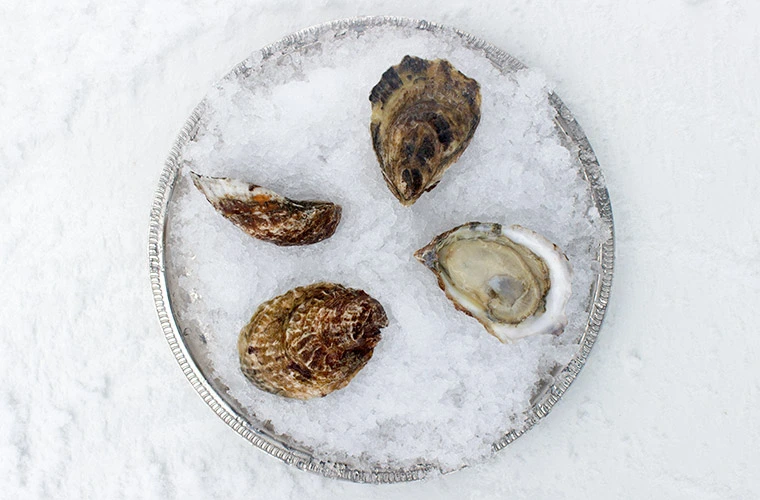
Riptide oysters are farmed Eastern oysters from the Westport River estuary in Westport, Massachusetts. The farm works the East Branch behind Horseneck Beach where tidal flow and conservation land shape grow-out conditions. Market cups usually land around two and a half to three inches for half-shell service.
Growers raise this line in floating flip-farm style bags that keep oysters tumbling and clean. Regular handling helps build sturdy teardrop shells with rippled bottoms and firm meats. The process supports consistent shell shape and presentation for raw-bar programs.
On the palate, Riptide opens with assertive brine and a sweet core. Tasters often note a savory olive-like edge and a green finish that makes the cup stand apart. Salinity around twenty-six to thirty ppt keeps the profile bold without flattening texture.
How Did Riptide Oysters Get Their Name?
Riptide oysters take their market name from strong current movement in the Westport River estuary. The branding ties the oyster directly to the dynamic tidal water that shapes shell and flavor. Buyers now recognize the label on distributor sheets and raw-bar menus across New England.
The name is a place-and-water signal rather than a separate species classification. It helps chefs and fishmongers quickly identify a Massachusetts-grown Eastern cup with a briny profile. That geographic naming pattern follows common practice in the premium oyster trade.
About Riptide Oyster Farm

Riptide Oyster Farm was founded in Westport by Kerian Fennelly and remains rooted in local aquaculture work. The team combines fisheries training, hands-on water labor, and small-estuary site knowledge to manage each crop cycle. Their operation was among the early Westport farms to secure aquaculture approval and scale commercial output.
Farm routines include nursery handling, bag rotation, grading, and harvest timing around weather and water quality windows. This labor-intensive cadence runs year-round to keep cups consistent for buyers and restaurants. The result is a recognizable Massachusetts oyster with strong provenance and dependable shell quality.
Riptide Oysters Information

Eastern oyster
If you like Riptide Oysters, then check out these similar varieties!
Location
Riptide oysters are grown in the Westport River estuary in southeastern Massachusetts near Buzzards Bay. The farm focuses on the East Branch behind Horseneck Beach where tidal energy remains strong. This placement gives the oysters regular water exchange through each grow-out cycle.
Brackish estuary flow brings both marine salinity and nutrient input that support plankton production. Those feeding conditions help the line develop dense meats and a savory finish during grow-out. Seasonal water management determines when harvest lots are pulled and packed.
Local tides and wind exposure also influence shell hardness and cup depth over time. Frequent tumbling and handling in floating gear reinforce shape and reduce fouling pressure. These physical conditions contribute to the line signature recognized by raw-bar buyers.
The broader Buzzards Bay setting keeps the farm connected to established Massachusetts shellfish distribution routes. That logistics access supports steady movement to wholesalers, retailers, and direct channels. Place-based branding and predictable quality keep Riptide visible in regional programs.
Suggested Beverage Pairings
Moët & Chandon Impérial Brut Champagne brings brisk bubbles and mineral lift to Riptide’s briny cup. The dry finish cleanses the palate between shucks. It is a classic sparkling match for rich Eastern oyster meats.
Guinness Draught Stout adds creamy texture and roasted malt against salty liquor. Low carbonation keeps the pairing smooth and balanced. The stout’s gentle bitterness supports the oyster’s savory tail.
A Negroni Sbagliato with extra Prosecco offers citrus bitterness and bright effervescence. Those notes contrast Riptide sweetness while refreshing the finish. The cocktail works well for guests who prefer aperitif-style pairings.
A chilled Hendrick’s gin martini keeps the flavor profile clean and aromatic. Botanicals frame the oyster’s brine without masking its texture. This pour suits traditional raw-bar service.
Whispering Angel Rosé contributes red fruit and crisp acidity with minimal tannin. The wine complements Riptide’s sweet-salty balance in warm-weather service. It is a versatile option for mixed seafood towers.
Where Can I Buy Riptide Oysters?
- Fortune Fish & Gourmet – Fortune Fish & Gourmet lists Riptide oysters from Westport, Massachusetts for wholesale and partner buyers.
- Island Creek Oysters – Island Creek Oysters carries Riptide lots from Westport with seasonal direct-to-consumer availability.
- Central Market – Central Market features Riptide oysters in its seafood assortment when supply windows are open.
- Marx Foods – Marx Foods routinely offers regional Eastern oyster selections and serves as an additional online purchase channel.
References
- Fortune Fish & Gourmet. Web. Accessed 30 May 2026. https://www.fortunefishco.net/riptide
- Island Creek Oysters :. Web. Accessed 30 May 2026. https://shop.islandcreekoysters.com/products/riptide-oysters-from-westport-ma-50-count
- Central Market :. Web. Accessed 30 May 2026. https://www.centralmarket.com/product/riptide-oyster-ea/8442530
Discover more from The Oyster Encyclopedia
Subscribe to get the latest posts sent to your email.