



Chef’s Notes
Mason Bostwick · Executive Chef
Eastern oyster
Lavaca Bay — Lavaca Bay — Strong minerality — creamy and mild brine. A solid wild eastern oyster.
Flavor chart
Chef palate read
Shuckability
Shell & line performance
When I buy it
Look for Lavaca Bay Oysters in peak season when conditions are optimal.
How I serve it
On the half shell with minimal garnish — let the oyster speak.
What to watch for
Mild salinity with creamy finish. Reject any with broken shells or milky liquor.
My read
Strong minerality — creamy and mild brine. A solid wild eastern oyster.
Lavaca Bay oysters are a variety of Gulf oysters that are wild-harvested from Lavaca Bay, Texas. They are a strain of the Eastern oyster, known for being large, tender, meaty, and mild in flavor. Oyster harvesting has been a significant part of the local economy in Port Lavaca. Despite environmental concerns in the past, the state has determined it safe to eat oysters from this area. Their low salinity and average size characterize these oysters.
What Are Lavaca Bay Oysters?
Lavaca Bay oysters are wild Gulf oysters harvested from Lavaca Bay on the Texas coast. They are Eastern oysters (Crassostrea virginica) known for large, tender, meaty cups. Commercial harvest remains active in one of the few Texas bays still open to oystermen. State regulators monitor water quality and have cleared shellfish from approved harvest zones.
On the half shell the line reads creamy with a mild Gulf brine. Salinity runs near twenty-eight ppt, softer than many Atlantic oysters despite the Gulf origin. The meat is plump and sweet with a fresh wild aroma on the nose. A balanced minerality lingers without sharp salinity, keeping the profile approachable.
Shells run large and irregular with a rough, dark exterior tinged green or brown. The typical three-inch cup shows an uneven hinge typical of wild reef harvest. Meats sit plump and cream-colored against a charcoal shell interior built for reef life. Chefs value them raw on the half shell when Gulf tags run November through April.
How Did Lavaca Bay Oysters Get Their Name?
Oyster farming in Lavaca Bay has a rich history that dates back hundreds of years. The bay, formed when the sea level rose following the last ice age, has been a significant site for seafood harvesting, including oyster harvesting. In the 1920s, Port Lavaca was a leader in shrimp production, which also supported the oyster industry, leading to the construction of a quick-freezing plant.
However, the industry faced challenges due to mercury pollution from heavy industry in Point Comfort, which led to restrictions on fish and shellfish production in certain areas of the bay. Despite these concerns, the state has determined it is safe to eat oysters from Lavaca Bay, and oyster harvesting remains a major industry. The bay’s mostly muddy bottom with large amounts of oyster reefs provides a suitable environment for cultivation. Today, oyster harvesting in Lavaca Bay continues, although it is not as prominent as once and is restricted to certain areas to protect nursery locations.
Wild Harvest in Lavaca Bay
Lavaca Bay oysters are wild-caught from natural reefs on the bay’s muddy bottom. Harvest crews locate established oyster beds and collect stock by hand or with tongs. Bottom culture on the seabed means shells grow directly on reef substrate without farm gear.
The bay’s mostly muddy bottom supports large oyster reefs across restricted harvest zones. Texas regulators limit some areas to protect nursery locations and maintain reef health. Mercury pollution from Point Comfort industry led to past shellfish restrictions in portions of the bay. State testing now clears approved zones for commercial harvest when water quality meets safety standards.
Oystermen supply local processors and Gulf distributors including Prestige Oysters from Port Lavaca. Harvest intensity is lower than in the bay’s peak shrimp and oyster boom decades ago. Wild tags still reach restaurants across Texas and the wider Gulf market each season.
Lavaca Bay Oysters Information

Eastern oyster
If you like Lavaca Bay Oysters, then check out these similar varieties!
Name: Lavaca Bay
Species: Crassostrea Virginica
Cultivation Method: Wild caught. Wild-harvesting involves locating natural oyster reefs in the bay and collecting the oysters by hand or with the use of tools.
Culture Method: Bottom Cultured on the seabed of Lavaca Bay.
Seasonality: November – April
Size: 3″+
Salinity: 15-23 ppt
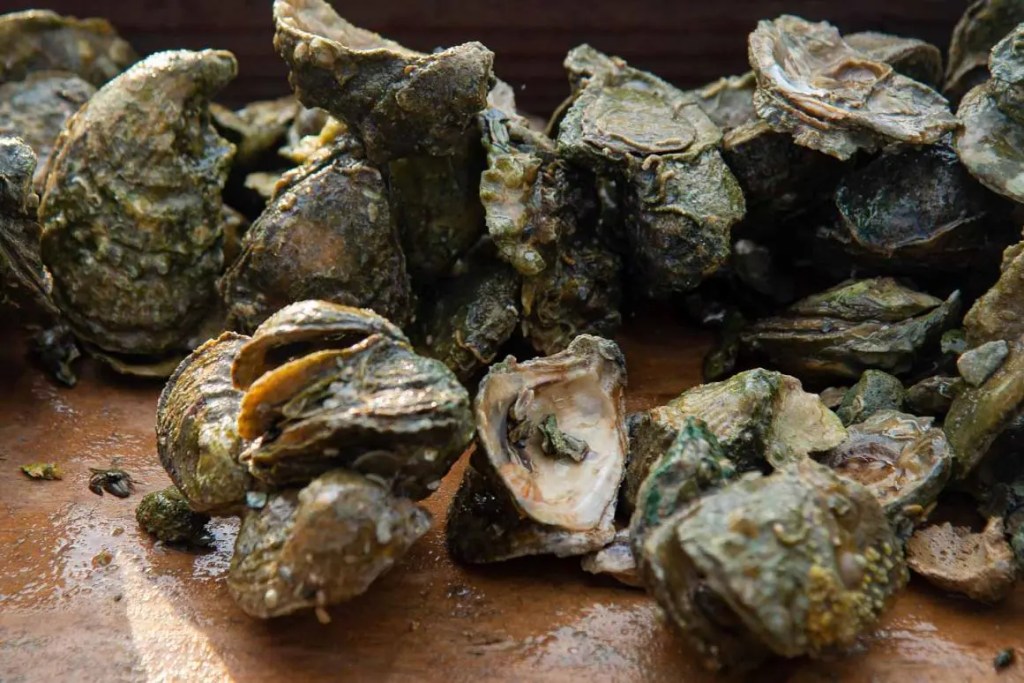
Appearance: Irregular shape with a rough, dark outer shell often tinged with green or brown.
Flavor Profile: A sweet, delicate, and robust flavor. As you take your first bite, you’ll notice a fresh, wild aroma that is both inviting and invigorating. The oyster’s meat is plump and creamy, providing a satisfying mouthfeel with a hint of the sea that is not overpowering. This sweetness is balanced by a mild brininess, a testament to the oyster’s Gulf origins.
Location
Lavaca Bay oysters are foraged from Lavaca Bay, Texas, near Port Lavaca on the Gulf Coast. The bay sits northwest of Matagorda Bay and opens toward the Gulf of Mexico. It remains one of the few Texas embayments still open to commercial oyster harvest. Oyster fishing has anchored the Port Lavaca economy for generations alongside shrimp and seafood processing.
Lavaca Bay formed when sea level rose after the last ice age flooded the coastal plain. The mostly muddy substrate and scattered reefs create classic Gulf oyster habitat. Fishermen work established beds that have supported shellfish harvest for centuries.
Past mercury contamination from Point Comfort industry led to harvest restrictions in parts of the bay. Ongoing state monitoring now clears approved zones for safe commercial oyster landing. Buyers should confirm current harvest-area advisories through Texas health and wildlife agencies.
Maps and tide charts guide oystermen to productive reefs within regulated boundaries. Product flows through local buyers like Miller’s Seafood and regional Gulf distributors. Peak market demand runs through the cooler months when Gulf oysters read fullest.
Suggested Beverage Pairings
Ryme Cellars Hog Island Oyster White Vermentino is made to pair with oysters. Bright acidity and salinity enhance Lavaca Bay sweet-briny Texas Gulf cups.
Domaine de la Pépière Muscadet brings light body, high acidity, and minerality beside Lavaca Bay oysters. Classic French white balances Texas Gulf sweetness and creaminess.
Guinness Draught brings rich creamy texture beside Lavaca Bay sweet mild flavor. Roasted malt sweetness and bitterness complement Texas Gulf half shells classically.
Classic Margarita brings tart lime and salted rim beside Lavaca Bay natural brininess. Tequila kick enhances Texas Gulf oyster salinity on raw-bar service.
Billecart-Salmon Brut Réserve brings high acidity and effervescence beside Lavaca Bay sweet delicate cups. Fine bubbles cleanse palate between Texas Gulf half shells.
Where Can I Buy Lavaca Bay Oysters?
- Miller’s Seafood – in Port Lavaca, Texas. They are known for their vast, fresh oysters.
- Prestige Oysters – A leading distributor and processor of Gulf Oysters, which includes those from Lavaca Bay.
- Bayside Seafood Restaurant – in Port Lavaca, Texas, as listed on Yelp’s top 10 best oysters near Port Lavaca.
References
- Prestige Oysters. Web. Accessed 30 May 2026. https://www.prestigeoysters.com/
Discover more from The Oyster Encyclopedia
Subscribe to get the latest posts sent to your email.