

Quick Facts
- Refined French Finish: Fine de Claire oysters are refined in shallow salt ponds for their signature briny-sweet flavor.
- Flavor Profile: Expect light salinity, a crisp vegetal finish, and a clean, oceanic aftertaste.
- Matured, Not Grown: These oysters are matured for 28 days in French “claires” after ocean harvesting.
- Appearance: Green-gilled hues often emerge from the presence of Navicula bluephila algae in the ponds.
- Popular in Europe: They are the most exported oyster from France, especially prized in seafood platters.
What Are Fine de Claire Oysters?
Fine de Claire oysters are among the most recognizable names in French oyster culture. Unlike typical oysters grown entirely at sea, these oysters go through an additional finishing process. They spend several weeks in nutrient-rich salt ponds, called “claires,” before reaching market. This process enhances their flavor and presentation.

These oysters are prized for their refined, oceanic taste with a clean finish. They are not as meaty or plump as some deep-water varieties. Instead, Fine de Claires offer a light, briny bite with more shell liquor and a slightly crisp texture. Their flavor suits oyster beginners and connoisseurs alike.
Fine de Claires are not a specific breed but a label of refinement. Farmers select oysters from Marennes-Oléron Bay and refine them using traditional methods. The controlled salinity and algae content of the ponds help shape both their taste and green-hued gills, making them a standout on seafood menus worldwide.
How Did Fine de Claire Oysters Get Their Name?
The term “Fine de Claire” comes from the French word “claire,” meaning a shallow salt pond used for oyster finishing. These man-made basins were originally salt pans converted into maturation beds for oysters. They became essential to the Marennes-Oléron oyster refinement industry in southwestern France.
“Fine” in this context indicates the oyster’s classification based on size and flesh index. French oyster grading standards assign the “Fine” label to oysters with a moderate meat content. When combined with the “de Claire” finishing method, the name “Fine de Claire” signifies both size and refinement process.
The Cultivation Process
Fine de Claire oysters are farmed oysters, but their hallmark lies in their post-harvest refinement. Farmers typically grow them in the Atlantic Ocean near the Marennes-Oléron basin. Once matured to market size, the oysters are transferred to the claires for final refinement.
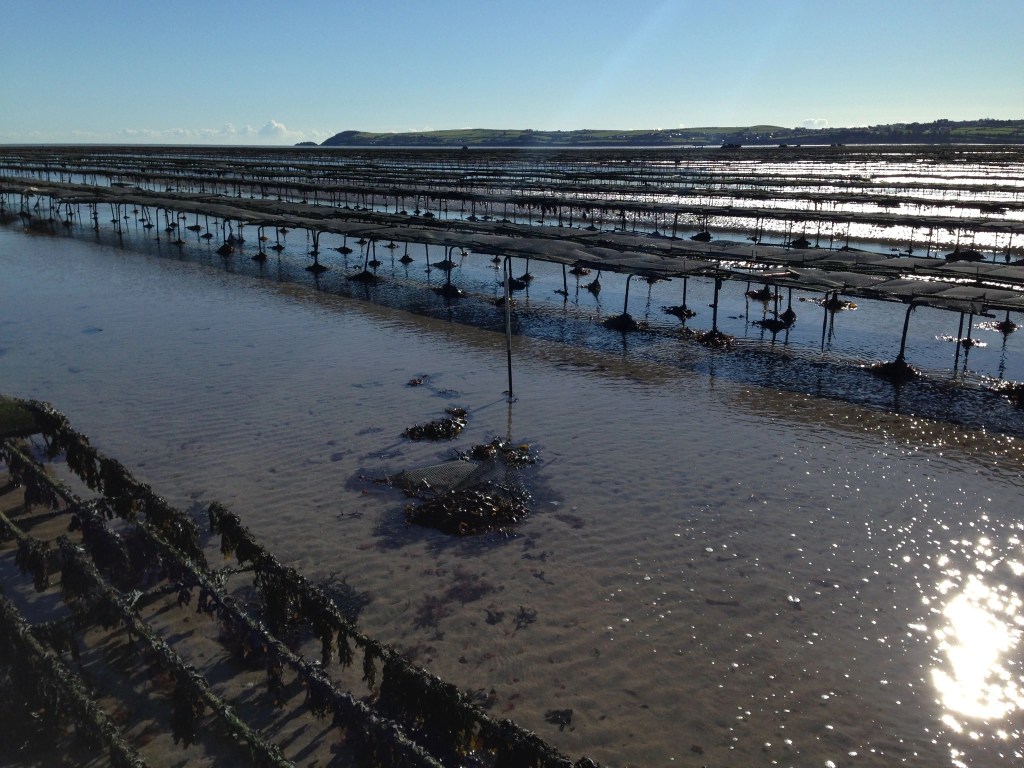
These claires are ancient salt ponds with controlled salinity and rich microalgae populations. Farmers like David Hervé and the Gillardeau family have perfected this process over generations. The oysters remain in the claires for 2 to 4 weeks, allowing them to filter the pond water and absorb flavor.
Farmers monitor the ponds carefully. The salinity, algae levels, and water quality are adjusted as needed to ensure consistency. Some claires encourage Navicula bluephila algae growth, which can tint the oyster’s gills green—a mark of premium quality in France.
About The Marennes Oléron Organization
The Marennes Oléron organization is a renowned collective of oyster producers based in the Marennes-Oléron basin, France’s largest and most historic oyster-farming region. This group unites hundreds of local oyster farmers who specialize in producing four main types of oysters: Fine de Claire, Fine de Claire Verte, Spéciale de Claire, and Pousse en Claire.

Their reputation is built on a commitment to traditional finishing methods—especially the use of shallow clay ponds, or claires—which impart distinct flavors, textures, and colors to their oysters.
This collective stands out for its rigorous quality standards and dedication to authenticity. The Marennes Oléron organization was the first in the world to earn the “Label Rouge” certification for a seafood product, awarded to their Fine de Claire Verte oysters. This distinction highlights their leadership in sustainable aquaculture and their focus on maintaining the highest product quality. The organization also carefully monitors every stage of production, from oyster selection to maturation, ensuring that each oyster reflects the unique marine terroir of the region.
The Marennes Oléron group prioritizes environmental stewardship and the preservation of local heritage. Their producers use time-honored techniques passed down through generations, balancing innovation with respect for nature. As a result, Marennes Oléron oysters are celebrated for their aromatic complexity, firm texture, and long, balanced finish—making the region a benchmark for excellence in the world of oysters.

Follow Them
Discover the authentic taste of Marennes Oléron oysters—crafted by generations of passionate producers and certified for exceptional quality. Taste tradition and excellence with every shell.
Fine de Claire Oysters Information
Oyster: Fine de Claire Oysters
Species: European Flat (Ostrea edulis) or Pacific (Crassostrea gigas), most often the latter
Cultivation Method: Farmed; 3+ years at sea, 3–4 weeks in claires
Size: 2″–4″ (5–10 cm)
Seasonality: November to March; available year-round
Culture Method: Oysters relocate from open sea to claires for maturation, then harvested and packed fresh
Salinity: 28–32 ppt; matches Marennes-Oléron’s basin waters

Appearance: fluted, oval-shaped shells with light gray to ivory tones. Their gills often show a distinctive green tint from algae in the Claires. The shell interior is smooth and pearly white.
Flavor Profile: Lightly briny with a crisp, oceanic freshness. They offer subtle notes of seaweed, cucumber, and a clean mineral finish. The texture is smooth, with a slightly firm bite.
If you like Fine de Claire oysters, then check out these similar varieties!
Location
cultivates oysters primarily in the Marennes-Oléron basin, located on the southwest coast of France in the Charente-Maritime region.
This area is one of the most famous oyster-farming zones in the world and holds France’s only Label Rouge and Protected Geographical Indication (PGI) for refined oysters. Gillardeau raises its oysters in offshore nurseries before transferring them to claires, or shallow salt ponds, for finishing. These claires are located in Bourcefranc-le-Chapus, near the mouth of the Seudre River.
The Marennes-Oléron basin is uniquely suited to oyster cultivation due to its mix of fresh and saltwater. The Seudre River provides consistent freshwater flow, which blends with nutrient-rich Atlantic tides. This brackish water environment promotes strong shell growth and allows oysters to feed on a variety of phytoplankton. The changing tides flush and oxygenate the area naturally, reducing the risk of disease and supporting sustainable farming practices.
Another critical environmental factor is the clay-rich soil lining the claires. This mineral-rich substrate imparts trace elements into the oysters, which subtly influence their flavor and help build stronger shells. The shallow depth of the ponds allows sunlight to warm the water, encouraging the bloom of beneficial algae like Navicula bluephila. These algae feed the oysters and often give their gills a prized green hue.
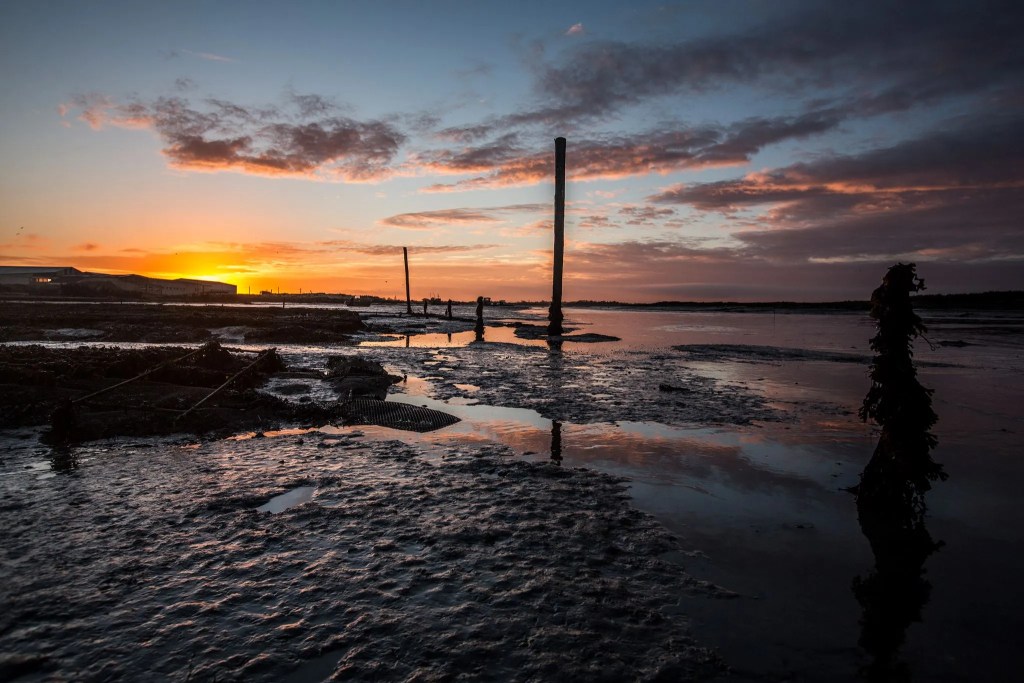
The temperate oceanic climate of the region ensures mild winters and warm summers. These conditions support year-round oyster farming without extreme temperature fluctuations. Combined with centuries of traditional farming knowledge and modern sustainability practices, the Marennes-Oléron basin remains one of the most productive and ecologically balanced oyster habitats in Europe.
Suggested Beverage Pairings
- Louis-Benjamin Dagueneau “Blanc Fumé de Pouilly” – This Sauvignon Blanc from the Loire Valley offers crisp acidity and flinty minerality. Its citrus and herbal notes enhance the oyster’s briny, vegetal profile.
- Ruinart Blanc de Blancs Champagne – Made from 100% Chardonnay, this Champagne is light, elegant, and finely effervescent. The bubbles and lemon zest finish complement the oyster’s clean, oceanic flavor.
- The Botanist Islay Dry Gin (served as a Martini) – Crafted with 22 island botanicals, this gin has floral and citrus complexity. Its herbal depth pairs beautifully with the oyster’s cucumber and mineral notes.
- Dupont Cidre Triple from Normandy – This sparkling French cider offers apple, brioche, and light funk. It cuts through the oyster’s saltiness while adding a touch of fruit and spice.
- Saison Dupont Farmhouse Ale – This Belgian saison delivers earthy hops, mild citrus, and peppery dryness. Its refreshing profile balances the oyster’s brine and cleanses the palate with every sip.
Where Can I Buy Fine de Claire Oysters?
1. Al Marsa Gourmet – Offers live Fine de Claire oysters in 48-piece boxes, sourced from Marennes-Oléron. Delivered chilled across Oman with protective packaging.
2. Royale Gourmet – Ships 24-piece packs of Fine de Claire No. 3 oysters from France. Fresh, air-flown, and available for delivery within Malaysia.
3. Rockfish – Delivers 12-piece sets of Fine de Claire oysters across the UK. Comes with next-day delivery in eco-friendly, chilled packaging.
4. Ostra Fine Foods – Weekly imports of Fine de Claire oysters, sold in boxes of 50. Delivered live to Phnom Penh, Cambodia, with premium freshness standards.
Stay Connected with The Oyster Encyclopedia!
Follow us on social media to get the latest updates, oyster recipes, and behind-the-scenes glimpses into the world of oysters:
Stay tuned for exclusive content, oyster trivia, and more! Engage with our vibrant community of oyster enthusiasts by liking, commenting, and sharing our posts. Your support helps us continue providing valuable oyster knowledge to fellow seafood lovers worldwide.
References
- “Marennes Oléron Oysters.” Maison Huîtres Marennes Oléron, https://huitresmarennesoleron.com/en/. Accessed 15 July 2025.
- “Fine de Claire Oysters.” The Oyster Gourmet, https://theoystergourmet.com/products/fine-de-claire-oysters. Accessed 15 July 2025.
- “French Oysters – A Guide to Marennes-Oléron Oysters.” France Today, 15 May 2021, https://www.francetoday.com/food-drink/french-oysters-a-guide-to-marennes-oleron-oysters/.
- “Oysters of Marennes-Oléron.” France.fr, https://www.france.fr/en/travel-guide/experience/marennes-oleron-oysters. Accessed 15 July 2025.
- “Buying Guide: French Oysters.” Fulton Fish Market, https://www.fultonfishmarket.com/blog/french-oysters-guide. Accessed 15 July 2025.
- “Fine de Claire Oyster.” Culinary Lore, https://www.culinarylore.com/food-science:fine-de-claire-oyster/. Accessed 15 July 2025.
- “La Route de l’Huître: Oysters, Claires and Salt Marshes.” Marennes-Oléron Tourism, https://www.oleron-marennes.com/en/taste/discover-our-oysters.
Discover more from The Oyster Encyclopedia
Subscribe to get the latest posts sent to your email.