

Chef’s Notes
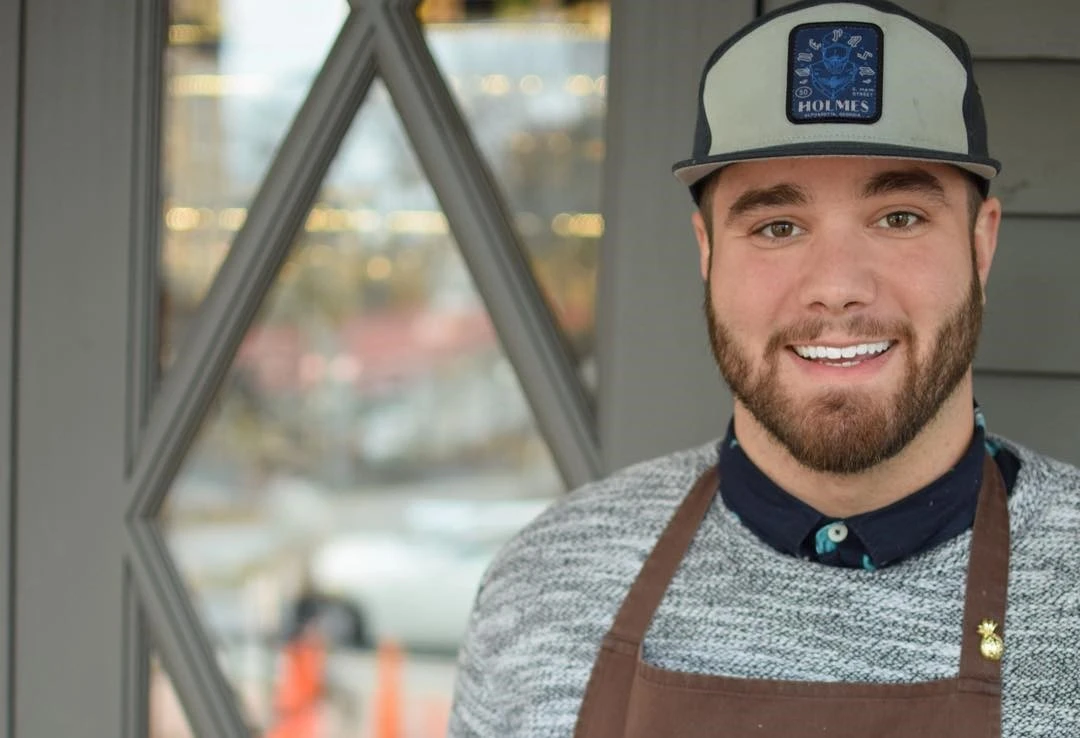
Mason Bostwick · Executive Chef
Pacific oyster
Shigoku — Taylor Shellfish’s tide-tumbled Pacific from Willapa and Samish Bays. Strong brine up front, a sweet finish, and a light cucumber note in a deep, clean cup.
Flavor chart
Chef palate read
Shuckability
Shell & line performance
When I buy it
I buy Taylor Shellfish tags and note whether the lot came from Willapa Bay or Samish Bay. Taylor harvests to order, so I ask when the bags left the water.
How I serve it
On the half shell with minimal garnish — let the oyster speak.
What to watch for
At two to two and three-quarter inches, these shuck fast, so keep the knife tight to the top shell. Reject any with broken shells or milky liquor.
My read
Bold brine, sweet finish, clean cucumber. A deep-cupped Pacific that shows exactly what tide tumbling does to a shell.
What Are Shigoku Oysters?
Shigoku oysters are farmed Pacific oysters, Crassostrea gigas, raised by Taylor Shellfish Farms in Washington. Taylor grows them in Willapa Bay and Samish Bay. The oysters sit in float bags on stationary lines that rise and fall with the tides. That motion tumbles them, chips the growing edge, and forces a deep cup. Market size runs about two to two and three-quarter inches.
On the half shell, Shigoku opens with strong brine and settles into a sweet finish. The meats are firm and plump, which Taylor credits to tumbling that works the adductor muscle. Rowan Jacobsen described a light, clean taste of cucumber and salt. He also noted a finish of water chestnut and Jerusalem artichoke.
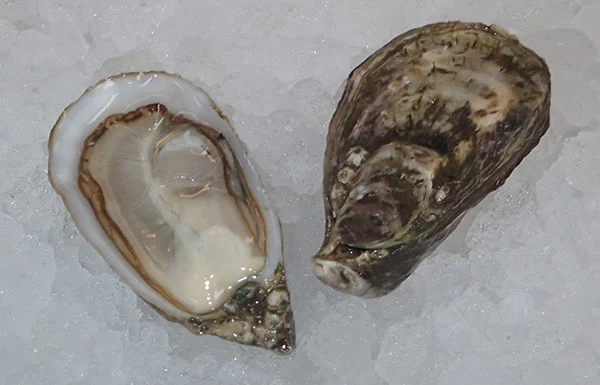
Shells are smooth and deeply cupped, often with black-and-gold exteriors, and tumbling leaves the edges rounded. Firm meats sit in clear liquor suited to raw-bar service. Taylor sells Shigoku year-round and harvests each order fresh. The line ranks among the most recognizable Pacific oysters on West Coast menus.
How Did Shigoku Oysters Get Their Name?
Shigoku takes its name from the Japanese word meaning ultimate. Taylor Shellfish chose the label to signal a premium Pacific oyster with an unusually deep cup. The name also sets this line apart from other Washington tags on wholesale sheets.
Taylor Shellfish introduced Shigoku in 2009. Rowan Jacobsen announced the new oyster that March on The Oyster Guide, calling it a Willapa Bay oyster. He described the method as a low-energy variation on the tumbling behind British Columbia’s Kusshi. The Seattle Times reported that the line began as a pet project of patriarch Justin Taylor.
Early crops grew near Bay Center, a small town on a peninsula in Willapa Bay. Taylor later raised Shigoku in Samish Bay as well. Shell tags list the harvest bay, but both carry the same Shigoku name. Buyers recognize the name on menus and distributor manifests across North America.
About Taylor Shellfish Farms
Taylor Shellfish Farms traces its roots to 1890 when the Taylor family began farming shellfish in Puget Sound. The company started with Olympia oysters in Totten Inlet before expanding across Washington and British Columbia tidelands. Today Taylor Shellfish is the largest farmed shellfish producer in the United States.
Brothers Edwin and Justin Taylor formed Taylor United in 1969 and built modern aquaculture across Puget Sound. The family now farms more than eleven thousand acres of tidelands for oysters, geoduck, and mussels. Bill and Paul Taylor and Jeff Pearson lead a team of over five hundred employees.
Taylor Shellfish raises Shigoku oysters in tide-tumbled float bags at Willapa Bay and Samish Bay sites. Farm teams emphasize water quality advocacy and careful handling from harvest through cold-chain shipping. The company’s retail shop sits on Chuckanut Drive in Bow, Washington, beside Samish Bay.

Colleen Taugher from Lewiston Idaho, USA, CC BY 2.0 https://creativecommons.org/licenses/by/2.0, via Wikimedia Commons
Follow Them
Visit the Taylor Shellfish Farms website for farm history, shop hours, and oyster bar locations. Order Shigoku direct from the Taylor Shellfish online store, which ships Tuesday through Friday. Follow @taylorshellfish on Instagram for harvest and farm photos. Taylor also posts updates on its Tide to Table Facebook page.
Shigoku Oysters Information

Pacific oyster
If you like Shigoku Oysters, then check out these similar varieties!
Location
Taylor Shellfish Farms cultivates Shigoku oysters in Willapa Bay and Samish Bay, Washington. Willapa Bay sits near the open Pacific on the state’s southern coast with strong tidal exchange. Samish Bay lies behind the San Juan Islands in northern Puget Sound with sheltered estuary conditions.
Salinity at both sites typically ranges twenty-six to thirty-two parts per thousand across the season. Float bags ride each tide, tumbling the oysters and shaping deep cups and smooth shells. Freshwater inputs and tidal flushing supply the plankton that feeds Pacific oyster growth.
Shigoku began in Willapa Bay, where the Seattle Times reported early crops near Bay Center. Samish Bay is home to Taylor’s retail shop on Chuckanut Drive in Bow. Growing in both bays helps Taylor keep Shigoku in supply year-round. Shell tags name the bay of harvest, so buyers can compare the two.
Washington shellfish monitoring and farm best practices protect water quality across both lease areas. Harvest teams grade for half-shell presentation before shipping to wholesale and retail buyers. Those regional conditions define the Shigoku profile on Pacific Northwest raw bars.
Suggested Beverage Pairings
Band of Bohemia Jasmine Beer adds floral crispness beside Shigoku creamy Pacific meats. Light body keeps cucumber finish forward without masking moderate salinity. Serve cold alongside freshly shucked cups.
Valdespino Family Manzanilla Sherry brings dry almond notes and brisk acidity to Shigoku brine. Saline sherry structure complements sweet mid-palate and clean finish. Pour chilled in small copitas between shells.
Troit Toits Muscadet offers mineral citrus and high acidity for Shigoku’s strong Washington brine. Bright Loire character balances firm meats and the sweet finish. It suits mixed West Coast seafood platters.
A dry Hendrick’s martini with lemon twist emphasizes Shigoku clean brine and cucumber notes. Botanical gin keeps sweet finish present through each bite. Serve ice-cold for sophisticated raw-bar pairings.
Cascade Brewing Kriek adds tart cherry acidity against Shigoku’s firm, plump meats. Sour beer contrast refreshes the palate between deep-cupped shells. It appeals to guests seeking beer over wine service.
Where Can I Buy Shigoku Oysters?
You can buy Shigoku oysters from the following sources:
- Pure Food Fish Market — Pure Food Fish Market offers fresh Shigoku oysters shipped from trusted Pacific Northwest suppliers when inventory allows.
- Taylor Shellfish Farms — Taylor Shellfish Farms sells Shigoku oysters direct from the grower with overnight shipping options across the United States.
- Pacific Wild Pick — Pacific Wild Pick lists live Shigoku oysters from Washington farms with focus on quality and cold-chain freshness.
- Element Seafood — Element Seafood provides Washington-sourced Shigoku oysters for retail buyers seeking premium half-shell Pacific cups.
References
- Pure Food Fish Market. Web. Accessed 30 May 2026. https://www.freshseafood.com/products/fresh-shigoku-oysters-in-shell
- Taylor Shellfish Farms. Web. Accessed 30 May 2026. https://buy.taylorshellfishfarms.com/oysters/shigoku-oysters
- Pacific Wild Pick. Web. Accessed 30 May 2026. https://pacificwildpick.com/products/shigoku-oysters
- Element Seafood. Web. Accessed 30 May 2026. https://www.elementseafood.com/product/shigoku-oysters
- Jacobsen, Rowan. “Shigokus.” The Oyster Guide, 2 Mar. 2009. https://www.oysterguide.com/new-discoveries/shigokus/
- “Shigoku Oysters. Hot Stuff. Can’t Get Enough.” The Seattle Times. Accessed 29 Sept. 2026. https://www.seattletimes.com/life/food-drink/shigoku-oysters-hot-stuff-cant-get-enough/
- “Shigoku Fever.” Sunset. Accessed 29 Sept. 2026. https://www.sunset.com/travel/northwest/seattle-oysters
Discover more from The Oyster Encyclopedia
Subscribe to get the latest posts sent to your email.