


Chef’s Notes
Mason Bostwick · Executive Chef
Navy Cove Oysters — Multiple purveyors distribute these oysters, famous for their moderate brine and rich, creamy, buttery flavor, to restaurants in Georgia, Texas, Louisiana, and Alabama. The cultivation of Navy Cove Oysters employs… Appearance: Beautifully farmed, indicating a well-shaped, clean shell. The shell color can vary, but it’s often a white, gray, and brown mix, typical of the Eastern oyster species.
Flavor chart
Chef palate read
Shuckability
Shell & line performance
When I buy it
Look for Navy Cove Oysters in peak season when salinity peaks.
How I serve it
On the half shell with minimal garnish — let the oyster speak.
What to watch for
Full brine with creamy finish. Reject any with broken shells or milky liquor.
My read
Bold brine — clean and versatile. A solid farmed eastern oyster.
Navy Cove Oysters, established in 2011, is a premium Gulf oyster brand known for their sustainable farming practices. Marine science researchers, including Dr. John Supan, founded the brand by producing them in the salty waters of southern Mobile Bay, along the northern shore of Fort Morgan. Their long-term friendship and working relationship led to the creation of this brand.
Multiple purveyors distribute these oysters, famous for their moderate brine and rich, creamy, buttery flavor, to restaurants in Georgia, Texas, Louisiana, and Alabama. The cultivation of Navy Cove Oysters employs specialized methods, highlighting their high quality and classification as boutique oysters.
About Navy Cove Oysters
Navy Cove Oysters LLC was founded in 2011 by marine science researchers Dr. John Supan and Dr. Charles Wilson. Eric Bradley was raised on a crawfish farm in south Louisiana and joined the partnership in 2016. The farm lies on the northern shore of Fort Morgan, Alabama, close to Navy Cove, a body of water that Native Americans, pirates, and the U.S. Navy frequented during the War of 1812 and World War II.
The partners sought to join a growing movement along the coastal regions of the Southern US and Gulf, producing prized oysters for the half-shell market. The farm has its nursery and grows its seed. Bon Secour Fisheries sells the oysters after planting and raising the seed.
In the first two years, the founders had permission to put ten cages in the water, and they ate all of their harvest. They were having fun. Then they decided they were pretty good oysters, so they decided to expand the operation.
The farm has had its best sales year recently and currently has 1 million oysters in the water to be harvested. Restaurants along the Alabama coast, Birmingham, Baton Rouge in Louisiana, Columbus and Atlanta in Georgia, Galveston in Texas, and sometimes Houston offer their oysters.
You can contact Navy Cove Oysters on their official website. You can also check out their social media accounts: Facebook, Instagram, or X.
Navy Cove Oysters Information
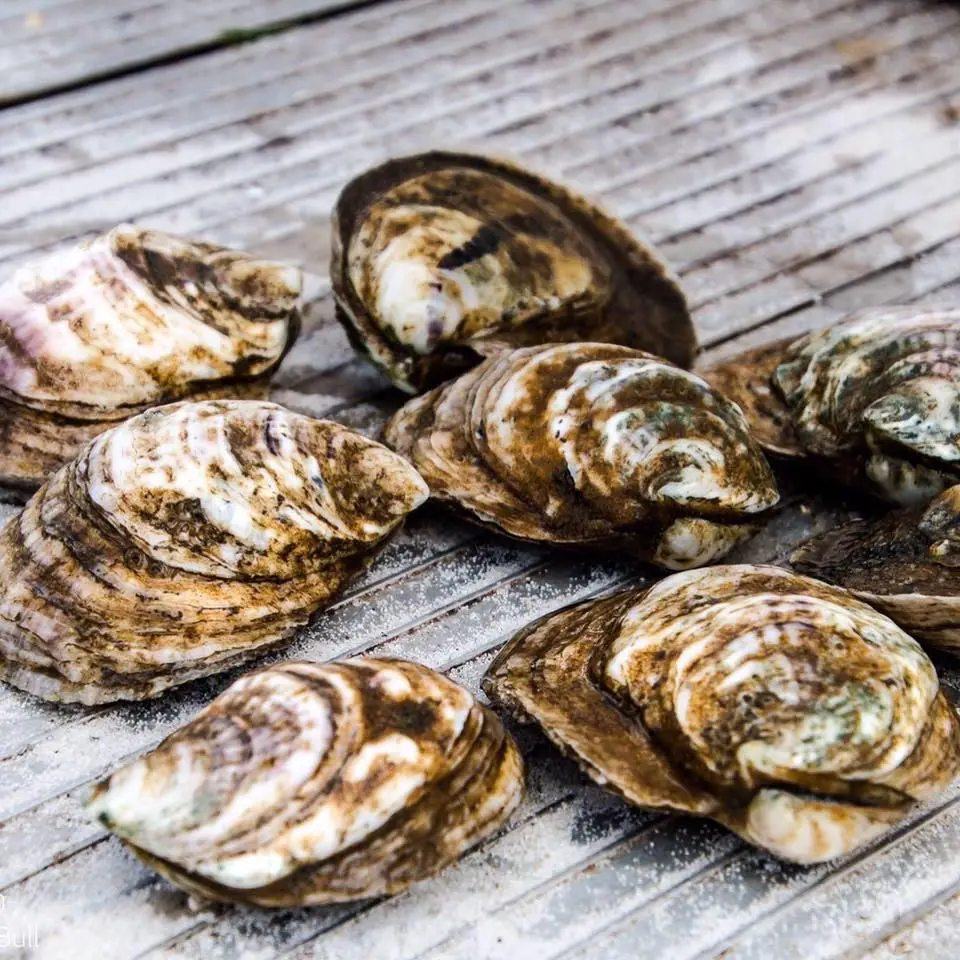
Appearance: Beautifully farmed, indicating a well-shaped, clean shell. The shell color can vary, but it’s often a white, gray, and brown mix, typical of the Eastern oyster species.
Flavor Profile: The gulf waters contribute to their moderate brine and sweet, cucumber-like finish. The meat has a delicate creamy, buttery texture.