



Chef’s Notes
Mason Bostwick · Executive Chef
Eastern oyster
Little Ram — Little Ram — Strong minerality — briny and clean. A solid farmed eastern oyster.
Flavor chart
Chef palate read
Shuckability
Shell & line performance
When I buy it
Look for Little Ram Oysters in peak season when salinity peaks.
How I serve it
On the half shell with minimal garnish — let the oyster speak.
What to watch for
Full brine with clean finish. Reject any with broken shells or milky liquor.
My read
Strong minerality — briny and clean. A solid farmed eastern oyster.
Quick Facts
- Cultivated by women-owned Little Ram Oyster Company on Long Island’s North Fork
- Known for crisp minerality and medium salinity
- Harvested from a 10-acre farm in Gardiners Bay
- Available year-round through their farm stand and online store
- Sustainably farmed, supporting local ecosystem health
What Are Little Ram Oysters?
Little Ram Oysters offer a distinctive taste of Long Island’s Gardiner’s Bay. These small to medium-sized bivalves pack a flavorful punch. They deliver a crisp minerality. Their medium salinity evokes the essence of a seaside vacation.
What sets Little Ram Oysters apart is their unique “merroir” – the aquatic equivalent of terroir. These oysters grow in the nutrient-rich confluence of Peconic Bay, Orient Harbor, and Gardiner’s Bay. They develop a crisp, briny flavor that perfectly expresses their 10-acre ocean home, and the farm’s location enhances this distinctive taste profile. The tidal structure ensures each oyster is a true representation of its environment.
Little Ram Oyster Company employs subtidal, off-bottom culture farming techniques. They suspend their oyster cages inches above the bay floor, allowing for optimal growth conditions. This method, combined with periodic machine tumbling, results in oysters with deeper cups, plumper meat, and harder shells. The tumbling process also enhances the oysters’ appearance, creating a clean, polished look that appeals to both chefs and consumers.
How Did Little Ram Oysters Get Their Name?
The name reflects the small but mighty nature of these oysters. Despite their modest size, Little Ram Oysters pack a flavorful punch, much like a small ram. The choice of “Ram” in the name also alludes to the strength and resilience of these oysters.
Rams are known for their hardiness. That hardiness mirrors oysters that thrive in varying water conditions. This name effectively captures the essence of these small but robust bivalves.
About The Farm
Little Ram Oyster Company was established in 2018. It is a women-owned and operated family business. Elizabeth Peeples and Stefanie Bassett founded the company. The couple started their journey in Brooklyn.
They moved to oyster farming on Long Island’s North Fork. It all began with a Groupon for an oyster shucking class. This class ignited their passion for these bivalves.

After 17-year careers in New York City, Peeples and Bassett made the bold decision to transition into aquaculture. They acquired a 10-acre oyster farm in Gardiners Bay, despite having no prior farming experience. Their enthusiasm and commitment impressed the previous owner. He appreciated their vision of supporting female and LGBTQ+ entrepreneurship in the industry.
Little Ram Oyster Company has grown significantly since its beginning. The farm now produces approximately 1.5 million oysters annually, with about 750,000 oysters filtering the waters at any given time. Each oyster filters up to 50 gallons of water per day, contributing substantially to the local ecosystem’s health.
Innovation in The Space
The company has embraced innovation in its operations. In 2023, they introduced the Oyster Automat, a 24/7 vending machine that dispenses fresh oysters, shucking kits, and other products3. This unique offering demonstrates their commitment to making fresh oysters accessible to customers around the clock.
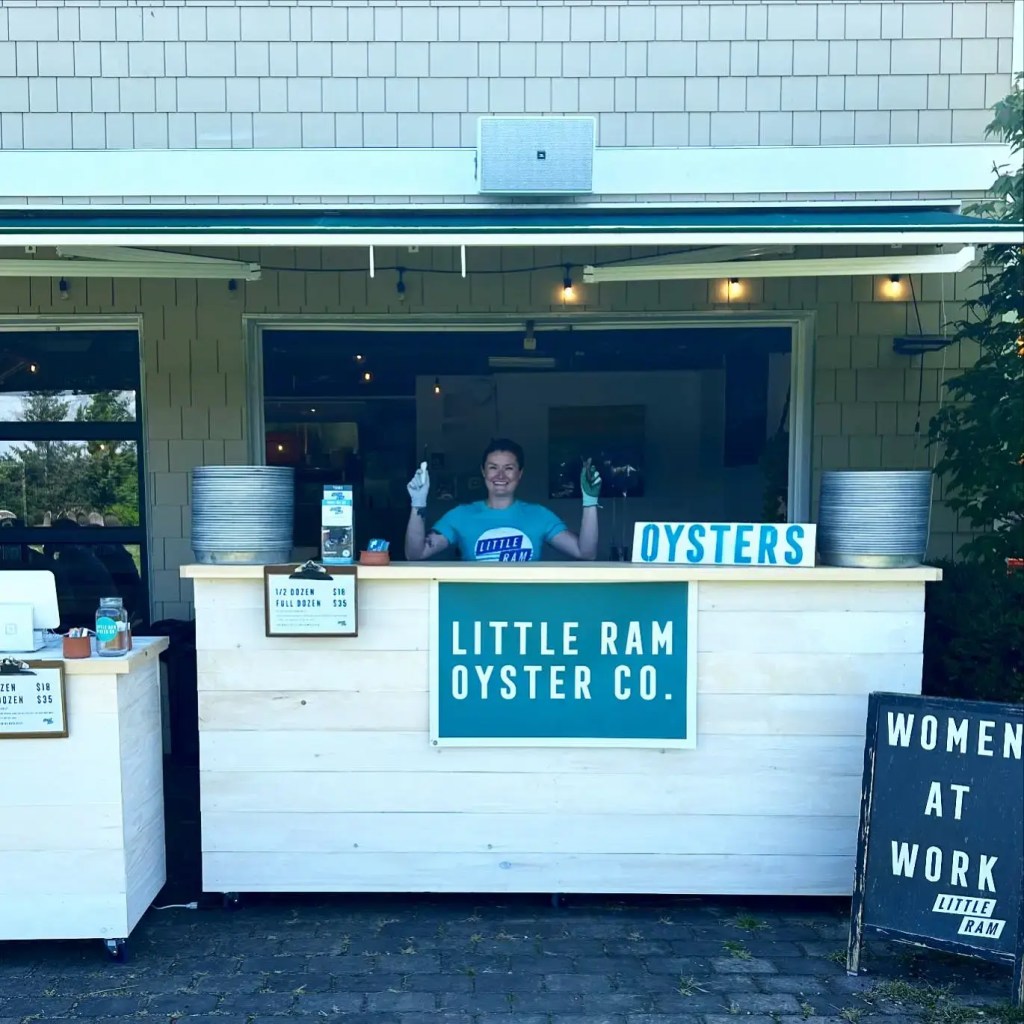
Peeples and Bassett have divided their responsibilities to manage the farm efficiently. Stefanie focuses on water operations, handling farming and harvesting, while Elizabeth manages the business aspects on land. Their work extends beyond cultivation. They actively join in the Long Island Oyster Growers Association (LIOGA).
They also collaborate with other local businesses. The couple’s commitment to sustainability has garnered attention from various media outlets. Their focus on community involvement also caught the eye of publications like The New York Times, Vogue, and Bloomberg. Their story exemplifies the growing trend of urban professionals transitioning to sustainable agriculture and contributing to local economies.
Follow Them
Craving a taste of Long Island’s finest? Dive into the world of Little Ram Oysters! Visit their official website to explore their story, farming practices, and mouthwatering offerings.
Follow their social media pages for fresh updates. Get oyster tips and a glimpse into life on the farm. Treat yourself to these briny gems and experience the essence of Gardiner’s Bay in every bite!
Little Ram Oysters Information

Eastern oyster
If you like Little Ram Oysters, then check out these similar varieties!
Location
Little Ram Oysters are cultivated in Gardiners Bay on the North Fork of Long Island, New York. This 10-acre farm sits in a unique position that provides ideal conditions for oyster growth4. The site benefits from the confluence of Peconic Bay, Orient Harbor, and Gardiner’s Bay.
This meeting of waters creates a nutrient-rich environment that supports robust oyster growth. The bay’s composition of coarse sand and gravel mixtures forms a hard bottom, which is crucial for supporting oysters6. This substrate is superior to many other oyster-growing regions in the United States.
Composition of The Bay
It provides a stable foundation for the oysters to thrive. The bay’s tidal structure is crucial. It creates a unique “merroir,” which is the aquatic equivalent of terrior.

Salinity Levels
This contributes to the oyster’s characteristic taste described by farmers as “tasting like vacation”41. Gardiner’s Bay’s salinity level of approximately 31 parts per thousand contributes significantly to the oyster’s flavor profile6. This high salinity imparts a crisp, briny taste to the Little Ram oysters, making them distinctively flavorful.
The Technique And The Bay
The farming technique employed by Little Ram Oyster Company further enhances the environmental benefits. They practice subtidal, off-bottom culture farming, suspending their oyster cages inches above the bay floor4. This approach provides optimal growth conditions, and the natural conditions of Gardiner’s Bay also contribute.
As a result, oysters develop deeper cups. They have plumper meat and harder shells. The location’s environmental factors, coupled with the farming methods, create an ideal ecosystem for cultivating high-quality oysters.
Suggested Beverage Pairings
Greenport Harbor Harbor Ale brings crisp slightly hoppy character beside Little Ram Peconic Bay brininess. Local North Fork craft beer complements delicate Long Island half shells without overpowering cup.
Paumanok Vineyards Chenin Blanc offers bright acidity and mineral notes beside Little Ram clean crisp profile. North Fork white enhances Peconic Bay salinity on raw-bar pours.
Kontokosta Winery Sauvignon Blanc brings citrusy undertones and grassy notes beside Little Ram salinity. Long Island Sauvignon refreshes palate between North Fork half shells.
Macari Vineyards Early Wine Chardonnay offers light fruity unoaked character beside Little Ram subtle sweetness. North Fork Chardonnay pairs cleanly with Peconic Bay cups.
North Fork Daiquiri brings lime acidity and subtle sweetness beside Little Ram briny flavor. Matchbook rum cocktail balances Long Island Peconic Bay half-shell salinity.
Where Can I Buy Little Ram Oysters?
- Little Ram Oyster Company – Purchase directly from their farm stand in Southold, NY, or use their innovative Oyster Automat for 24/7 access to fresh oysters
- Fulton Fish Market – Order Little Ram Oysters online for nationwide delivery, available in counts of 50 or more.Island Creek Oysters – Another online option for purchasing Little Ram Oysters, offering various quantity options for home delivery.
References
- Little Ram Oyster Company. “Home.” Little Ram Oysters, http://www.littleramoysters.com.
- Long Island Oyster Growers Association. “Little Ram Oyster Co.” LIOGA, http://www.liogany.org/little-ram.
- “Rough and Tumble: Little Ram Oyster Company.” Edible Manhattan, 23 Jan. 2023, http://www.ediblemanhattan.com/progressives/rough-and-tumble-little-ram-oyster-company/.
- United States, National Marine Fisheries Service. “Articles.” Seafood Processing & Observation, spo.nmfs.noaa.gov/sites/default/files/pdf-content/mfr3213.pdf. Accessed 5 Oct. 2024.
- Northforker. “Get fresh oysters 24/7 with Little Ram Oyster Co.’s Oyster Automat.” Northforker, 9 Nov. 2023.
- Bloomberg. “Weekend Trips- All Women Run Oyster Farm.” Bloomberg, 1 July 2022.
- Northforker. “Get fresh oysters 24/7 with Little Ram Oyster Co.’s Oyster Automat.” Northforker, 9 Nov. 2023.
Stay Connected with The Oyster Encyclopedia!
Follow us on social media to get the latest updates, oyster recipes, and behind-the-scenes glimpses into the world of oysters:
Stay tuned for exclusive content, oyster trivia, and more! Engage with our vibrant community of oyster enthusiasts by liking, commenting, and sharing our posts. Your support helps us continue providing valuable oyster knowledge to fellow seafood lovers worldwide.
Discover more from The Oyster Encyclopedia
Subscribe to get the latest posts sent to your email.