

Quick Facts
- Origin: Branded oysters grown off Karatomari in Nishi‑ku, Fukuoka City, Japan.
- Species: Pacific oyster, Crassostrea gigas.
- Best season: Peak flavor from December through February each winter.
- Flavor profile: Rich, creamy, and sweet, without strong fishiness.
- Signature style: Sold and enjoyed primarily as charcoal‑grilled oysters at the Karatomari Ebisu Oyster Hut.
What Are Karatomari Ebisu /3Oysters?
Karatomari Ebisu oysters come from Hakata Bay, near Fukuoka in southern Japan. Local fishers raise them under strict safety controls, then serve them mainly grilled at a bustling oyster hut on the shore. This hands‑on style makes Karatomari Ebisu feel more like a winter event than a simple plate of oysters.
Karatomari Ebisu oysters also carry an award‑winning reputation inside Japan. A panel of fifty oyster specialists once ranked them second best in the country, which pushed the local brand into the national spotlight. Only the Karatomari Ebisu kakigoya serves these specific oysters, so eating them means traveling to their home port on the Itoshima Peninsula. That exclusivity mirrors how some French or Pacific Northwest oysters only appear in one region or one type of bar. At Karatomari, customers order baskets by weight, grill them at long shared tables, and enjoy them alongside simple sides like rice, scallops, or squid. The whole setting highlights the oysters as a local winter specialty rather than a generic commodity.
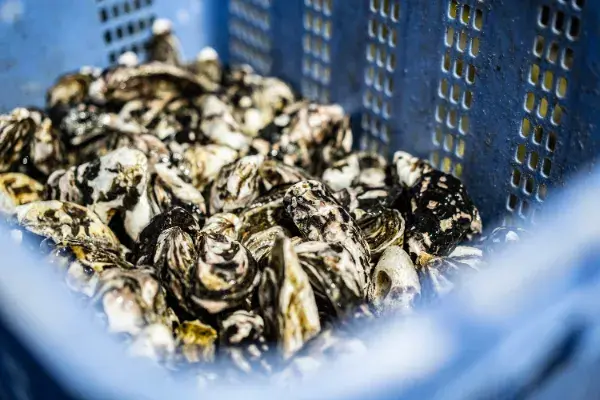
What truly makes Karatomari Ebisu oysters unique is the combination of their growing area, handling, and eating style. Hakata Bay and the Genkai Sea provide clean, cold water that helps the oysters build thick, flavorful meat through winter. The local fishery then cleans, purifies, and inspects every batch so guests can safely enjoy them straight from the bay. Instead of shipping widely, the community focuses on serving them at the seaside hut, where people grill, season, and eat them within sight of the farming grounds. That tight link between sea, harbor, and table gives Karatomari Ebisu oysters a clear sense of place that many other oysters never achieve.
How Did Karatomari Ebisu Oysters Get Their Name?
The English word “oyster” traces back to Latin “ostrea” and Greek “ostrakon,” both referring to hard‑shelled shellfish. These roots highlight the importance of the shell as the defining feature of the animal. Over centuries, European languages adapted the term as oysters gained culinary and cultural value. That lineage explains why scientific names for many oyster genera still echo the older classical forms.
Karatomari Ebisu Oysters take their brand name from both place and tradition. “Karatomari” refers to the historic fishing port and district along the eastern edge of the Itoshima Peninsula in Fukuoka. “Ebisu” names the Japanese god of fishermen, luck, and prosperity, who has a local shrine in the same area. Together, the name signals oysters tied to a specific harbor, guided by maritime heritage, and marketed as a premium local specialty.
About The Karatomari Fishery Cooperative Association
Karatomari Ebisu oysters are cultivated by the Karatomari branch of the Fukuoka City Fisheries Cooperative, often called the Karatomari Fishery Cooperative Association. This local cooperative brings together fishermen who farm, manage, and market the branded “Karatomari Ebisu Oysters” from the historic Karatomari fishing port in Fukuoka’s Nishi‑ku district.

The cooperative began cultivating oysters around 2001 and soon launched the Karatomari Ebisu brand to highlight their local product. In 2003, the group opened a simple oyster hut so people could eat the oysters near the harbor, then expanded it in 2007 into a large kakigoya that now seats hundreds of guests each season. This setup lets the cooperative control the full chain from sea to table, instead of relying on outside wholesalers or restaurant groups.
Operationally, the cooperative’s fishermen grow the oysters in offshore waters, then bring them to land for sorting, cleaning, and depuration. They hand‑separate sizes, polish shells, and soak the oysters in sterilized, circulating seawater for at least 24 hours to ensure safety and quality. The same organization then sells the oysters directly at the Karatomari Ebisu kakigoya and supplies select hotels, restaurants, and export clients, using strict quality checks and regular health inspections to protect the brand’s reputation.
Follow Them
Explore more straight from the source. Visit the Karatomari Fishery Cooperative Association’s official website and follow their social media profiles to see harvest updates, seasonal events, and real‑time oyster hut action.
The Cultivation Process
Fishers cultivate Karatomari Ebisu Oysters in the clear offshore waters near Karatomari, along the eastern coast of the Itoshima Peninsula. These are farmed Pacific oysters grown using suspended aquaculture in sheltered coastal zones rather than wild‑dredged shellfish. While exact grow‑out time is not always specified, Japanese Pacific oysters typically take around two to three years to reach market size in cool, nutrient‑rich waters. The cooperative focuses on producing medium‑large oysters with thick, plump meat suited to grilling.
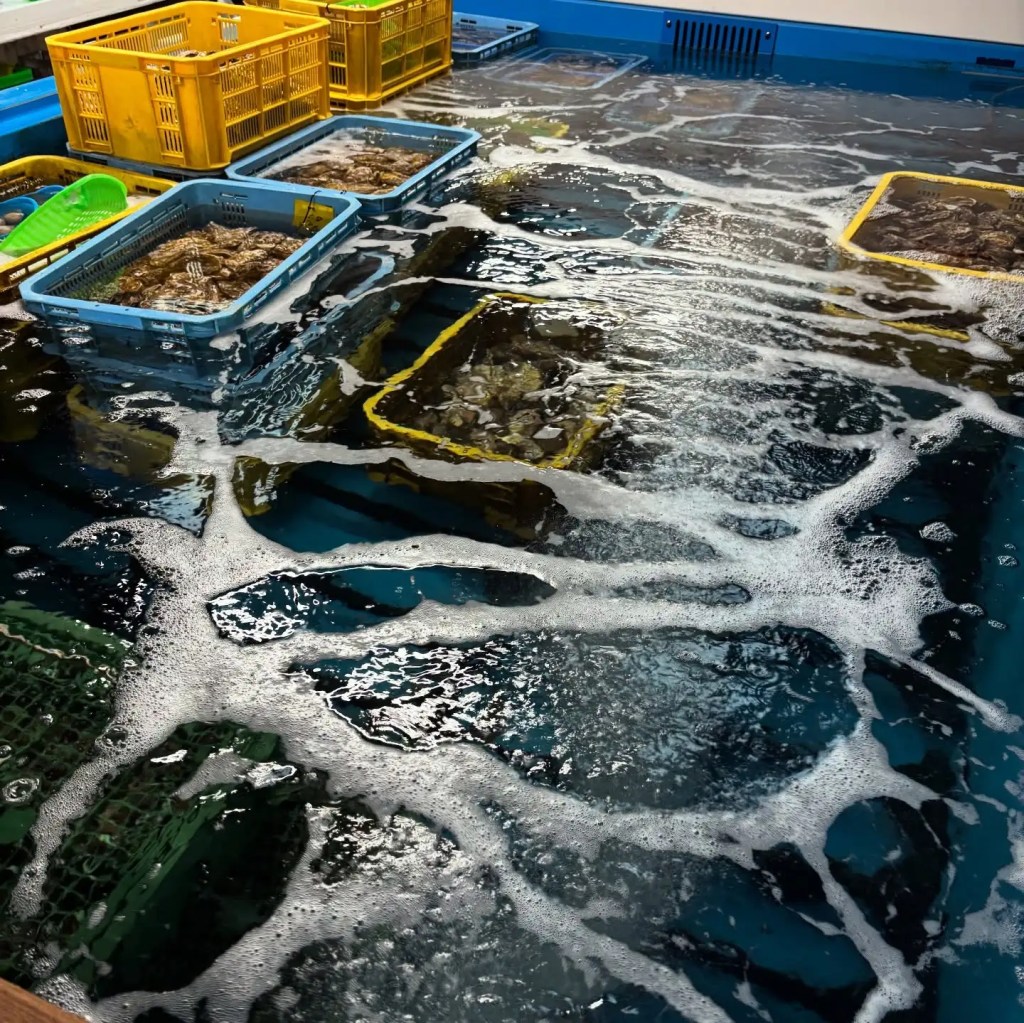
After harvesting from offshore beds, workers move the oysters to shore‑side facilities at Karatomari Fishing Port. There, they sort, clean, and polish shells entirely by hand to improve presentation and remove fouling. The oysters then undergo depuration in tanks of continuously circulated seawater that has been sterilized with ozone and ultraviolet light. This step lasts at least 24 hours before shipment or service at the oyster hut. These methods help deliver oysters that are visually appealing, safe to eat, and consistent in flavor and texture.

The Raw Bar Bible
A deeper look into oysters, shucking technique, brine, knife choice, and real raw bar workflow — written from a chef’s point of view. Clear, practical, and built from actual service experience.
Karatomari Ebisu Oysters Information
Oyster: Karatomari Ebisu Oysters.
Species: Pacific oyster (Crassostrea gigas).
Cultivation Method: Farmed
Size: Typically sold as large, plump oysters with thick, chewy meat, offered in 500 g and 1 kg baskets rather than by inch count.
Seasonality: Early November through late March, with peak quality in the coldest winter months.
Culture Method: Grown in suspended or raft‑style systems in clean, open coastal water, then sorted, polished, and purified in sterilized, circulating seawater for at least 24 hours.
Salinity (in ppt) 28 to 32 ppt,

Appearance: sturdy, deep shells that look clean and well polished, with smooth surfaces and muted gray, cream, and brown tones. When opened, the cup holds abundant clear liquor and a large, glossy mantle that fills most of the shell.
Flavor Profile: Rich and creamy, with a soft, full mouthfeel and very little fishiness. Their liquor gives a clean, moderate brine with gentle sweetness, and when grilled they show concentrated umami, light smokiness, and a rounded, satisfying finish.
If you like Karatomari Ebisu Oysters, Then Check Out These Similar Varieties!
Location
Karatomari Ebisu oysters are cultivated in the offshore waters near Karatomari Fishing Port, on the western edge of Fukuoka City along Hakata Bay and the Genkai Sea.
Farmers place gear in clean, open coastal water rather than crowded inner harbors. This gives oysters steady access to clear, flowing seawater and natural plankton. The setting lies just off a historic fishing village near low, scenic coastline. Farms thus benefit from open-sea influence and protection from extreme surf.
Environmental Factors
Several key environmental factors here support strong oyster growth. The Genkai Sea delivers oceanic water with good salinity and oxygen. Hakata Bay and nearby inlets soften conditions to avoid harsh offshore swells. Local rivers and runoff add nutrients that feed phytoplankton. This gives oysters reliable food through cool months when they build dense meat. Winter temperatures stay low but not brutal. Growth slows just enough to tighten texture without stress or mortality spikes.
Coastline and seafloor shape make this area ideal for farming. Headlands, islands, and gentle bays break up wave energy. Longlines, rafts, and suspended systems thus sit securely through the season. Water stays deep enough for constant submersion yet shallow enough for easy boat access, gear maintenance, and efficient harvesting. This balance lets farmers work quickly in short winter daylight, moving oysters from water to shore with minimal delay.

Human management adds another layer of advantage for oyster prosperity. The Karatomari fishery uses strict handling and purification steps once oysters leave the farms, which helps maintain water quality expectations and supports a premium brand image. Because the oysters are sold directly at the Karatomari Ebisu kakigoya and to select buyers, farmers have strong incentive to protect the local environment and avoid practices that would cloud the water or damage the bay. Together, the natural setting and careful stewardship create a location where oysters can thrive and develop the large, high‑quality meat that defines the Karatomari Ebisu name.
Suggested Beverage Pairings
- Dassai 39 Junmai Daiginjo Sake – Clean melon notes match the oysters’ creamy sweetness. Bright acidity cuts through rich grilled texture. Crisp finish refreshes between bites.
- Mionetto Prosecco DOC Treviso Brut – Fine bubbles lift umami and smoke from grilled meat. Sharp acidity balances plump texture. Light fruit notes echo gentle sweetness.
- Kirin Ichiban Shibori Lager – Crisp malt cuts charcoal smokiness and brine. Gentle hop bitterness cleanses rich mouthfeel. Japanese lager style suits local grilling tradition.
- Domaine William Fèvre Chablis Premier Cru Champ de Milles – High acidity mirrors clean marine notes. Subtle minerality amplifies oyster brine. Lean structure highlights creamy core without overwhelming.
- Roku Gin Highball with Yuzu – Herbal botanicals complement umami depth. Citrus yuzu brightens sweet grilled finish. Effervescent tonic refreshes heavy texture.
Where Can I Buy Karatomari Ebisu Oysters?
Availability of specifically branded Karatomari Ebisu Oysters online can change by season and export volume. For restaurants and retailers outside Japan, importers and specialty distributors of Japanese seafood are often the best channel. The sites below illustrate the types of vendors that may carry premium Japanese oysters or can special‑order them; always confirm current stock and origin.
1. Karatomari Official Site – the official online presence for Karatomari Ebisu Oysters and the Karatomari Fishery Cooperative’s brand. It provides background on the product, the growing area, and the cooperative, and it targets both local and overseas buyers interested in the branded oysters.
2. Local Restaurants & Businesses – Check out the partner list that highlights restaurants, retailers, and distributors that already work directly with Karatomari Ebisu Oysters and the Karatomari Fishery Cooperative Association. Those partners are the most realistic channels if you want to source these oysters outside the oyster hut itself, since they already handle the brand and its logistics.
References
- “Itoshima Kakigoya – Oyster Hut Guide 2025-2026 | Fukuoka Now.” www.fukuoka-now.com/en/itoshima-kakigoya-oyster-hut-guide/. Accessed 5 Jan. 2026.
- “Karatomari Ebisu Kakigoya Travel Guides (Fukuoka).” japantravel.navitime.com/en/area/jp/spot/02301-13500237n/. Accessed 5 Jan. 2026.
- “Karatomari Ebisu Oyster – 唐泊恵比須かき.” ebisuoyster.com/en. Accessed 5 Jan. 2026.
- “Karatomari Ebisu Oyster hut – 唐泊の牡蠣小屋.” www.karatomari.jp/English/kakigoya/engkakigoya.html. Accessed 5 Jan. 2026.
- “The Tastes of Winter in Fukuoka – Karatomari Ebisu Oyster Tasting!” gofukuoka.jp/articles/detail/1aee893e-86e0-4cca-902a-21eab72bdf6d. Accessed 5 Jan. 2026.
- “【2025】The perfect season! Fukuoka Oyster Hut Special Feature.” www.crossroadfukuoka.jp/en/articles/fuk_kaki. Accessed 5 Jan. 2026.
- “Delicious Products of Fukuoka – Karatomari Ebisu Oysters.” umakamon.city.fukuoka.lg.jp/en/pdf/umakamon_oysters_en.pdf. Accessed 5 Jan. 2026.
Discover more from The Oyster Encyclopedia
Subscribe to get the latest posts sent to your email.