

Chef’s Notes
Mason Bostwick · Executive Chef
Eastern oyster
Cold Bottom — Dave and Jennifer Tarantino’s Plymouth CCB42MA line through Island Creek partner drops. Rack-and-bag, tray, and sandy mud bottom plant yield clean shells and a Maldon-salt-to-bouillon arc. I reach for Cold Bottom when I want Cape Cod Bay salinity with savory finish and pretty half-shell cosmetics.
Flavor chart
Chef palate read
Shuckability
Shell & line performance
When I buy it
Ask for Cold Bottom bands tied to Plymouth CCB42MA, not a generic South Shore lot. Dave and Jennifer Tarantino farm the line; Island Creek distribution often carries it seasonally. Confirm harvest week when the SKU is a limited drop. Rack-and-bag then tray and bottom plant yields clean shells from constant handling. Reject gaping shells or cups that smell stagnant after warm holding.
How I serve it
Plate on crushed ice with virgin liquor intact. The Maldon-salt entry and bouillon finish fade if you pre-dress with heavy mignonette. One-line menu copy can cite Plymouth and Cold Bottom without over-explaining Dave’s ICO-inspired origin story. Pretty shells suit half-shell flights beside other Cape Cod Bay oysters. Keep acids on the side until after the first sip.
What to watch for
Spawn-season milky liquor can appear on Eastern oysters in warm months. Shorten hold times and store colder through midsummer even though solid tidal flow keeps Plymouth stock plump. Sandy mud bottom plant can pick up sediment odors after storms. Smell each cup before you shuck a full order. Limited availability means you may not see steady supply year-round.
My read
Cold Bottom is a Plymouth family farm story worth telling tableside. Dave Tarantino started growing in 2016 after Island Creek’s story inspired a pivot from IT sales. He and Jennifer built the lease for sons Chase and Clint with a quarter-acre in production on a four-acre grant. I reach for Cold Bottom when I want pure Cape salinity with bouillon depth and pristine shell cosmetics.
What Are Cold Bottom Oysters?
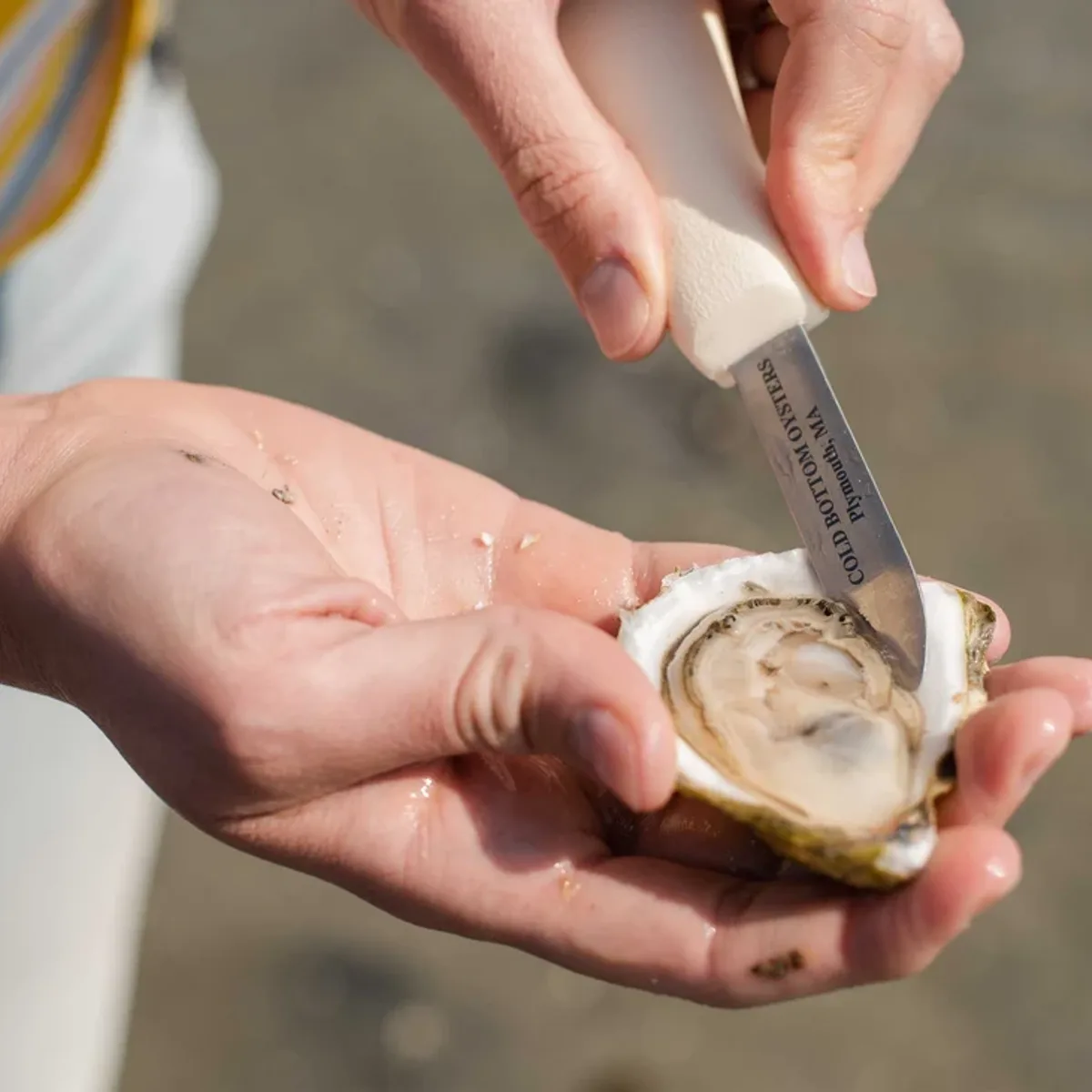
Cold Bottom Oysters are an Eastern oyster line from Dave and Jennifer Tarantino’s Plymouth, Massachusetts lease in area CCB42MA. Seed starts in a rack and bag system for eighteen months before moving to trays. Constant handling creates pristinely clean shells and an easy shuck. Solid tidal flow with strong nutrient exchange from Cape Cod Bay keeps meats plump and briny.
Island Creek Oysters distributes Cold Bottom as a partner SKU marked available for a limited time on the retail shop. On the half shell. Rack-and-bag then bottom plant yields a flavor arc distinct from floating Duxbury lines nearby.
All stock is Crassostrea virginica. Grow-out continues on the lease year-round. Pristine shell cosmetics and an easy shuck reflect constant handling from rack through mud-bottom plant. Chefs should confirm Cold Bottom bands on the manifest when the Plymouth lot is listed.
How Did Cold Bottom Oysters Get Their Name?
Cold Bottom names the sandy mud bottom-plant phase off North Plymouth where part of the Tarantino crop finishes grow-out. The label signals South Shore bottom culture distinct from floating Duxbury lines nearby. Chefs and distributors use Cold Bottom on carton bands when the Plymouth lot is in Island Creek rotation. The label ties directly to the Tarantino bottom-plant phase rather than a separate cultivar line.
Island Creek marketing frames the line as embodying Cape salinity with South Shore flare rather than a separate cultivar or. The name helps chefs distinguish Tarantino bottom culture from floating-bag neighbors when half-shell tags arrive from Plymouth. Carton bands read Cold Bottom when the CCB42MA lot is the one in rotation.
About the Tarantino Farm
Dave Tarantino, known to friends as the cranky oyster guy, started growing oysters in 2016. Island Creek’s origin story inspired his pivot from IT sales on Plymouth lease CCB42MA. Jennifer Tarantino joined him to build a legacy for sons Chase and Clint. About a quarter of the four-acre grant is in production today. The family still has headroom to scale rack, tray, and bottom plant together.
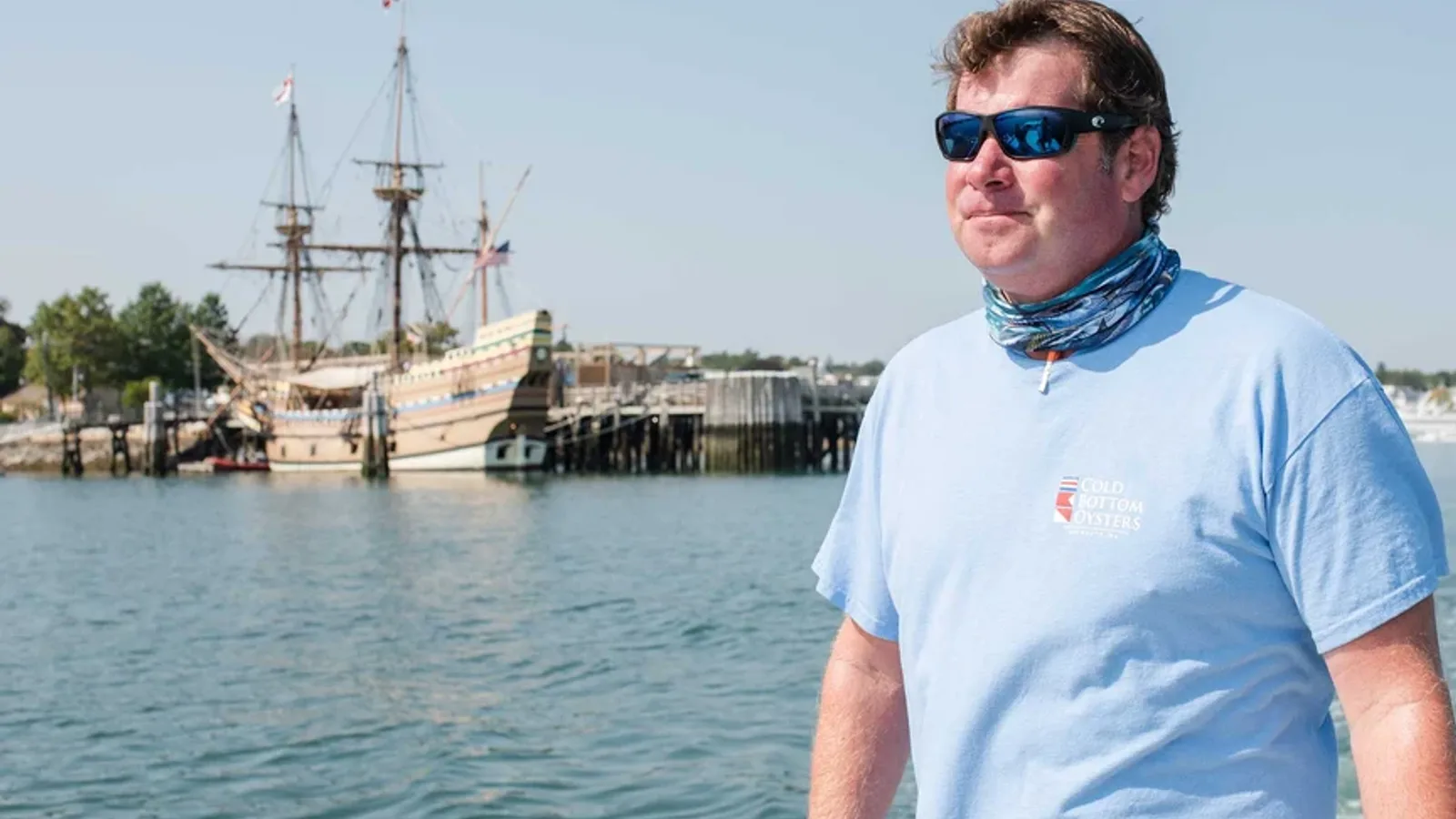
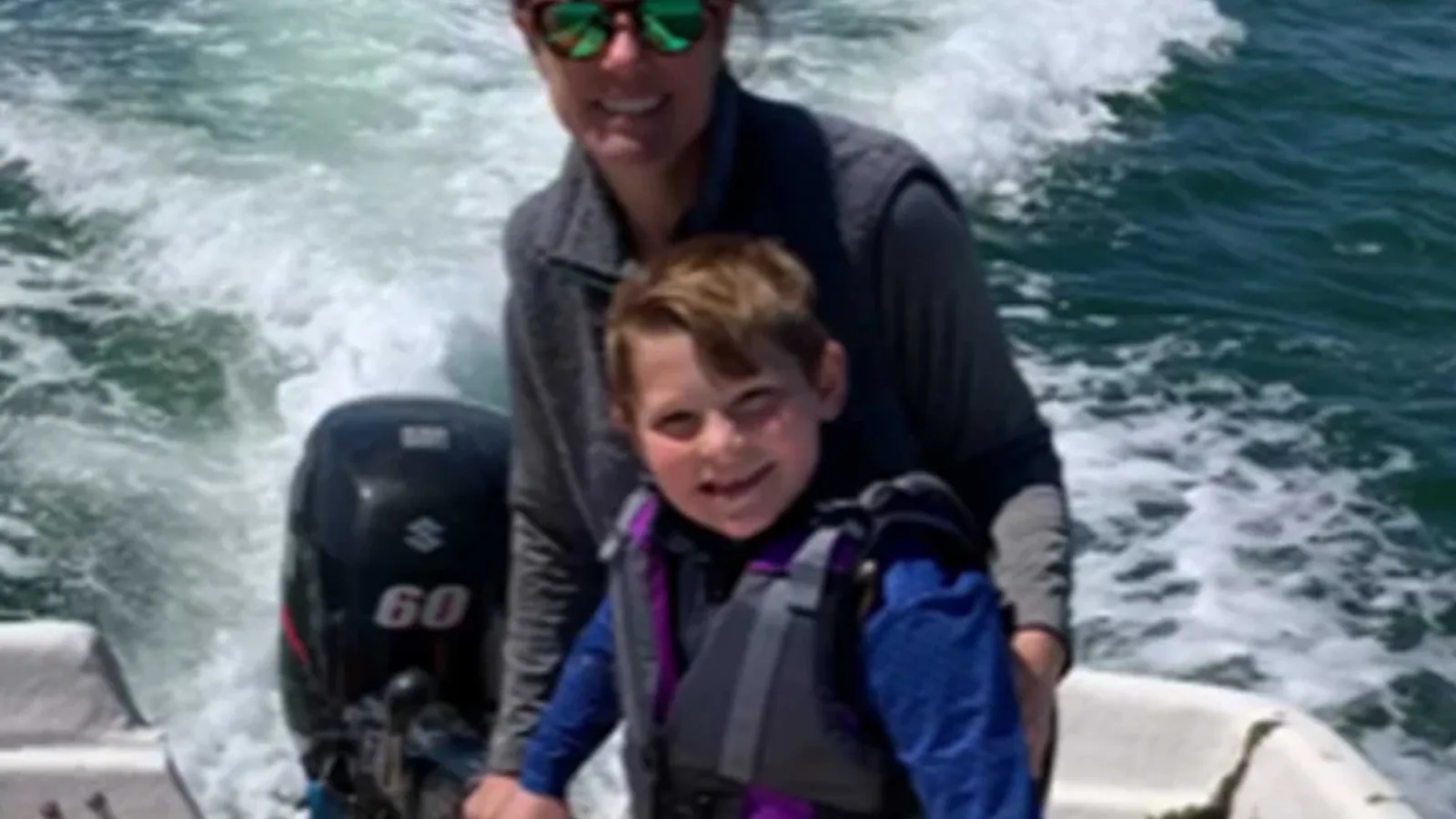
Chase and Clint appear in Island Creek materials as part of the family crew on Cape Cod Bay. Dave and Jennifer run a small-boat operation from seed through harvest. Island Creek lists Cold Bottom when the Plymouth lot is in rotation. The retail shop marks the SKU as available for a limited time only.
Follow Them
Read the Island Creek Cold Bottom product sheet for Dave and Jennifer Tarantino grow-out detail on Plymouth CCB42MA. Browse Island Creek About Us for partner-farm context on South Shore distribution. Route restaurant POs through Island Creek chef direct sales when the Cold Bottom SKU is in rotation. Watch the retail shop for limited seasonal drops before planning a raw-bar feature.
The Cultivation Process
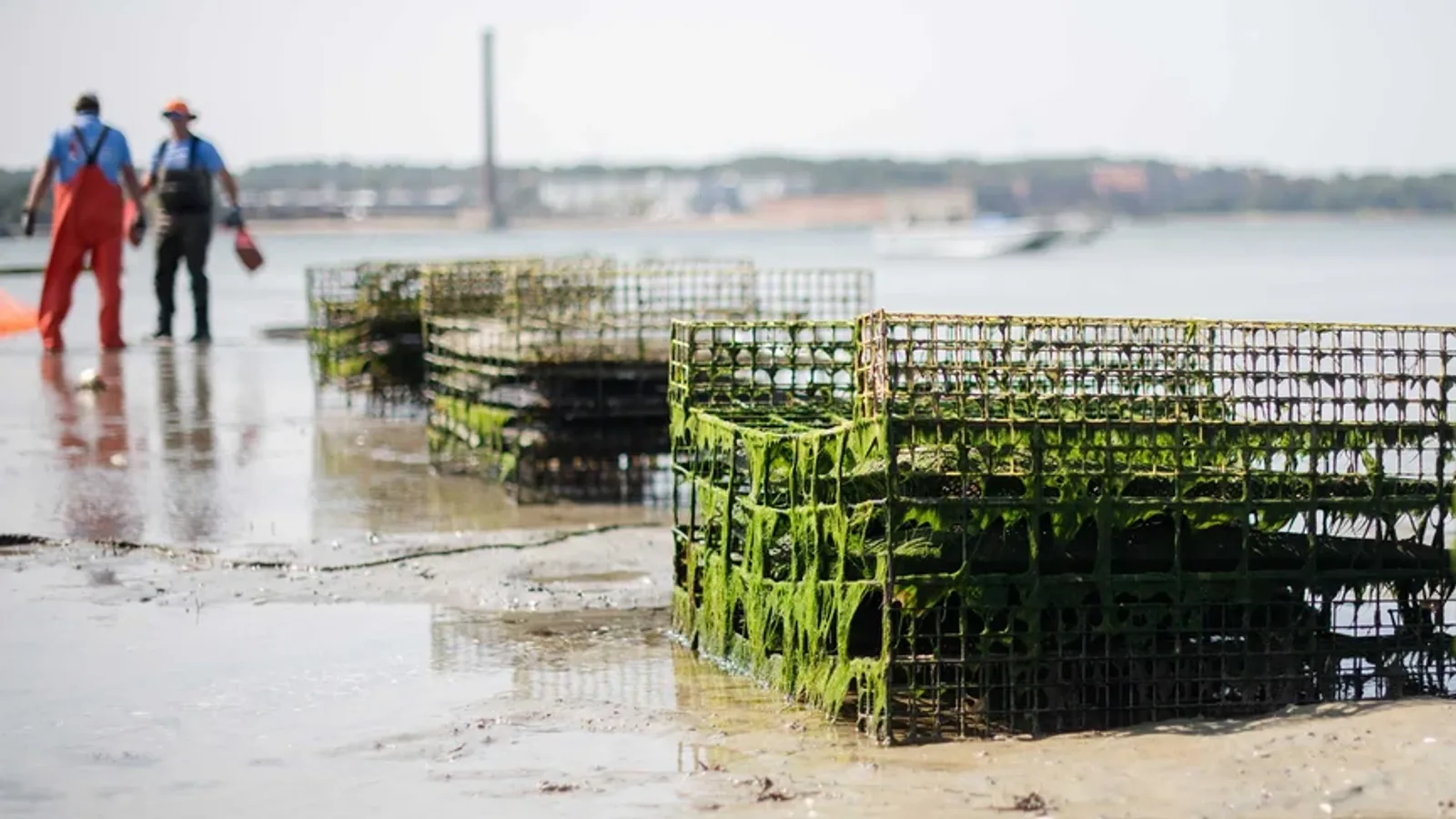
Seed goes to rack and bag culture for eighteen months. Oysters then move to trays. Constant handling throughout grow-out yields clean shells and straightforward shucking on busy shucking lines.
Solid tidal flow delivers nutrients that keep meats plump through Cape Cod Bay exchange. After harvest, purge and chill follow standard Massachusetts wholesale practice once oysters leave Plymouth. The mud-bottom finish hardens shell cosmetics compared with suspended-only South Shore lines.
Cold Bottom Oysters Information

<span class=”oe-sub”>Eastern oyster</span>
If you like Cold Bottom Oysters, then check out these similar varieties!
Location
The Tarantino lease sits in Plymouth, Massachusetts shellfish area CCB42MA on Cape Cod Bay. Bottom plant uses thick sandy mud off the North Plymouth coast. Solid tidal flow with nutrient-rich exchange from the bay defines the site. The four-acre grant offers expansion headroom beyond current quarter-acre production.
Tidal exchange from Cape Cod Bay feeds phytoplankton to rack, tray, and bottom stock. Storm runoff and bay sediment can affect nearshore beds after heavy weather. Chefs should taste a sample cup after nor’easters even when lot tags read Plymouth. Exposed tidal exchange and sandy mud bottom contact define the nearshore character on the half shell.
The lease sits on the North Plymouth coast within reach of Plymouth Harbor and Cape Cod Bay open water. That placement keeps salinity high relative to inner-estuary Virginica without the fully exposed Atlantic surf of outer Cape sites. Cold Bottom finish reflects that bay-mouth exchange plus the sandy mud bottom-plant phase named on carton bands.
Environmental Factors
Hybrid culture interacts with both suspended handling and sandy mud bottom contact. Constant handling supports shell cleanliness for raw-bar presentation. Eastern oyster spawn biology still applies in warm months regardless of culture method. Respect Massachusetts sanitary closures and distributor advisories before raw service.
Suggested Beverage Pairings
Clean rice polish mirrors Maldon-salt opening on Cold Bottom without masking bouillon finish. Dassai crisp junmai daiginjo keeps Plymouth salinity forward on Tarantino hybrid bottom-culture cups. Serve chilled between salty opening and savory bouillon close.
Chalky minerality pairs with pristine Cold Bottom Plymouth cups after the salty opening. Fine mousse refreshes palate between Maldon-salt bites on Tarantino hybrid culture. Classic blanc de blancs for Cold Bottom on a South Shore raw-bar lineup.
Farmhouse phenolics flirt with bouillon savor while carbonation resets Cold Bottom salinity. Saison scrubs Cape Cod Bay brine gently between sandy-bottom half shells. Dry finish keeps savory resolve readable on the swallow.
Low tannin red suits Cape salinity on approachable Plymouth pours. Bright carbonic fruit lifts bouillon finish without overpowering hybrid bottom-culture liquor. Serve slightly cool beside Island Creek Cold Bottom flights.
Nutty oxidative depth supports savory bouillon finish on Cold Bottom bottom-culture meats. Cobbler dilution softens alcohol heat while echoing Maldon-salt opening. Served cold, it bridges salty entry and savory resolve.
Where Can I Buy Cold Bottom Oysters?
You can buy Cold Bottom oysters from the following sources:.
- Island Creek Oysters — Cold Bottom from Plymouth — Partner product page with Dave and Jennifer Tarantino grow-out detail on Plymouth CCB42MA.
- Island Creek Oysters — chef direct — Wholesale and restaurant PO route when the Cold Bottom SKU is in seasonal rotation.
- Browne Trading Company — Portland, Maine distributor sourcing Northeast farm oysters including Massachusetts South Shore tags when listed.
- Fortune Fish & Gourmet — Regional seafood distributor carrying New England farm oysters; ask for Plymouth CCB42 or Cold Bottom bands when available.
References
- Island Creek Oysters. “Cold Bottom Oysters from Plymouth, MA.” Island Creek Oysters Shop. Accessed 16 September 2026. https://shop.islandcreekoysters.com/products/cold-bottom-oysters-from-plymouth-ma
- Massachusetts Division of Marine Fisheries. “Aquaculture in Massachusetts.” Mass.gov. Accessed 16 September 2026. https://www.mass.gov/info-details/aquaculture-in-massachusetts
- NOAA Fisheries. “Eastern Oyster (Crassostrea virginica).” NOAA Fisheries Species Directory. Accessed 16 September 2026. https://www.fisheries.noaa.gov/species/eastern-oyster
Discover more from The Oyster Encyclopedia
Subscribe to get the latest posts sent to your email.