


Quick Facts
- Species: Pacific oyster (Crassostrea gigas).
- Origin: Normandy, France.
- Harvest Area: Asnelles and Meuvaines on the cold northern French coast.
- Cultivation: Ecological farming in mesh bags on raised tables and pilings with frequent hand management.
- Size: Typically 2–4 inches, sorted by grade before sale.
- Seasonality: Available year-round, with peak eating from September through March.
- Shell: Deep-cupped, solid shells with bright white to lightly green tones.
- Flavor: Crisp brine, strong minerality, iodine notes, and a clean finish with a subtle garlicky edge.
Flavor Chart
Sharp brine, mineral depth, and savory finishShuckability
Firm shells and good structure from long grow-out and tidal exposureWhen I buy it
When I want a distinctly French oyster with strong salinity, real structure, and a finish that guests actually remember.
How I serve it
Very cold, very clean, with lemon on the side at most. A simple mignonette is fine, but the oyster does not need much help.
What to watch for
Keep the liquor intact and don’t overwork the shuck. The mineral snap and savory finish are a big part of what makes this oyster special.
My read
Bright Normandy brine, meaty texture, pronounced minerality, and a clean savory finish with a faint garlicky edge.
What Are Calvadosienne Oysters?
Calvadosienne oysters grow in the villages of Asnelles and Meuvaines, at the northern tip of France. Their shells turn bright white from the pure waters that cradle them. These oysters stand out because they mature slowly in the cold Atlantic, developing a salty and fleshy texture that has won awards.

Farmers use ecological practices, avoiding chemicals and letting local plankton shape the oyster’s flavor. Workers keep the oysters in mesh bags and shift those bags often. This method ensures round, nicely-shaped shells and a firm muscle. Oysters spend three to four years on these raised tables, enjoying clean tides and mild, sunny weather that helps them grow.
La Calvadosienne farm faces new dangers, including diseases that can wipe out most of a season’s crop. Despite these setbacks, farmers persevere, investing in new baby oysters and keeping watch for irregular shapes or shells. Their active management and respect for the environment set Calvadosienne oysters apart from mass-produced varieties, making them beloved across France and abroad.
How Did Calvadosienne Oysters Get Their Name?
Calvadosienne oysters are named after their home region, Calvados, in Normandy, France. The name connects the oyster to its place of origin, linking it directly to the local waters and the traditions of the area. “Calvadosienne” distinguishes these oysters from other varieties in Normandy and makes them recognizable in markets across Europe.
The La Calvadosienne oyster farm, founded in 1991, gave these oysters their commercial identity. The farm operates in the villages of Asnelles and Meuvaines and is known for ecological farming and consistency. This local name became the official retail and distribution brand, solidifying the oyster’s reputation across France and beyond.
Producers chose “Calvadosienne” to celebrate the unique terroir, where clean tides and cold Atlantic winds help develop rich flavor and strong shells. The name ensures clear traceability and quality, connecting the oysters to a distinct tradition of French aquaculture that dates back generations.
The Cultivation Method
Calvadosienne oysters begin life as tiny larvae raised in seawater tanks filled with plastic tubes. These larvae settle onto the tubes and grow for several weeks until they turn into spats, forming small shells. Workers then remove the spats and carefully place them into mesh bags, which are then tied to long lines of pilings stretching into the cold waters of Normandy.
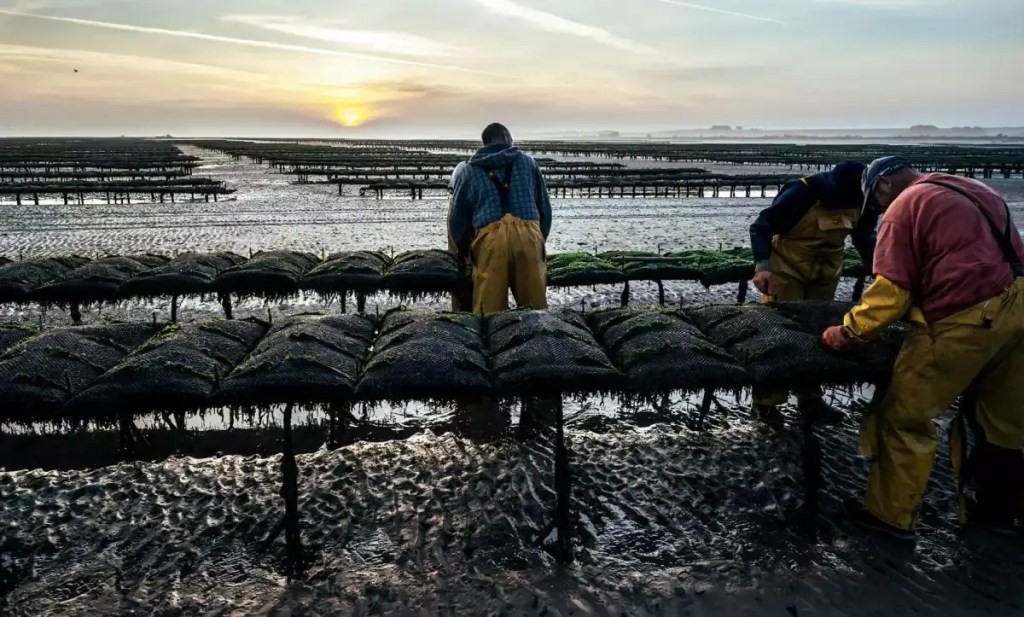
Oysters spend their first months in deeper water, protected from air and strong tides. As they mature, the farmers move the mesh bags to shallower pilings, exposing the oysters to tidal cycles and fresh air. This active process helps the oysters develop thick shells and plump meat. Every few months, workers bring the bags ashore for sorting and cleaning, ensuring that only healthy oysters continue to grow.
Each Calvadosienne oyster makes up to ten trips between shore and ocean during its three-to-four-year cultivation cycle. This hands-on approach allows farmers to remove irregular shapes and keep the best oysters growing strong. The end result is a round, firm oyster renowned for taste and texture, prized by chefs and shellfish lovers.
About La Calvadosienne
La Calvadosienne oyster farm cultivates Calvadosienne oysters. The company opened its doors in 1991 and quickly became one of the first major oyster farms in France. It operates out of Asnelles and Meuvaines, two villages along the Normandy coast. La Calvadosienne uses ecological farming methods and relies on the natural plankton in the local water to shape the oysters’ flavor.
The farm produces more than 300 tons of oysters each year, offering a highly awarded variety called “Special Norman” that has won gold medals at the Paris International Agricultural Show. Its cultivation uses mesh bags on pilings in cold Atlantic waters, and workers constantly sort and monitor oyster growth to maintain quality. Farm owner Frédéric Lefèvre manages the operation using traditional techniques, which involve regular cleaning and shifting of oyster bags, plus active supervision of the shell and meat development.
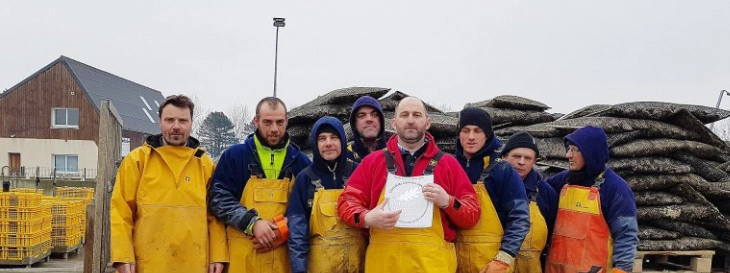
La Calvadosienne hires around two dozen people, including disabled workers through a sheltered employment program. This approach helps sort oysters and operate machinery that organizes oysters by size and weight. The farm’s focus on hands-on care and community support sets it apart from larger industrial producers and creates an active, bustling atmosphere during busy seasons.able aquaculture, makes the farm a regional leader in both quality and community involvement.
Follow Them
Discover more about La Calvadosienne oysters and their craft. Visit the farm’s official website and follow their social channels for fresh harvest updates, farm stories, and exclusive behind-the-scenes looks into Normandy’s leading oyster operation
Calvadosienne Oysters Information
Species: Pacific oyster (Crassostrea gigas)
Cultivation Method: Farmed. Grow out period is 3-4 years.
Size: Typically 2–4 inches (5–10 cm). Sorted by grade before sale.
Seasonality: Year-round availability. Most popular and tastiest from September to March.
Culture Method: Workers turn, sort, and clean oysters regularly. The process uses ecological methods, with no chemical additives. Oysters feed on local plankton and experience frequent tidal exposure for muscle development.
Salinity: 32–35 ppt, matching Normandy’s oceanic coastal waters.

Appearance: Deep-cupped, solid shells that range from pearly white to hints of green. Their flesh appears thick, glossy, and creamy with a plump texture. The oysters often display vibrant luster and fullness, making them visually appealing on the half shell.
Flavor Profile: Crisp and briny, delivering an immediate punch of fresh ocean salinity. Their flavor features distinct iodine notes with a clean, almost garlicky finish that lingers on the palate. Each bite provides a meaty texture with an appealing balance between savory and mineral qualities
If you like Calvadosienne Oysters, Then Check Out The Similar Varieties!
Location
Farmers raise Calvadosienne oysters along the Normandy coast, mainly in the villages of Asnelles and Meuvaines.
The farm operates on a vast ten-hectare field situated by the open sea, not far from the historic D-Day beaches. Oysters grow in mesh bags placed on rows of pilings, where they experience changing tides and fresh sea air for three to four years.
The region’s waters are rich in plankton and minerals, which help oysters develop firm flesh and pure flavor. Normandy’s mild climate, cool sea temperatures, and sandy estuarine beds set an ideal backdrop. The farm uses ecological methods and avoids chemical additives, ensuring the flavor reflects the natural qualities of the sea. Frequent tidal exposure trains the oysters’ muscles, encouraging a meaty texture and full-bodied flavor.
The open coastline offers plenty of sunlight and fresh Atlantic currents. Each low tide drains the farm, exposing oyster bags to air for hours on end. This rhythmic cycle strengthens the shells and keeps the oysters healthy. The nearby rivers and marshes feed extra nutrients into the sea, making the area particularly productive for shellfish farming.

Normandy’s protected status and strict farming controls promote sustainable growth and high water quality. The combination of optimal tides, clean water, abundant plankton, and skilled hands at La Calvadosienne guarantees robust oysters. These environmental advantages help make Calvadosienne oysters some of the most prized and flavorful in France.
This guide is part of the Raw Bar Bible — chef-level technique, safety, and gear so you can shuck and serve oysters with confidence.
Suggested Beverage Pairings
- Domaine Gadais ‘Navineaux-Amphibolite’ Muscadet Sèvre Et Maine Sur Lie
This Loire Valley white wine delivers high acidity and saline minerality. It cleanses the palate while highlighting the crisp, briny flavors of Calvadosienne oysters. Its citrus and green apple notes add brightness with every bite. - Chablis (Domaine William Fèvre)
Chablis offers zesty citrus and subtle white flower aromas. Its mineral-driven flavor naturally complements the oyster’s saline punch and iodine notes. Serve well-chilled to refresh your palate between oysters. - Allagash Tripel
This golden Belgian ale displays honey and passion fruit notes. Its sweetness offsets oyster salinity, while lively carbonation wipes the palate clean. Each sip invites another oyster, making this pairing a classic for raw shellfish. - Left Hand Milk Stout
A lighter stout offers roasty malt and a pillowy mouthfeel. This counteracts the oyster’s bold salinity and mineral notes, creating a balanced experience. The beer’s subtle richness enhances the fresh, meaty texture. - The Paloma (Tequila, grapefruit, salt)
An effervescent citrus cocktail matches the creamy body of Calvadosienne oysters. Its tart grapefruit and pinch of salt amplify the savory and mineral notes. The light tequila keeps the palate sharp and ready for another shell.
Where Can I Buy Calvadosienne Oysters?
- I Love Ostrica – Order Calvadosienne oysters online for delivery across Italy. The oysters are shipped live and packed to preserve freshness, with grading by size and weight.
- La Calvadosienne Farm Shop – Purchase directly from the official farm shop in Asnelles. The shop offers tastings and round-the-clock vending machines with freshly harvested oysters, perfect for visitors and locals.
- Seafood France – Find Normandy oysters for sale online. Seafood France ships packs of oysters express throughout Europe, guaranteeing quality and freshness on arrival.
- Chowders ‘N Moor – Order Normandy oysters online in the US. The oysters are shipped cold-packed, offering restaurant-quality flavor for home delivery
References
- “Calvadosienne – Oysters.” I Love Ostrica, 10 May 2025, www.iloveostrica.it/en/Oysters/calvadosienne.
- “Oldways in Normandy: The World is My Oyster.” Oldwayspt.org, 26 Mar. 2024, oldwayspt.org/blog/oldways-normandy-world-my-oyster/.
- “A Short Story about Oysters.” Spritzer and Schnitzel, WordPress.com, 9 Oct. 2013, spritzerundschnitzel.wordpress.com/2013/10/10/a-short-story-about-oysters/.
- “LA CALVADOSIENNE – Fish – Seafood – Asnelles (14960).” Petit Fute, www.petitfute.co.uk/v4533-asnelles-14960/c650-produits-gourmands-vins/c672-poissons-fruits-de-mer/699521-la-calvadosienne.html.
- “Eating Oysters in Normandy.” Rick Steves Travel Forum, 3 Dec. 2022, community.ricksteves.com/travel-forum/france/eating-oysters-in-normandy.
- “Taillepied – Normandie’s Oysters, the Bessin and the Bay of Veys.” Huitres-taillepied.fr, 27 Nov. 2023, www.huitres-taillepied.fr/en/the-bessin/.
- “Normandy Oyster.” Destination Granville Land and Sea, en.tourisme-granville-terre-mer.com/impregnate/local-flavours/seafood/the-normandy-oyster/.
- “Seafood France – Product Page.” Seafood France, 9 July 2025, www.seafoodfrance.com/en/product-page/hu%C3%AEtres-normande-no2-x12.
- “Normandy Oysters – Chowders ‘N Moor – Waterville Ohio.” Chowders ‘N Moor, chowdersnmoor.com/product/normandy-oysters/.
- “Oyster Salinity / Brine.” Oysterater, 5 Aug. 2024, www.oysterater.com/about/oyster-size-salinity/.
- “Top 6 Wine Pairings for Fresh Oysters.” LW Oysters, 21 May 2025, lwoysters.com/blogs/news/top-6-wine-pairings-for-fresh-oysters.
- “Pairing Beer and Oysters.” Allagash Brewing Company, 31 Oct. 2017, www.allagash.com/discover/pairings-recipes/beer-oysters-part-3-pairing/.
- “The Best Oyster and Beer Pairings.” Allagash Brewing Company, 29 July 2020, www.allagash.com/discover/pairings-recipes/the-best-oyster-and-beer-pairings/.
- “Pairing Cocktails and Naked Oysters.” Pangea Shellfish Company, 16 May 2020, www.pangeashellfish.com/blog/pairing-oysters-and-cocktails.
- “10 French Oyster Varieties to Know.” The Francophone Collective, 30 Mar. 2023, thefrancophonecollective.com/blogs/lifestyle/10-french-oyster-varieties-to-know.
- “Oysters: A French Passion.” Monsieur de France, 22 Mar. 2023, monsieur-de-france.com/en/consume-oysters-france.
- “Spring Break Part Two, Continued: Oyster and Calvados-Hunting in Normandy.” When There Is Food, 29 June 2023, www.whenthereisfood.com/posts/spring-break-part-two-continued-oyster-and-calvados-hunting-in-normandy-with-a-quick-stop-in-paris.
- “Utah Beach Oysters.” The Oyster Encyclopedia, 11 June 2025, oysterencyclopedia.com/encyclopedia/utah-beach-oysters/.
- “Isigny Oysters.” The Oyster Encyclopedia, 23 June 2025, oysterencyclopedia.com/encyclopedia/isigny-oysters/.
- “Fine de Claire Oysters.” The Oyster Encyclopedia, 19 July 2025, oysterencyclopedia.com/encyclopedia/fine-de-claire-oysters/.
- “What Do Oysters Taste Like Texture-wise?” Reddit, 26 July 2024, www.reddit.com/r/Cooking/comments/1edtayh/what_do_oysters_taste_like_texturewise/.
Discover more from The Oyster Encyclopedia
Subscribe to get the latest posts sent to your email.
My real-world read
Calvadosienne oysters drink like a serious French coastal oyster. The first hit is sharp, clean brine, then you get that fleshy, meaty body, and the finish turns savory with a faint garlicky note that makes them memorable. They feel polished, structured, and ocean-forward — not soft, not sweet, and definitely not boring.