


Quick Facts
- European flat oyster (Ostrea edulis) with Protected Designation of Origin status 5
- Takes 3 years from sea to table using traditional farming methods 3
- Represents 90% of Croatia’s oyster production 4
- Won Grand Prix and Gold Medal at London’s General Trades International Exhibition in 1936 3
- Harvested in one of Europe’s last A-grade water quality locations 6
What Are Mali Ston Oysters?
Mali Ston oysters stand as one of the last healthy populations of European flat oysters (Ostrea edulis) in Europe. Their unique character emerges from the pristine waters of Mali Ston Bay, which maintains an A-grade water quality rating 3.

The bay’s exceptional blend of mineral-rich freshwater from the Neretva River and salty Adriatic waters creates perfect growing conditions. This mixture produces a distinctive nutrient profile that gives the oysters their characteristic sweet-salty balance and sea-mineral flavor 4. The seabed’s rich phytoplankton concentration provides ideal nourishment for these prized mollusks.
These oysters earned international recognition by winning the Grand Prix and Gold Medal at London’s General Trades International Exhibition in 1936 5. Their reputation attracted notable patrons throughout history, including Austrian Emperor Franz Josef, who demanded monthly shipments. Some Dubrovnik Republic nobles even accepted these oysters as payment instead of money.
How Did Mali Ston Oysters Get Their Name?
The oysters take their name from Mali Ston Bay, their native habitat. This 17-mile stretch of coastline sits between the Pelješac peninsula and Croatia’s mainland 5.
The name reflects both geography and heritage. The bay’s first documented oyster farming dates back to the Roman Empire. Written records from 1573 detail specific harvesting methods from natural nurseries 4.
About The Cultivation Process
Local family farms and cooperatives handle all cultivation through the Association of Ston Shellfish Farmers4. The process starts with collecting wild spat from the bay. Farmers lower nets into the water to catch young oysters3.

After the first year, mature oysters move to ropes suspended 1.5 meters below the surface. They remain there for two more years before harvest. Farmers handle each oyster 5-7 times during the growing process36.
About the Association of Ston Shellfish Farmers
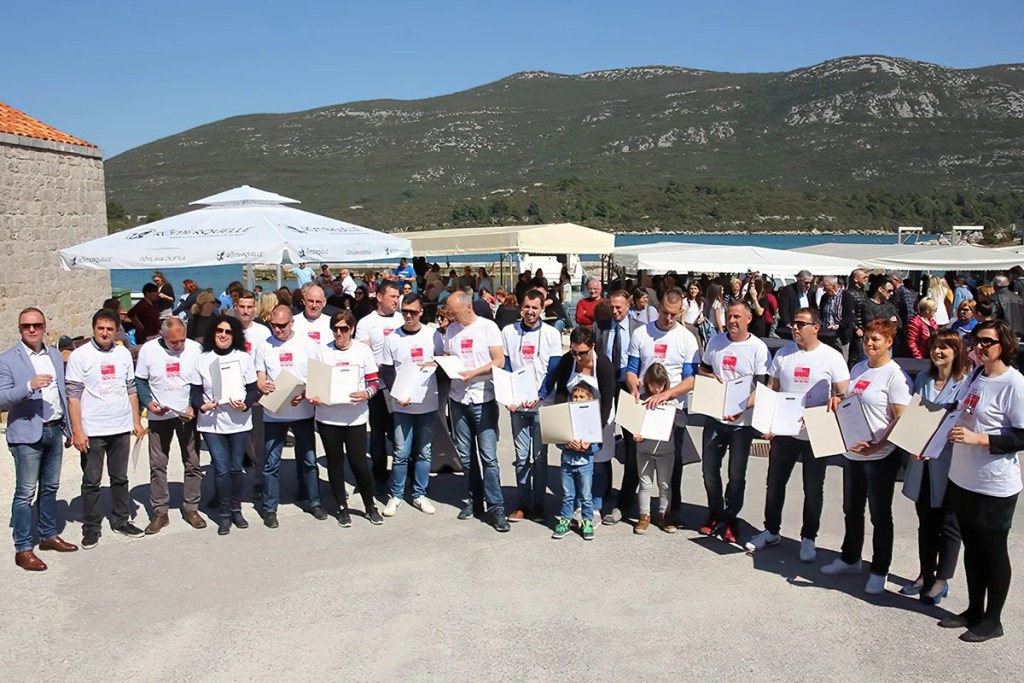
The Association of Ston Shellfish Farmers manages Mali Ston oyster cultivation through local family farms and cooperatives. The farming tradition spans centuries, with documented history dating back to the Roman Empire 2.
Historical Development
The Dubrovnik Republic first regulated oyster farming in 1333. The Rector of Ston controlled the business by issuing concessions to farmers who shared part of their harvest with the state 5.Captain Stijepo Bjelovučić established the region’s first commercial operation in 1889. His farm, ‘The First Commercial Oysters and Mussels Farm in Dalmatia,’ revolutionized cultivation techniques and exported oysters to Vienna, Prague, and Paris 2.
Modern Operations
Today’s farmers handle each oyster 5-7 times during the three-year growing process 4. The cultivation starts with wild spat collection. Farmers then:
- Lower nets to catch young oysters
- Transfer mature oysters to ropes after one year
- Suspend the ropes 1.5 meters below surface 3
The industry underwent significant modernization in the 1980s. Production now reaches about 2 million oysters annually, representing 90% of Croatia’s total oyster output 4. Most consumption remains local, with minimal exports.
Regulatory Framework
Mali Ston oysters received Protected Designation of Origin status from the European Union in 20204. This designation marks them as the first protected farmed European flat oyster. The farmers maintain traditional, sustainable practices while operating under strict environmental guidelines.
Follow Them On Social Media!
Discover the royal heritage of Mali Ston oysters! Visit thier official site to explore our centuries-old tradition, book exclusive farm tours, and taste Europe’s most prestigious flat oysters. Follow our journey from sea to table, learn about our sustainable farming practices, and plan your visit to Croatia’s oyster paradise.
Mali Ston Oyster Information
Oyster: Mali Ston
Species: European Flat Oyster (Ostrea edulis)
Cultivation Method: Farmed, 3-year growout period.
Size: 3+ years at harvest
Seasonality: Year-round except during reproduction periods.
Culture Method: Traditional rope suspension method – spat collection followed by cementing young oysters to ropes suspended 1.5m below surface
Salinity: Variable due to mix of seawater and freshwater from Neretva River
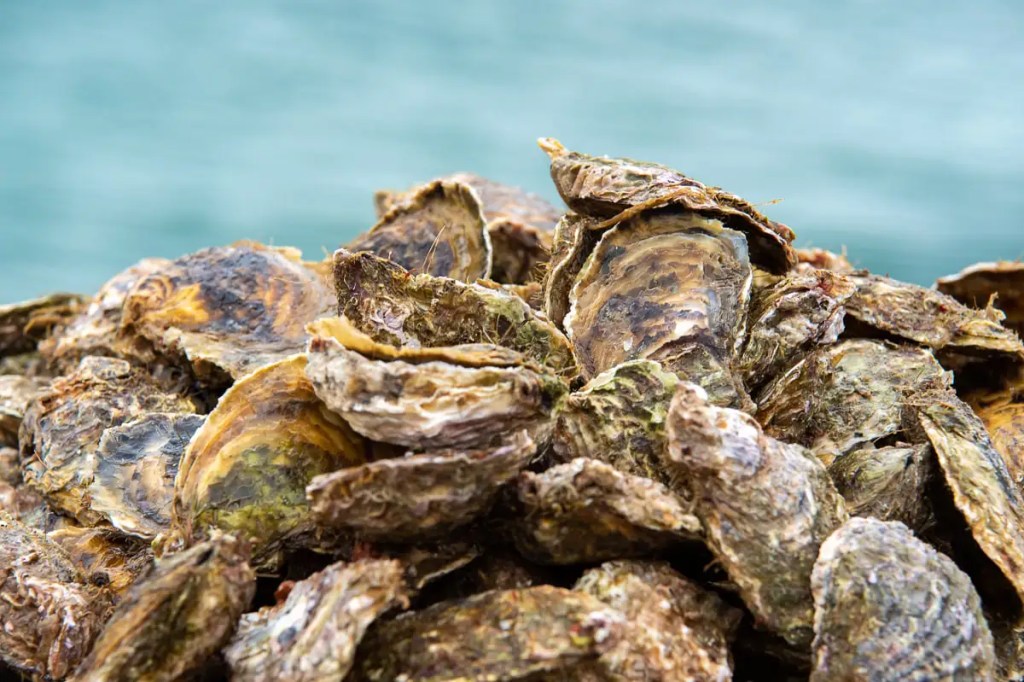
Appearance: flat, shallow shells with firm, domed fatty tissue inside. The meat displays a glossy grey-white-yellowish color and appears swollen when the oyster is in its prime.
Flavor Profile: an initial burst of sweet brine, followed by complex mineral notes and a buttery richness. The flesh delivers a delicate balance of ocean saltiness and subtle nutty undertones, finishing with a clean, crisp aftertaste.
Location
Mali Ston Bay’s unique geography and environmental conditions create an exceptional habitat for oyster cultivation. The bay stretches 17 miles between the Pelješac peninsula and Croatia’s mainland. Its complex coastline, featuring numerous coves and islets, extends to 63 miles total. This intricate geography provides natural protection from harsh weather and strong currents.
The bay’s ecosystem thrives on a perfect balance of elements. The Neretva River delivers mineral-rich freshwater that mixes with the Adriatic’s saltwater. Underground springs add additional freshwater inputs. This mixture creates ideal conditions for phytoplankton growth, the primary food source for oysters. The bay’s protected status ensures these waters maintain their A-grade quality rating, making it one of Europe’s last pristine oyster habitats.
The rocky seabed plays a crucial role in oyster development. Unlike muddy bottoms, the rocky substrate provides better water circulation and prevents sediment accumulation. The bay’s depth averages between 10-20 meters, creating optimal pressure conditions for oyster growth. The water temperature remains stable throughout the year, ranging from 10°C in winter to 24°C in summer.
The bay’s unique microclimate supports year-round cultivation. Mild winters and moderate summers prevent extreme temperature fluctuations that could stress the oysters. The sheltered position protects farms from destructive wave action while allowing sufficient water movement for nutrient distribution. These conditions make Mali Ston Bay the world’s only remaining successful breeding ground for European flat oysters (Ostrea edulis).

The combination of these environmental factors creates a self-sustaining ecosystem. The bay’s natural filtration systems, including seagrass beds and other marine vegetation, maintain water quality. Local regulations restrict development along the coastline, preserving the pristine conditions that have supported oyster farming for centuries. This careful balance of natural elements and human stewardship ensures the continued prosperity of Mali Ston’s oyster industry.
Suggested Beverage Pairings
- Volarevic Winery’s La Chic Rosé
The dry, mineral-forward profile of this Croatian rosé complements the oysters’ briny character. Its light body and crisp finish enhance the delicate sweetness of the meat. - Merga Victa Pošip
This white wine from Korcula island offers bright acidity and citrus notes that cut through the oyster’s creamy texture. Its local terroir creates a natural harmony with Mali Ston’s marine flavors. - Kurtalj Winery’s DRI Sparkling White
The fine bubbles cleanse the palate while the wine’s mineral notes mirror the oyster’s sea-mineral character. Its crisp effervescence provides textural contrast to the oyster’s smooth, creamy texture. - Grasevina Krauthaker
This premium Croatian white wine brings clean, crisp acidity that enhances the oyster’s natural brine. Its subtle fruit notes balance the mineral qualities without overwhelming the delicate flavors. - Hendrick’s Gin with Fever-Tree Mediterranean Tonic
The cucumber notes in Hendrick’s complement the oyster’s sweet undertones, while the Mediterranean tonic’s gentle botanicals enhance the maritime qualities. The effervescence refreshes the palate between bites.
Where Can I Buy Mali Ston Oysters
- Association of Ston Shellfish Farmers – Due to their Protected Designation of Origin status and traditional farming methods, Mali Ston oysters remain a local delicacy that must be enjoyed in Croatia. For the authentic experience, visitors should plan to visit Mali Ston Bay directly.
Stay Connected with The Oyster Encyclopedia!
Follow us on social media to get the latest updates, oyster recipes, and behind-the-scenes glimpses into the world of oysters:
Stay tuned for exclusive content, oyster trivia, and more! Engage with our vibrant community of oyster enthusiasts by liking, commenting, and sharing our posts. Your support helps us continue providing valuable oyster knowledge to fellow seafood lovers worldwide.
References
- Just Dubrovnik. “MALI STON OYSTER Meet & Taste Our Queen Of Oysters.” Just Dubrovnik, 18 Aug. 2021.
- Passionate Food Blog. “The Mali Ston Oyster: A Croatian Prize of the Adriatic.” Passionate Food Blog, 13 June 2022.
- Dubrovnik Premium Wine Tours. “Ston oysters.” Dubrovnik Premium Wine Tours, 2022.
- Smith, David. “Are these the world’s best raw oysters?” BBC Travel, 25 Feb. 2022.
- Wilson, Mark. “Game of Stones: Dubrovnik’s Mali Ston Oysters.” Worldfoodist, 1 July 2020.
- Association of Ston Shellfish Farmers. “Mali Ston Oysters – Queen of Oysters.” malistonoyster.com, 2024.
Discover more from The Oyster Encyclopedia
Subscribe to get the latest posts sent to your email.