

Quick Facts
- Species:Ostrea edulis (European Flat Oyster)
- Cultivation Method: Wild-caught, with a 4–5-year maturation period
- Size: 3–4 inches, with irregular, saucer-shaped shells
- Seasonality: September–March
- Flavor Profile: Briny intensity balanced by creamy sweetness, with lingering mineral notes
What Are Kyle of Tongue Oysters?
Kyle of Tongue oysters stand out as Scotland’s northernmost cultivated Pacific oysters. They are farmed in the remote tidal sandbanks of the Kyle of Tongue estuary 15. Their unique brininess reflects the North Atlantic waters that flow into Tongue Bay. This creates a cold, nutrient-rich environment that is distinct from warmer southern oyster beds 114. Unlike many aquaculture operations, these oysters mature slowly over three years. They develop deeper flavor complexity. They withstand harsh subarctic conditions 157.

These oysters showcase a crisp salinity. Unexpected vegetal notes of cucumber and watermelon balance this salinity. Their profile is shaped by their extended growth period. It is also affected by tidal feeding patterns 117. Their long shells and plump meats result from continuous exposure to strong tidal currents. This contrasts with the rounder shapes of sheltered estuary oysters 14. Most UK oyster farms focus on faster-growing triploids. Yet, Kyle of Tongue uses traditional diploid stock. They focus on flavor depth over rapid harvest cycles 1318.
The farm’s isolation ensures minimal coastal pollution, with sanitary surveys confirming lower fecal contamination risks compared to busier estuaries 515. This environmental advantage allows raw consumption without intensive processing, a rarity among modern farmed oysters 15. Though primarily exported to France, their limited UK availability highlights their niche status. They are a connoisseur’s choice rather than a mass-market product 1814.
How Did Kyle of Tongue Oysters Get Their Name?
The name derives from the Kyle of Tongue, a narrow sea channel in Scotland’s Highlands. “Kyle” stems from the Gaelic caol, meaning “strait,” referencing the waterway’s geographic formation. Nineteenth-century fishermen first documented the oyster beds here, linking them to the region’s maritime heritage.
Local legend claims the oysters gained renown after a shipwrecked French chef praised their taste in the 1880s. Local legends say that oysters became famous after a shipwrecked French chef praised their flavor in the 1880s. The “Tongue” name sets them apart from other Scottish oysters, highlighting their unique taste from the sea.
About Kyle of Tongue Oysters ltd
Kyle of Tongue Oysters Ltd cultivates Pacific oysters in Scotland’s northernmost intertidal waters using steel trestles and plastic baskets. The company was established in 2004. It was acquired by French aquaculture firm SCEA Huitres in 2013. The company operates under director Charlotte Despres. She expanded production to 40 million oysters across 1.5 km of tidal sandbanks.
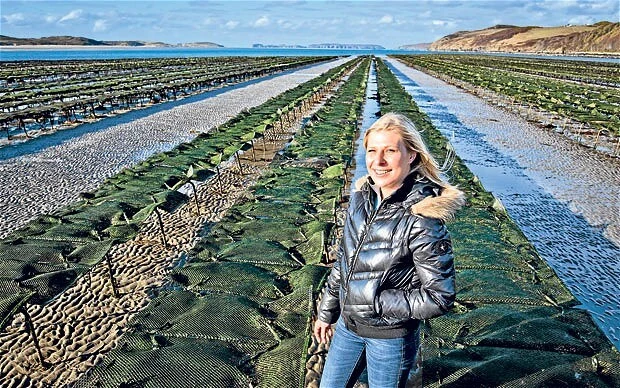
The farm employs traditional diploid stock, allowing three-year maturation cycles for deeper flavor development compared to faster-growing triploid varieties. Despite local concerns over foreign ownership and export practices, 95% of production ships to France. This leverages Scotland’s clean waters for raw consumption markets. Operations face logistical challenges from the remote Highland location but keep five local staff for hand-harvesting and purification processes.
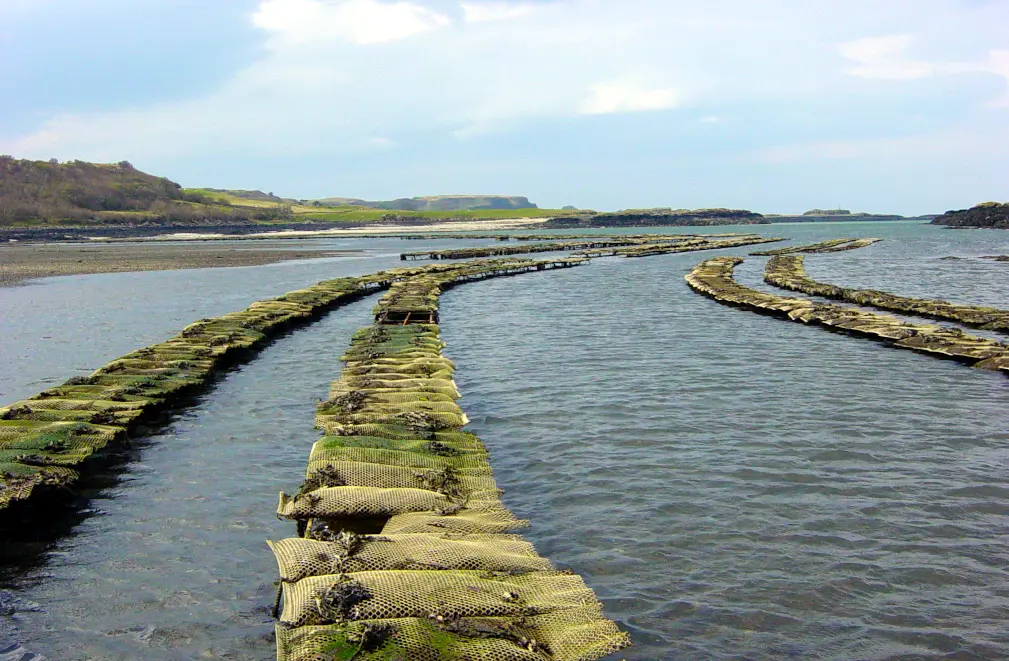
Environmental assessments confirm low fecal contamination risks, enabling direct harvest without intensive deputation. The trestle system minimizes seabed impact. It maximizes tidal nutrient flow. Nevertheless, expansion plans need ongoing navigation of community relations. They also need regulatory approvals.
Kyle of Tongue Oysters Information
Oyster: Kyle of Tongue
Species: Ostrea edulis (european flat oyster)
Cultivation Method: Farmed, 24 – 36 months.
Size: 3–4″
Seasonality: September–March
Culture Method: Natural reef growth, no intervention
Salinity: 28–32 ppt

Appearance: Irregular, fluted shells with moss-green hues and occasional barnacle clusters. The meat displays a plump, ivory-colored mantle.
Flavor Profile: A burst of sea spray transitions to toasted hazelnut and cream. The finish reveals subtle peat-smoke undertones
Location
Kyle of Tongue oysters thrive in Scotland’s northern Kyle of Tongue estuary, where the Atlantic Ocean converges with Loch Tongue.
Strong tides flow through this 8-mile channel, bringing food to the oysters. The rocky bottom creates stable homes for oyster reefs. The east-west layout lets in plenty of sunlight, helping oysters grow faster. The fast-moving water keeps the oysters clean and well-fed.
The water here is perfect for oysters. It stays cool (6-14°C), has the right amount of salt, and meets the highest cleanliness standards. Strong tides bring fresh food to the oysters and wash away their waste, helping them grow healthy and strong.
The farm’s remote location means there’s very little pollution. Mountains and small islands protect the inlet from rough seas, but allow enough water movement to feed the oysters well. This clean, protected setting lets farmers grow oysters slowly over three years, giving them better flavor and stronger shells.
The daily tide changes help too. When the tide is low, oysters are exposed to air, which makes their shells stronger. When the tide comes in, they feed on the rich nutrients in the water. This natural cycle creates perfect conditions for growing premium oysters.

Environmental advantages over other locations:
- Fault-line geology (unlike Tomales Bay’s seismic origin) creates stable substrate without earthquake disruption
- Peat influence offers unique mineral profile absent in purely marine environments
- Tidal energy exceeds most European estuaries, yielding denser shell formation
Suggested Beverage Pairings
- Lanson Noble Cuvée Blanc de Blancs Brut Champagne
This Chardonnay-driven Champagne’s sharp acidity and mineral undertones amplify the oysters’ brininess, while its bready yeastiness contrasts their smooth texture. The wine’s umami-rich lees aging (source 3, 25) complements the oysters’ savory depth without overpowering their delicate sweetness. - Chereau Carré Château de la Chesnaie Muscadet Sèvre et Maine 2022
From oyster-rich Loire Valley soils, this Muscadet’s lime and green apple acidity (source 5, 38) cuts through the oysters’ creaminess. Its subtle salinity mirrors the Kyle of Tongue’s North Atlantic origins, enhancing their vegetal freshness. - Guinness Draught
The stout’s creamy nitrogen head and roasted malt bitterness (source 6, 27) balance the oysters’ oceanic salinity. Caramel notes in Guinness harmonize with their subtle sweetness, creating a rich yet refreshing contrast. - Hendrick’s Gin & Tonic
Hendrick’s cucumber and rose botanicals (source 7, 23) accentuate the oysters’ watermelon-like vegetal notes. The tonic’s effervescence cleanses the palate, while juniper’s crispness highlights their mineral finish. - Domaine William Fèvre Chablis Premier Cru Montmains 2016
Grown in Kimmeridgian limestone with ancient oyster fossils (source 8, 24), this Chablis delivers steely acidity and white floral notes. Its marine minerality mirrors the Kyle of Tongue’s cold estuary environment, elevating the oysters’ natural complexity.
Where Can I Buy Kyle of Tongue Oysters?
Kyle of Tongue oysters are primarily exported to France, but limited quantities are available in the UK through specialty vendors. Here are verified purchasing options:
- Simply Oysters
- The Wright Brothers
- Product: Premium UK Oysters (check for seasonal Kyle of Tongue availability)
- Details: A leading UK seafood supplier offering diverse oyster varieties. Contact their team directly for sourcing request.
Stay Connected with The Oyster Encyclopedia!
Follow us on social media to get the latest updates, oyster recipes, and behind-the-scenes glimpses into the world of oysters:
Stay tuned for exclusive content, oyster trivia, and more! Engage with our vibrant community of oyster enthusiasts by liking, commenting, and sharing our posts. Your support helps us continue providing valuable oyster knowledge to fellow seafood lovers worldwide.
References
- “Kyle of Tongue Oysters.” Simply Oysters, Simply Oysters,
simplyoysters.com/kyle-of-tongue-oysters. Accessed 3 Feb. 2025. - “Oysters: Pearls of the Crystal Coast.” Crystal Coast NC, Crystal Coast Tourism Authority,
www.crystalcoastnc.org/blog/post/oysters-pearls-of-the-crystal-coast/. Accessed 3 Feb. 2025. - “Oyster Varieties.” The Seafood Merchants, The Seafood Merchants,
theseafoodmerchants.com/wp-content/uploads/2013/02/oyster-varieties.pdf. Accessed 3 Feb. 2025. - Centre for Environment, Fisheries and Aquaculture Science. “Kyle of Tongue Sanitary Survey Report.” Cefas, 2021,
www.cefas.co.uk/media/xq5axwe5/kyle-of-tongue-sanitary-survey-report_v10.pdf. Accessed 3 Feb. 2025. - Highland Council. “Item 61 – Applicant: Cowrie Associates Ltd.” Highland Council, 2014,
www.highland.gov.uk/download/meetings/id/67149/item_61_-_applicant_cowrie_associates_ltd_14002874ful. Accessed 3 Feb. 2025. - “The French Firm at the Helm of a Scottish Oyster Boom.” The Telegraph, Telegraph Media Group, 2013,
www.telegraph.co.uk/foodanddrink/10245558/The-French-firm-at-the-helm-of-a-Scottish-oyster-boom.html. Accessed 3 Feb. 2025. - “Kyle of Tongue Oysters Ltd Business Profile.” Dun & Bradstreet,
www.dnb.com/business-directory/company-profiles.kyle_of_tongue_oysters_ltd.f40556243ad0c52ca0e04ed38a4a2a24.html. Accessed 3 Feb. 2025. - “Food Poisoning from Marine Toxins.” CDC Yellow Book 2024, Centers for Disease Control and Prevention, 2024,
wwwnc.cdc.gov/travel/yellowbook/2024/environmental-hazards-risks/food-poisoning-from-marine-toxins. Accessed 3 Feb. 2025. - “Oysters of the US.” Food52, Food52 Inc.,
food52.com/blog/20089-oysters-of-the-us. Accessed 3 Feb. 2025. - “Conservation of the Native Oyster Ostrea Edulis in Scotland.” NatureScot, 2007,
www.nature.scot/sites/default/files/2017-07/Publication%202007%20-%20SNH%20Commissioned%20Report%20251%20-%20Conservation%20of%20the%20Native%20Oyster%20Ostrea%20edulis%20in%20Scotland.pdf. Accessed 3 Feb. 2025.
Discover more from The Oyster Encyclopedia
Subscribe to get the latest posts sent to your email.