

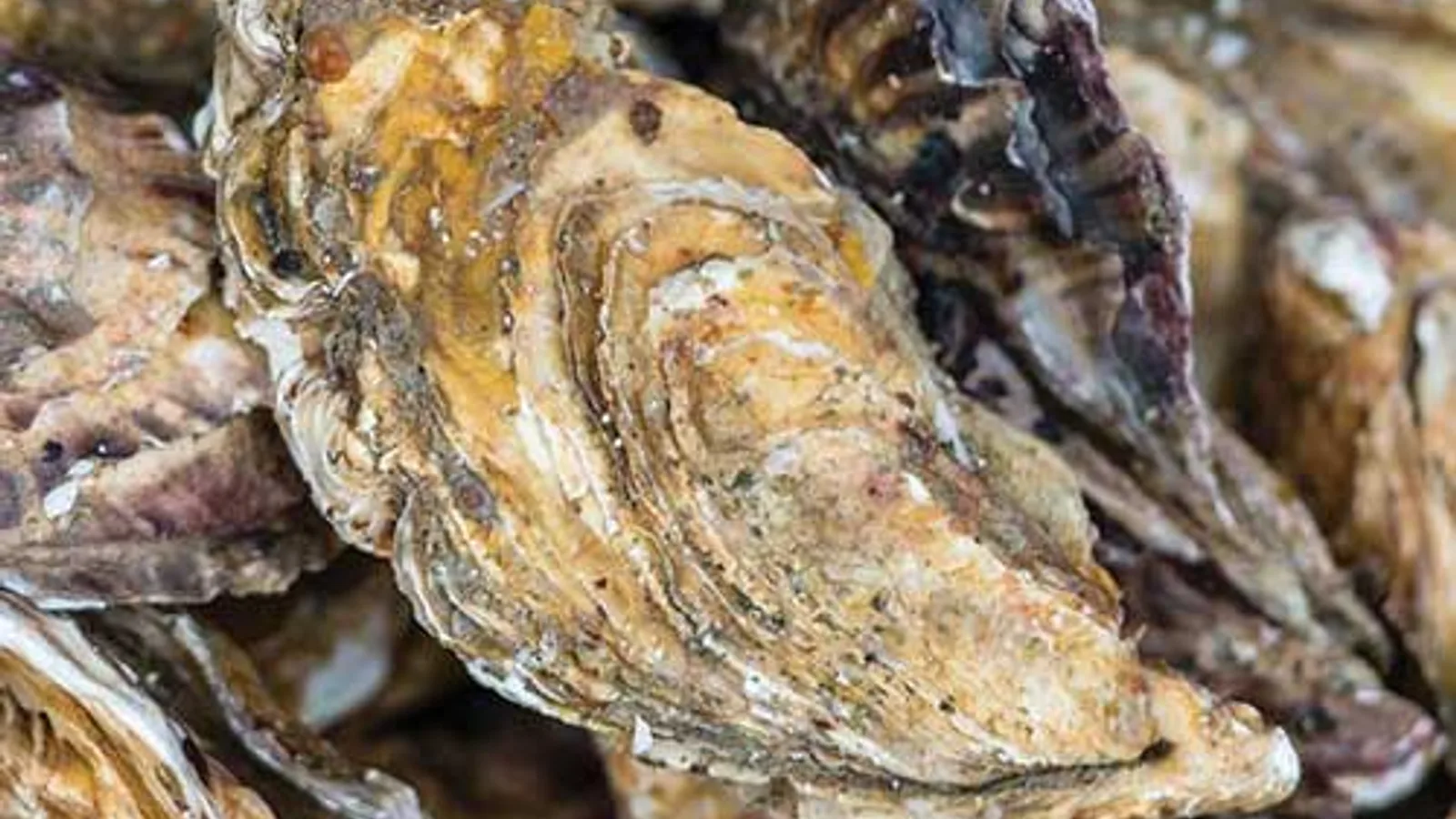

Chef’s Notes
Mason Bostwick · Executive Chef
Eastern oyster
Davenport is a father-son Dennis farm story on sandy tidal flats where Quivett Creek meets Cape Cod Bay. James started after a 2003 shellfish meeting; Jamie joined full time in 2011. Seed comes from Fishers Island Oyster Farm each June and July. I reach for Davenport when I want salty buttery cups with mineral punch and sweet finish.
Flavor chart
Chef palate read
Shuckability
Shell & line performance
When I buy it
Ask for Davenport bands tied to Quivet Neck Beach Dennis, not a generic Cape lot. James and Jamie Davenport farm the line; Island Creek distribution often carries it seasonally. Confirm harvest week when the SKU is limited and reject gaping shells after warm holding.
How I serve it
Plate on crushed ice with virgin liquor intact. The salty-mineral-sweet arc fades under heavy mignonette. Menu copy can cite Quivet Neck and Crowe’s Pasture conservation history without over-explaining the farm backstory on every ticket.
What to watch for
Spawn-season milky liquor can appear on Eastern oysters in warm months. Tide exposes the farm eight feet submerged at high tide and dry sandy flats at low. Quivett Creek freshwater can shift character after heavy rain, so smell each cup before a full order.
My read
Davenport is a father-son Dennis farm story on sandy tidal flats where Quivett Creek meets Cape Cod Bay. James started after a 2003 shellfish meeting; Jamie joined full time in 2011. Seed comes from Fishers Island Oyster Farm each June and July for salty buttery cups with mineral punch.
What Are Davenport Oysters?
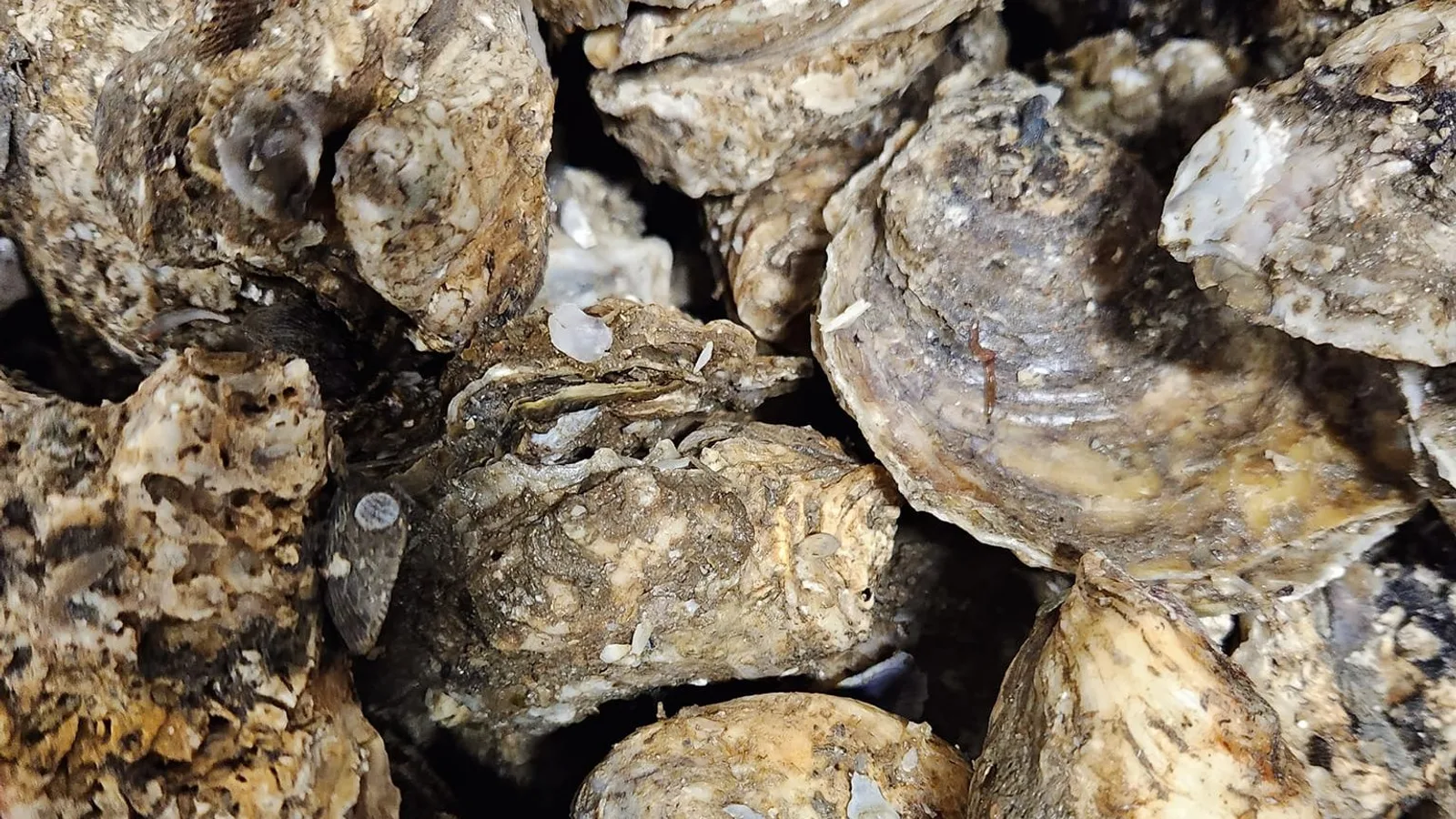
Davenport Oysters are an Eastern oyster line from James and Jamie Davenport’s farm at Quivet Neck Beach in Dennis, Massachusetts. Oysters grow off-bottom in PVC racks, mesh bags, and metal cages for about two years. The farm sits on sandy tidal flats of Cape Cod Bay where brackish Quivett Creek water collides with crisp open bay water. High tide submerges the grant under eight feet of water; low tide leaves dry sandy flats for six to ten hours daily.
Distribution often flows through Island Creek Oysters as a limited partner SKU. On the half shell, tasters report salty buttery flavor finishing with a kiss of sweetness and mineral punch. Waves tumble and shape deep cups while drying action keeps shells clean.
Seed arrives from Fishers Island Oyster Farm each June and July. All stock is Crassostrea virginica. James and Jamie Davenport finish the line over eighteen to twenty-four months before seasonal Island Creek distribution.
How Did Davenport Oysters Get Their Name?
Davenport names the family growers James and Jamie Davenport on Quivet Neck. The label is patronymic rather than a geographic or cultivar descriptor. Chefs and distributors use Davenport on carton bands when the Dennis lot is in Island Creek rotation.
The farm borders Crowe’s Pasture conservation land rich with local history. Seed arrives from Fishers Island Oyster Farm in June and July. Babies start in grow-out bags then tie to PVC racks on pristine Cape Cod Bay shores.
About the Davenport Farm
James Davenport attended a 2003 Dennis shellfish meeting where the town offered aquaculture leases. After nearly thirty years on the Dennis police force he took the plunge. Jamie worked as a Boston chef and carpenter before film school in Vancouver; he returned in 2008 and joined the farm full time in 2011.
Farming oysters gave Jamie freedom to be the father he wanted while teaching his boys hard work and land connection. Land was originally settled by Native Americans and later used as commons for grazing cattle in the 1600s. Seed arrives from Fishers Island Oyster Farm in June and July before babies start in grow-out bags tied to PVC racks on Cape Cod Bay shores.
Final months finish in metal cages or plastic aqua trays before market at eighteen to twenty-four months. Off-bottom culture controls size, shape, and mortality versus soft sand bottom with strong current. Drying flats between tides reduce fouling while waves tumble deep cups on Quivet Neck Beach.
Follow Them
Island Creek Oysters lists the Davenport oysters from Dennis partner product sheet with grow-out and farmer detail for James and Jamie Davenport’s Quivet Neck grant. The Island Creek About Us page covers the distributor partnership behind the limited seasonal Davenport SKU. Restaurant buyers can route POs through Island Creek chef direct when the Dennis lot is in rotation. Seasonal availability shifts with partner harvest windows, so confirm the SKU before you build a raw-bar feature around Davenport bands.
Davenport Oysters Information

Eastern oyster
If you like Davenport Oysters, then check out these similar varieties!
Location
The grant sits at Quivet Neck Beach in Dennis on Cape Cod Bay, Massachusetts. Quivett Creek brackish water mixes with open bay water at the site. Crowe’s Pasture conservation land borders the farm accessible by rugged dirt road. For another farmed Eastern from the same Cape neck, see Crowe’s Pasture Oysters.
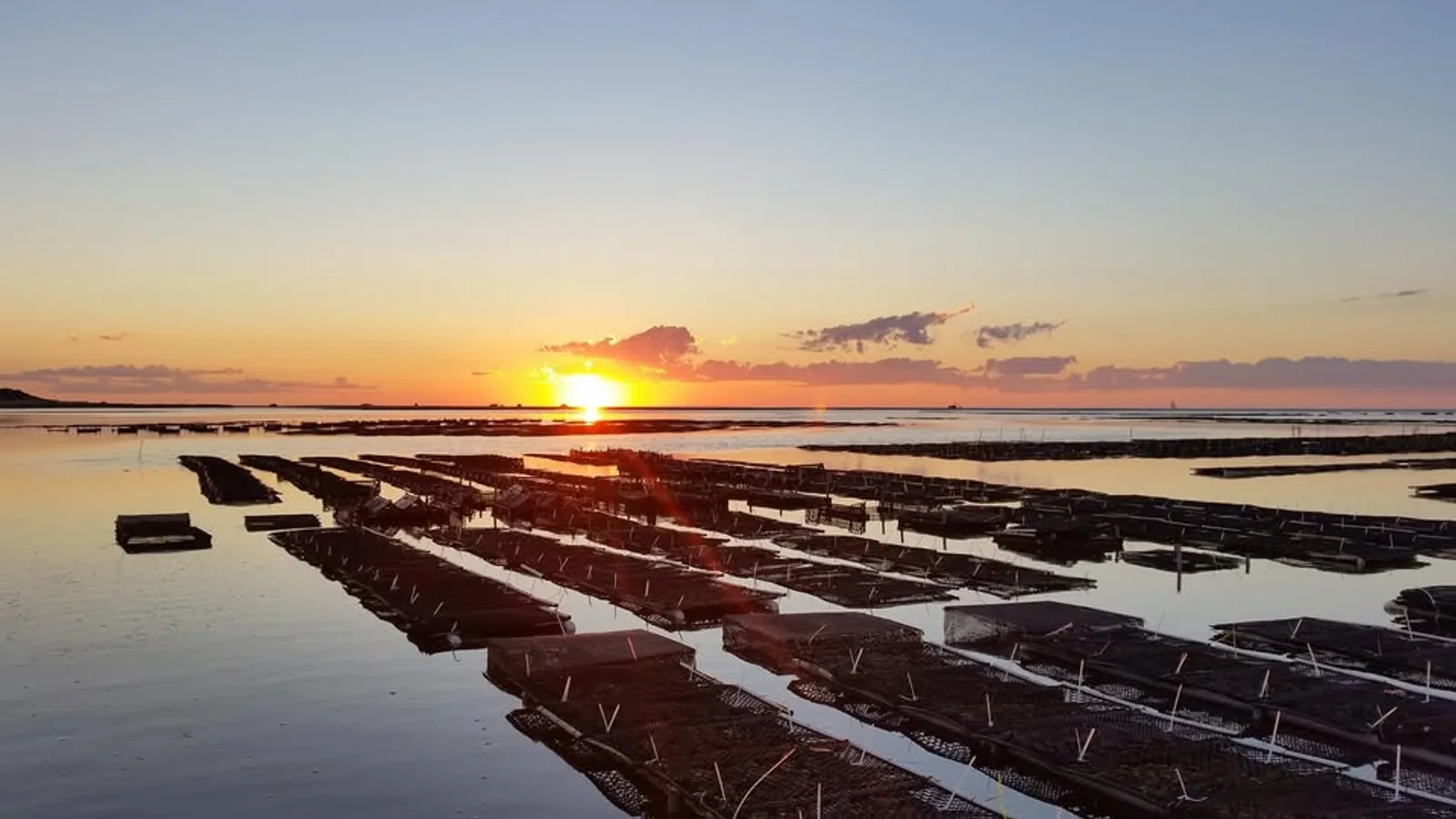
Sandy flats dry six to ten hours daily at low tide. Tidal tumbling shapes cups while creek-fed influence moderates salinity character. Storm runoff can shift nearshore beds after heavy weather on Dennis tidal grants.
Off-bottom culture on soft sand with strong current avoids bottom planting risks while tidal drying reduces fouling on exposed flats. Eastern oyster spawn biology still applies in warm months, so chefs should taste a sample cup after nor’easters even when lot tags read Dennis. Respect Massachusetts sanitary closures before raw service.
Suggested Beverage Pairings
Dassai 45 Junmai Daiginjo brings clean rice polish beside Davenport salty buttery brine without masking the sweet finish. Crisp junmai daiginjo keeps Quivett Creek-influenced salinity forward on rack-culture Dennis cups. Serve chilled between mineral punch and a kiss of sweetness.
Chalky minerality pairs with mineral punch on James and Jamie Davenport’s Dennis cups. Fine mousse refreshes palate between salty buttery bites from off-bottom rack culture. Classic sparkling service for Quivet Neck half shells.
Shiga Kogen saison brings farmhouse phenolics beside Davenport buttery mid-palate while carbonation resets salinity. Saison scrubs Cape Cod Bay brine gently between wave-tumbled Davenport half shells. Dry finish keeps creek-moderated sweetness readable on the swallow.
Low tannin red suits creek-influenced Cape pours from Dennis sandy flats. Bright carbonic fruit lifts sweet finish without overpowering rack-and-cage liquor. Serve slightly cool beside Davenport off-bottom flights.
Palo Cortado sherry Cobbler adds nutty oxidative depth beside Davenport rack-culture meats. Cobbler dilution softens alcohol heat while echoing the salty buttery opening on James and Jamie Davenport cups. Served cold, it bridges mineral punch and gentle sweetness.
Where Can I Buy Davenport Oysters?
You can buy Davenport Oysters from the following sources:
- Island Creek Oysters — Partner product page for Davenport from Dennis with farmer, site, and grow-out detail.
- Island Creek Oysters — Chef Direct — Wholesale and restaurant PO route when the Davenport SKU is in season.
References
- Island Creek Oysters. Davenport Oysters from Dennis, MA — partner product page. Accessed 21 May 2026. https://shop.islandcreekoysters.com/products/davenport-oysters-from-dennis-ma
- NOAA Fisheries. Eastern oyster (Crassostrea virginica) overview. NOAA Fisheries Species Directory. Accessed 21 May 2026. https://www.fisheries.noaa.gov/species/eastern-oyster
Discover more from The Oyster Encyclopedia
Subscribe to get the latest posts sent to your email.