

The history of James River Oysters dates back to the early 17th century when English colonists arrived in Virginia. Oysters were an abundant local resource, and colonists quickly learned to rely on them as a food source. The James River was known for its oyster reefs, and colonist Francis Perkins described it in 1608 as “full of shallows and piles of oyster shells“.
James River Oysters are wild oysters that are descend from the reefs that hung up John Smith in 1607. Oystermen would go miles up the James River in the fall of the year to buy small seed oysters and plant them on their own oyster grounds. Over time, oyster harvesting became an important industry in Virginia, and James River Oysters became a popular variety due to their unique flavor profile.
Virginia has a long history of oyster production, and by the 1890s, it supplied half of the world’s oyster supply. The oyster industry in Virginia, including the James River, has experienced various changes and management actions over the years.
Today, they are farmed on the James River in Virginia, just upstream from Chesapeake Bay. They are one of the oyster appellations from the Chesapeake Bay region off the Maryland and Virginia coasts. Despite changes in the oyster industry over the centuries, James River Oysters remain a beloved and unique variety of oyster.
James River Oysters Information
Oyster: James River
Cultivation Method: can be wild or aquaculture farmed. Wild ones are bottom-cultured, while aquaculture ones are rack and bag cultured
Season: Year Round
Size: 3.5″+
Culture Method: Can be cultured using different methods, depending on the location and environmental conditions. The culture method involves planting oyster seed on the river bottom, suspending them in mesh bags or cages, or wild Set on Oyster Reefs
Salinity: approx 25 ppt
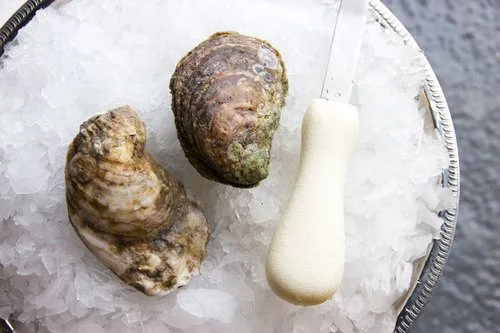
Appearance: Rough, irregular shell with a slightly curved shape. Grayish-brown coloration with some white patches.
Flavor Profile: Mild, sweet, and less briny compared to most sea-caught oysters. Full of meat with a slight chew and very mild finish.
Location
Cultivated in the James River, Virginia. They are found in the James river estuary all the way to Newport News.
Suggested Beverage Pairings
- Champagne: The crisp fizziness and acidic flavor of Champagne make it a classic and popular pairing with oysters.
- Dry Sparkling Wines: Other dry sparkling wines, such as Prosecco or Cava, can also complement the flavors of oysters.
- Muscadet: Muscadet is a white wine that has bright and crisp characteristics, with green fruit notes like lime, apples, and pears. It pairs well with oysters and can even replace the need for lemon.
- White Wines: White wines that are high in acidity and minerality, such as Chablis or Sauvignon Blanc, generally pair well with oysters.
- Stouts: For beer lovers, stouts like Guinness can be a great choice to pair with oysters.
- Dry White Wines: Dry white wines like Sauvignon Blanc or Pinot Gris can also be a good match for oysters.
- Citrusy Drinks: If you prefer non-alcoholic options, citrusy drinks like strawberry lemonade can provide a refreshing and complementary flavor.
Remember, personal preferences may vary, so feel free to experiment and find the pairing that suits your taste.
Where to Buy James River Oysters
- Gourmet Food Store: Gourmet Food Store is an online marketplace.
- Local Oyster Farms: Some local oyster farms or seafood markets may also sell James River Oysters. Check with your local seafood markets or visit their websites to see if they offer James River Oysters for sale.
- High Country Seafood Co.: High Country Seafood Co. is an online seafood retailer. You can visit their website to order a box of cleaned oysters.
Discover more from The Oyster Encyclopedia
Subscribe to get the latest posts sent to your email.