

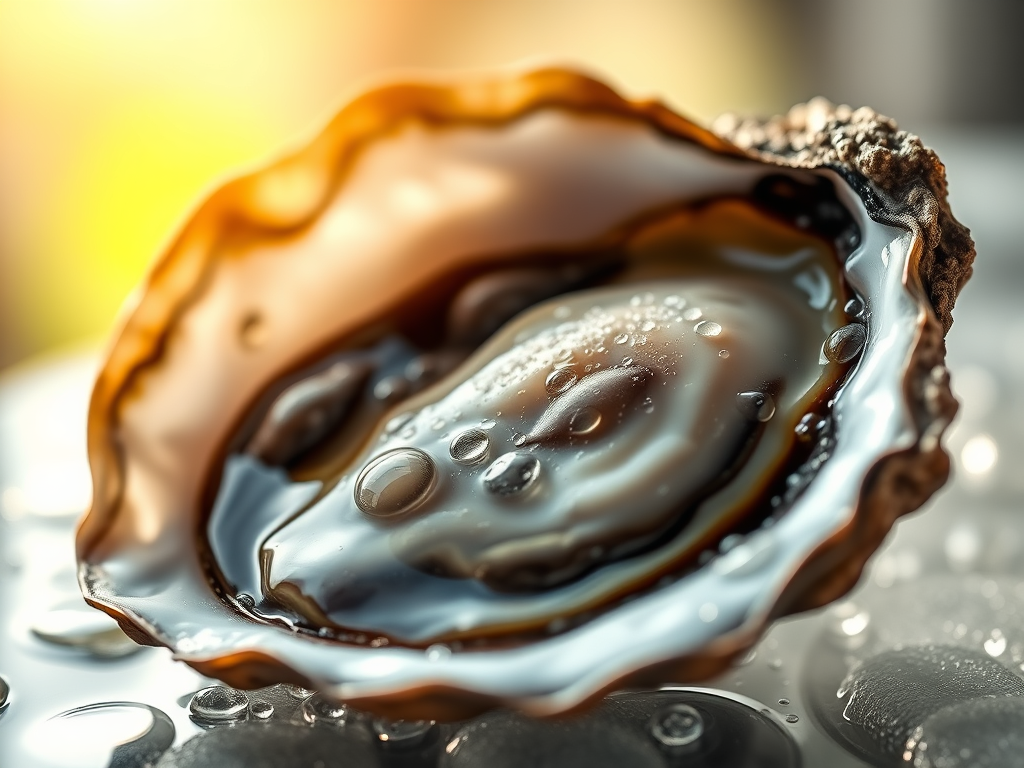
Oysters, those delicious and mysterious shellfish, have been a culinary delight for centuries. But a pressing question has emerged among scientists, animal rights advocates, and even curious seafood lovers: Do oysters feel pain?
The answer isn’t as straightforward as it may seem. To understand this, we need to explore oyster anatomy, scientific research on pain perception, and the ethical implications of eating them.
Oyster Anatomy: A Brain Unlike Any Other
Unlike mammals, birds, or even fish, oysters lack a centralized brain. Instead, they have paired ganglia—clusters of nerve cells that control their basic functions like opening and closing their shells.

Key differences between oyster and human nervous systems:
✅ No centralized brain – Oysters have a decentralized system that operates without conscious thought.
✅ No pain receptors (nociceptors) – These are essential for experiencing pain in most animals, but oysters don’t have them.
✅ Simple response to stimuli – When disturbed, oysters close their shells to protect themselves, but this doesn’t necessarily indicate pain.
Without a complex brain and nervous system, do oysters have the ability to suffer? Scientists have explored this question deeply.
What Science Says: Do Oysters Feel Pain?
Pain is more than just a physical reaction—it’s a subjective experience processed by the brain. Most scientists agree that for an organism to feel pain, it must have:
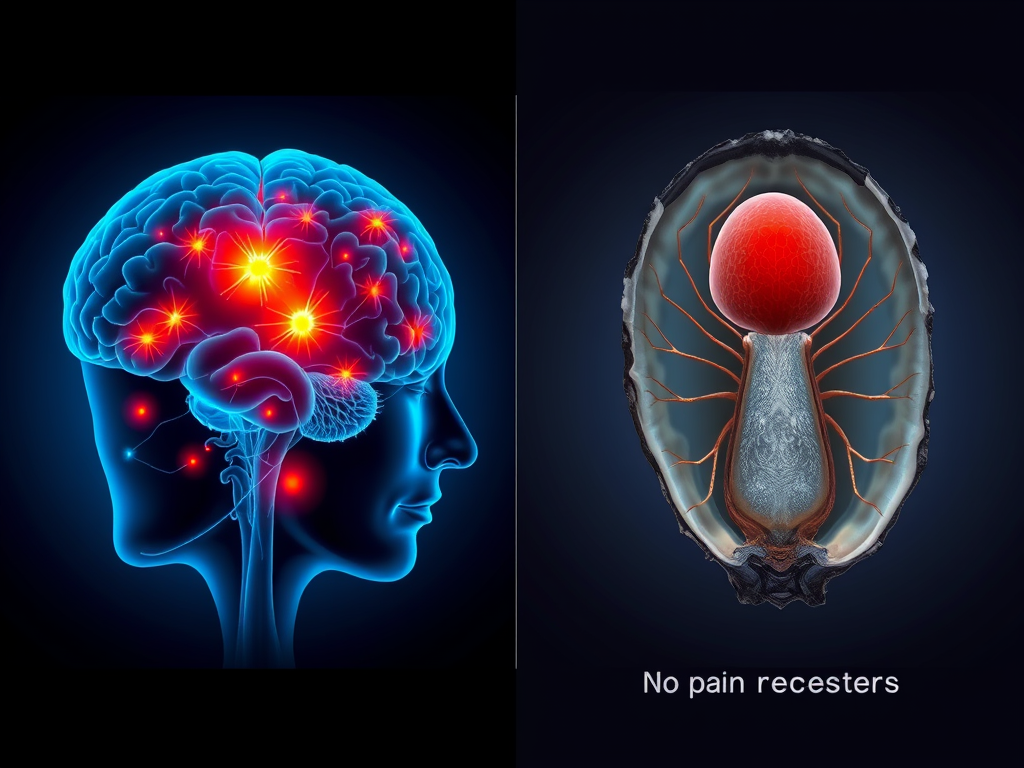
- Nociceptors – Specialized nerve endings that detect harmful stimuli.
- A central nervous system – A brain or similar structure to interpret pain signals.
- Behavior indicating distress – Signs of suffering, such as trying to escape danger.
Since oysters lack a centralized brain and nociceptors, they likely do not feel pain in the way humans, mammals, or even fish do.
Studies on invertebrates suggest that some simple organisms, like crabs and octopuses, exhibit behaviors consistent with pain. However, oysters remain an exception due to their biological simplicity.
A scientific perspective: According to marine biologists, pain requires a level of consciousness that oysters simply do not have. Instead of experiencing discomfort, their nervous system allows them to react reflexively—like how a plant moves toward sunlight.
The Ethics of Eating Oysters

Because oysters are unlikely to experience pain, some vegetarians and vegans make an exception for them in their diets. This has led to the rise of bivalve veganism—the practice of eating bivalves (oysters, mussels, clams) while avoiding other animal products.
Arguments for eating oysters ethically:
🔹 No evidence of suffering – If they don’t feel pain, is eating them more ethical than eating animals that do?
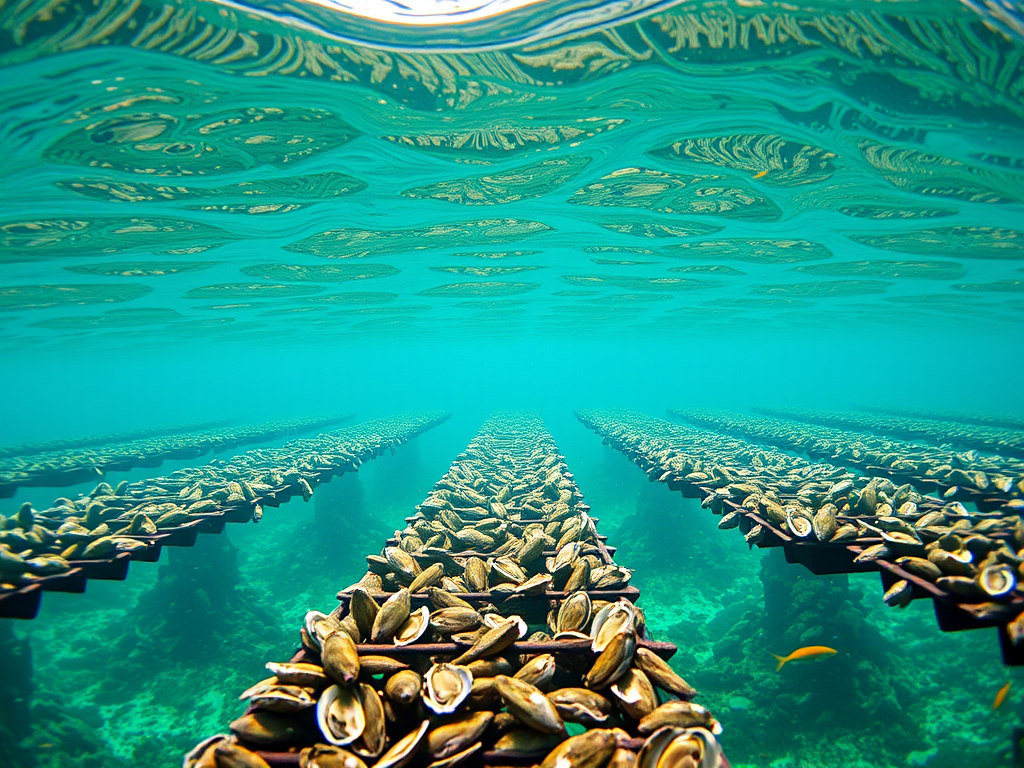
🔹 Sustainable farming – Oysters don’t require feed and actually help clean the ocean by filtering water.
🔹 High in nutrients – Oysters are rich in vitamin B12, iron, and omega-3s, making them a nutritious choice.
Can oysters feel pain: Counterarguments
❌ What if science is wrong? Some argue that, until we fully understand invertebrate pain, we should err on the side of caution.
❌ Environmental concerns – While oyster farming is relatively sustainable, overharvesting can harm local ecosystems.
Ultimately, the decision to eat oysters is a personal one, based on scientific understanding and ethical beliefs.
A Closer Look at the Vegan and Ethical Debate
The question of whether oysters should be considered ethical to eat remains controversial within the vegan community. Some plant-based eaters classify themselves as “bivalve vegans,” arguing that since oysters lack sentience, eating them does not violate ethical principles. Others, however, caution against consuming any animal product, stating that our understanding of invertebrate pain is incomplete.
Why Some Vegans Eat Oysters
- They do not exhibit suffering like mammals, birds, or even fish.
- Oyster farming has a low environmental footprint compared to livestock agriculture.
- They provide essential nutrients (e.g., vitamin B12) that can be difficult to obtain from a strict plant-based diet.

Why Some Vegans Avoid Oysters
- Erring on the side of caution—just because we don’t know for certain doesn’t mean we should assume they don’t feel anything.
- Ethical consistency—if the goal is to avoid all animal consumption, eating oysters contradicts that principle.
- Slippery slope argument—allowing bivalves might lead to justifying other forms of animal consumption.
The debate reflects broader questions about how we define sentience, pain, and ethical consumption in the modern world.
Future Research: What Scientists Are Still Trying to Discover
The study of invertebrate pain perception is still evolving. While current evidence suggests that oysters do not experience pain, future research could uncover new insights. Some key questions scientists are exploring include:

🧪 Could oysters have a different, undiscovered form of perception?
🧪 Are there molecular or chemical signals in oysters that mimic pain responses?
🧪 Could advances in neuroscience redefine how we understand invertebrate sentience?
Future research may involve high-tech imaging, neural mapping, and behavioral experiments to determine whether oysters exhibit responses beyond basic reflexes.
As science advances, so too will our ethical and environmental considerations regarding oysters and other marine life.
Conclusion: What Do We Really Know?
As far as science can tell, oysters do not feel pain in the way humans and animals with centralized brains do. Their lack of nociceptors and simple nervous system suggest that they react to stimuli but do not suffer.
However, ethical debates remain, and the conversation about animal sentience is far from over. Whether or not you eat oysters, understanding their biology helps inform more conscious and sustainable choices.
Would you still eat oysters knowing they probably don’t feel pain? Or do you think science hasn’t uncovered the full story yet?
Thank you for reading! If you enjoyed this article check out some of our other oyster related content!
Stay Connected with The Oyster Encyclopedia!
Follow us on social media to get the latest updates, oyster recipes, and behind-the-scenes glimpses into the world of oysters:
Stay tuned for exclusive content, oyster trivia, and more! Engage with our vibrant community of oyster enthusiasts by liking, commenting, and sharing our posts. Your support helps us continue providing valuable oyster knowledge to fellow seafood lovers worldwide.
Discover more from The Oyster Encyclopedia
Subscribe to get the latest posts sent to your email.