


Introduction
As the demand for high-quality oysters grows, modern oyster farming techniques continue to evolve to meet sustainability and efficiency goals. One of the most effective methods used today is floating and submerged cage oyster farming. This technique involves placing oysters in cages that are either suspended at the water’s surface (floating cages) or positioned just below the surface (submerged cages).

By keeping oysters elevated in the water column, these cages allow for optimal water flow, better feeding conditions, and protection from seabed predators. In this article, we’ll explore how floating and submerged cage oyster farming works, its advantages, challenges, and why it is shaping the future of sustainable oyster aquaculture.
What is Floating and Submerged Cage Oyster Farming?
Floating and submerged cage oyster farming is a mid-water aquaculture technique where oysters grow inside enclosed cages that are either anchored below the surface or kept afloat using buoys. Unlike bottom culture methods where oysters grow directly on the seabed, this system elevates oysters into cleaner, nutrient-rich water, improving growth rates and overall oyster quality.
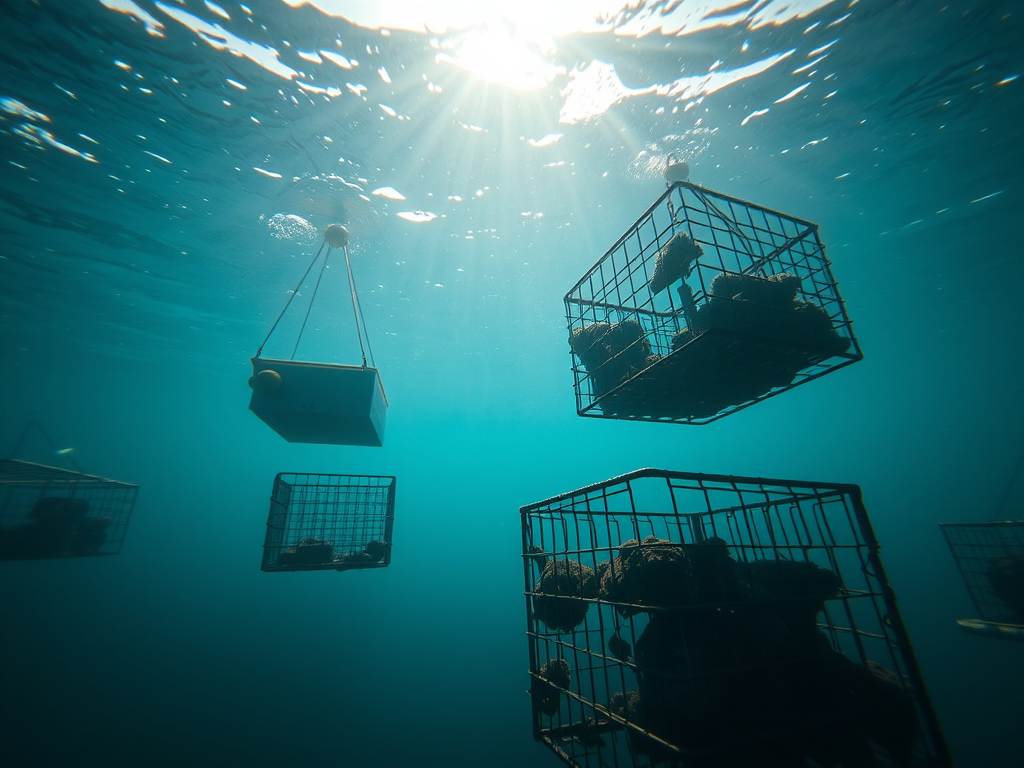
- Floating Cages: Positioned at the surface of the water, these cages are supported by buoys or floating structures.
- Submerged Cages: Placed just below the surface, these cages are tethered to the seafloor but remain suspended in the water column.
Both methods provide controlled growing environments that protect oysters from sediment accumulation, predators, and water quality fluctuations.
How Floating and Submerged Cage Oyster Farming Works

1. Site Selection and Cage Installation
Farmers select locations with steady water currents, moderate salinity, and good water circulation to maximize oyster growth. Floating cages are anchored with buoys, while submerged cages are weighted and secured to the seabed.
2. Spat Seeding and Cage Placement
- Young oysters (spat) are placed in stackable cages with mesh enclosures, allowing for free water flow.
- The cages are then strategically placed at different depths based on water quality and plankton availability.
3. Growth and Maintenance
- Oysters filter-feed naturally on plankton, benefiting from the constant movement of fresh water.
- Farmers regularly monitor and adjust cage depth to maintain optimal growing conditions.
- Tumbling or shaking the cages prevents overcrowding and encourages stronger, more uniform shell development.
4. Harvesting the Oysters
- Once mature (12–24 months), oysters are harvested directly from the cages, resulting in clean, market-ready oysters with minimal post-harvest processing required.
Benefits of Floating and Submerged Cage Oyster Farming
The floating and submerged cage method offers multiple advantages over traditional oyster farming techniques. One of the most significant benefits is faster growth rates due to oysters being suspended in plankton-rich, well-oxygenated waters. Since they are not resting on the seabed, they receive a constant flow of fresh nutrients, leading to larger, meatier oysters in a shorter time frame.

Another key advantage is protection from seabed predators such as crabs, starfish, and oyster drills. Oysters grown in cages experience higher survival rates compared to those grown directly on the ocean floor. Additionally, the elevated position in the water column helps oysters develop cleaner, grit-free shells, making them more desirable for raw consumption and premium seafood markets.
From an environmental perspective, this method has minimal impact on the ocean floor, as it does not involve dredging or disturbing natural habitats. It also allows for better farm management, since oysters can be easily monitored, adjusted, and harvested without damaging surrounding ecosystems.
Another advantage is the flexibility of cage depth adjustment. Farmers can modify the position of submerged cages to avoid harmful algal blooms, temperature fluctuations, or other environmental hazards, ensuring more stable growth conditions.
Challenges of Floating and Submerged Cage Oyster Farming
Despite its benefits, floating and submerged cage oyster farming presents several challenges. One of the biggest concerns is vulnerability to extreme weather conditions. Floating cages, in particular, are susceptible to strong waves, storms, and high winds, which can dislodge cages, damage oyster stocks, and create operational risks.
Submerged cages, while more protected from surface conditions, require frequent monitoring and adjustments to ensure that they remain at optimal depths. If not managed properly, oxygen levels, temperature changes, or water quality fluctuations can negatively impact oyster growth.
Another challenge is biofouling, where algae, barnacles, and other marine organisms accumulate on cages. This restricts water flow and reduces oyster growth efficiency, requiring regular cleaning and maintenance. Farmers must invest in anti-fouling treatments, labor, and advanced cage designs to mitigate this issue.
Additionally, floating and submerged cage farming requires a higher initial investment compared to bottom culture methods. The cost of cages, anchoring systems, buoys, and maintenance equipment can be substantial, making it less accessible for small-scale farmers.
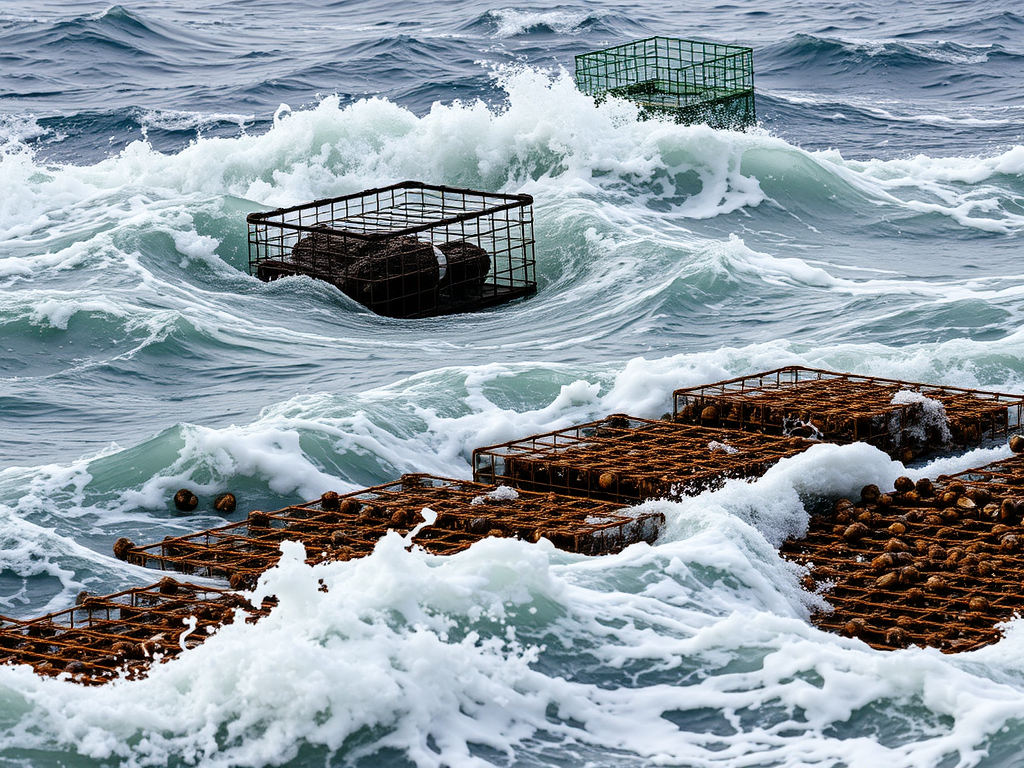
Finally, regulatory approvals and water space competition can pose challenges in some regions. Since these farms occupy the mid-water column, they may interfere with boat traffic, fishing zones, or recreational waters, requiring permits and negotiations with local authorities.
Where is Floating and Submerged Cage Oyster Farming Used?
This method is widely used in regions known for premium oyster production, including:
- United States (East & West Coast) – Used in Chesapeake Bay and the Pacific Northwest for high-quality raw oysters.
- France (Normandy & Arcachon Bay) – Floating cages are popular for cultivating fine de claire and Belon oysters.
- Canada (Prince Edward Island & British Columbia) – Submerged cage farming is preferred for deep-cupped oysters in cold waters.
- Australia & New Zealand – Used for growing Sydney Rock Oysters and Bluff Oysters, known for their unique merroir.
Comparing Floating and Submerged Cage Farming to Other Methods
| Farming Method | Growth Environment | Advantages | Challenges |
|---|---|---|---|
| Floating Cages | Suspended at the water surface | Faster growth, high oxygen supply | Vulnerable to storms and rough waves |
| Submerged Cages | Below the water surface | More stable conditions, less surface exposure | Requires monitoring to adjust depth |
| Bottom Culture | Seabed/Natural Ocean Floor | Minimal equipment needed | Slower growth, high predator risk |
| Rack and Bag System | Elevated racks above the seabed | Cleaner oysters, easy maintenance | Requires frequent flipping and handling |
The Future of Floating and Submerged Cage Oyster Farming
As oyster aquaculture continues to advance, innovations in automated cage systems, AI-driven water monitoring, and anti-fouling technology will make floating and submerged cage farming more efficient and cost-effective.
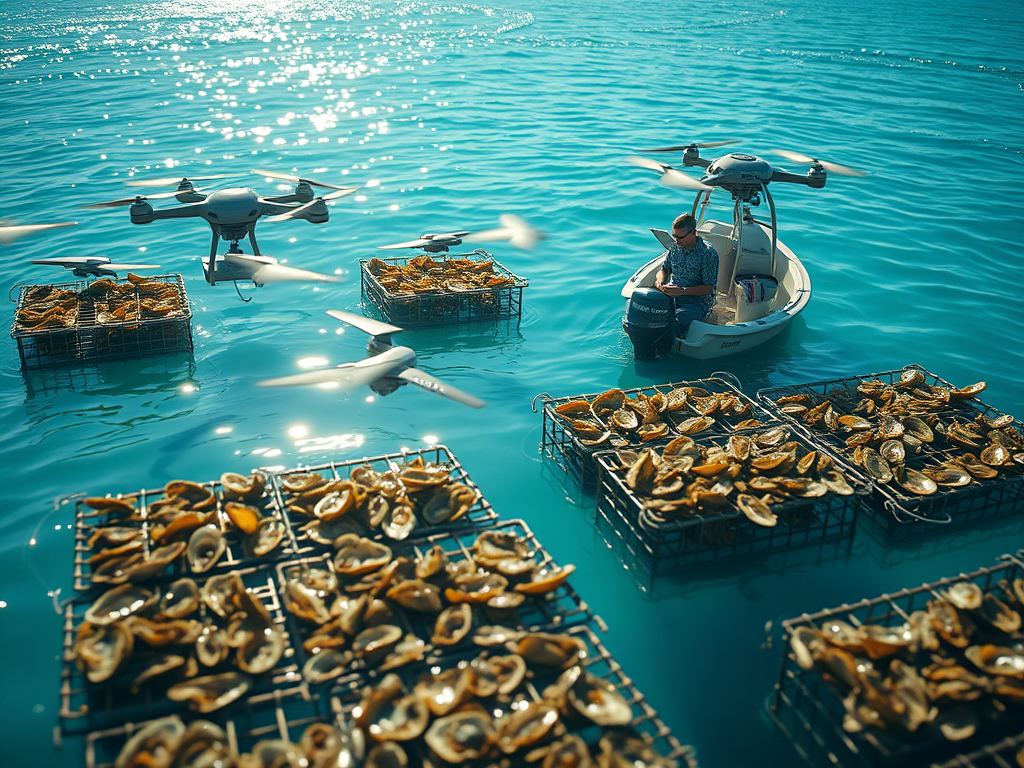
Many oyster farms are also adopting hybrid approaches, combining floating and submerged cage techniques to adapt to different environmental conditions and improve sustainability. Additionally, oyster reef restoration projects are integrating cage farming to enhance wild oyster populations and marine biodiversity.
Why Floating and Submerged Cage Oyster Farming is the Future
With its ability to produce high-quality oysters while minimizing environmental impact, floating and submerged cage oyster farming is quickly becoming a preferred method in modern aquaculture. While it presents challenges such as maintenance, biofouling, and weather vulnerability, its efficiency, sustainability, and ability to produce cleaner oysters make it one of the most promising innovations in oyster farming today.

As technology improves and sustainable practices expand, this method will continue to shape the future of oyster aquaculture, ensuring a reliable and eco-friendly seafood supply for generations to come.
Discover more from The Oyster Encyclopedia
Subscribe to get the latest posts sent to your email.
Do several large oyster farms in a small space produce a foul odor?
Not usually — unless the farms are mismanaged or an unusual environmental problem occurs. Alot of oyster farms in a small area would actually be very beneficial to the surrounding environments and communities. Oysters are filter feeders so the waters in the vicinity would be much cleaner. This would lead me to believe that it would actually smell more pleasant.
Odor problems only occur when something unusual happens—such as a large mortality event where many oysters die at once, poorly maintained gear that accumulates rotting seaweed or biofouling, stagnant or low-oxygen water that produces hydrogen sulfide, or intertidal mud flats that naturally smell at low tide. In healthy, flowing water with proper maintenance, even dense clusters of oyster farms remain essentially odor-free.