

Dermo disease is a chronic disease of oysters caused by the protozoan parasite Perkinsus marinus. The oyster disease can impact oysters of all ages, from bathe to adults. The illness can spread swiftly from one oyster to another.
The disease can cause massive oyster mortalities, with up to 90-95% of oysters dying in some areas. The condition can also cause severe emaciation, gaping, shrinkage of the mantle, and black spots in the tissue.
Dermo disease does not harm humans and has nothing to do with food safety. A recent study suggests that the condition is intensifying, and A historically significant marine disease emerged in eastern oysters due to a rapid phenotype change in the pathogen Perkinsus marinus.

The study also suggests that tolerant phenotypes in culture can reduce environmental parasite densities and disease-related mortality in the wild, and thus tolerance rather than resistance may be a better selection target for managing Dermo disease in aquaculture settings and preserving the health of wild eastern oyster reefs nearby.
What are the symptoms of Dermo Disease in Oysters?
Dermo disease is a condition of the oyster caused by the protozoan parasite Perkinsus marinus. The disease causes the protist to destroy oyster tissues and infected cells, releasing many trophozoites into the host’s tissues or bloodstream.
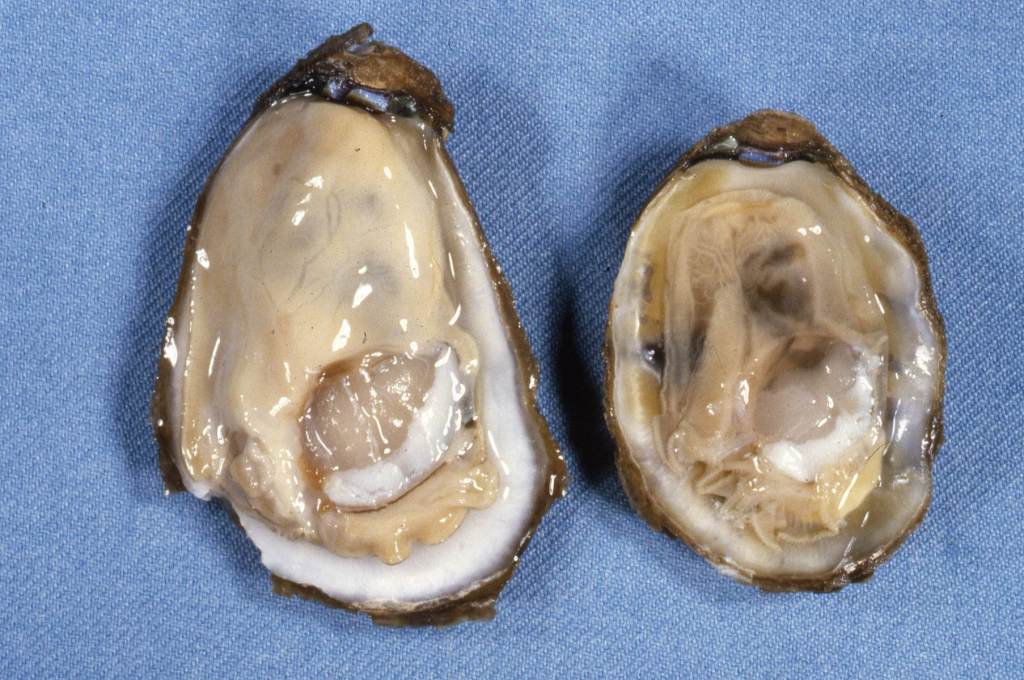
When an oyster becomes infected, it undergoes several changes. Its tissues become pale, its gamete production slows, and its growth rate decreases. The oyster loses weight, and its mantle shrivels, pulling away from the shell. In some cases, it may develop pockets of pus-like fluid. The oyster may die if the tissues break down and the blood vessels become blocked. However, some oysters with active infections can survive, despite the condition, for up to 3 years.
The symptoms of Dermo disease in oysters include a pale appearance to the digestive gland, reductions in condition index, severe emaciation, gaping, shrinkage of the mantle, and black spots in the tissue.
What are the signs of Dermo disease in oysters?
The signs of Dermo disease in oysters include:
- Infection of the hemocytes (blood cells) of the oyster
- Reduced condition index.
- Slowed growth.
- Loss of reproductive output.
- Mortality.
- Severe emaciation.
- Gaping.
- Shrinkage of the mantle.
- The presence of black spots in the tissue.
- Pale appearance to the digestive gland.
What is the mortality rate of oysters infected?
The mortality rate of oysters infected with Dermo disease can vary depending on several factors, including the age and health of the oyster, the severity of the infection, and environmental conditions. Mortality rates can range from low to high, with some studies reporting mortality rates of up to 97-98% in infected oysters.

Is Dermo Disease Harmful to Humans if They Consume and Infected Oysters?
Dermo disease is not harmful to humans if they consume infected oysters. The protozoan parasite Perkinsus marinus, which causes the condition, does not directly threaten humans who consume infected oysters. Leading biologists believe that oysters infected with Dermo disease are safe to eat, as the parasites cannot survive in the human body. However, infected oysters grow more slowly, exhibit poorer body conditions, and reproduce less successfully than their healthy counterparts. The illness can lead to substantial financial setbacks for the oyster industry.
Are there any reported cases of humans dying from consuming infected oysters?
There is no evidence of humans getting sick from consuming oysters infected with Dermo disease.
Are there any preventive measures to avoid this disease in oysters?
Yes, there are several preventive measures to avoid Dermo disease in oysters, including:
- Avoid moving infected oysters into an area containing uninfected oysters, as Dermo disease transmits from oyster to oyster.
- Harvest shellfish at the age of 3, as Dermo, is a slow-killing disease and could cause mortality in oysters grown beyond 3-4.
- Maintain oysters at reduced salinities (< 15 ppt) as long as possible, as this can help manage the disease.
- Use tolerant phenotypes in culture, which can reduce environmental parasite densities and disease-related mortality in the wild.
- Sun curing is a commonly used preventative measure, allowing for sufficient drying time to ensure complete mortality of Dermo spores.
It is important to note that there is currently no known cure for Dermo disease in oysters, and more research is needed to develop effective treatments.
How does it affect the oyster industry?
- Economic losses: Dermo disease can cause significant financial losses for the oyster industry. Infected oysters grow more slowly, exhibit poorer body condition, and reproduce less successfully than their healthy counterparts. This can result in reduced harvests and lower profits for oyster farmers.
- Reduced oyster populations: Dermo disease can cause massive oyster mortalities, with up to 90-95% of oysters dying from the disease in some areas. Overall, more mortalities reduce oyster populations, negatively impacting the ecosystem and the industry.
- Slowed growth: Infected oysters grow more slowly than healthy oysters. The delay in the time it takes for oysters to reach market size affects the sellable product farmers end up with, resulting in reduced profits for oyster farmers.
- Poorer body condition: Infected oysters exhibit poorer body condition than healthy oysters. Consequently, their poor appearance renders them less desirable to consumers and reduces demand for oysters altogether.
- Reduced reproductive output: Infected oysters reproduce less successfully than healthy oysters. This can result in reduced populations and lower profits for oyster farmers.
What measures prevent the spread of Dermo disease in oyster farms?
There are several measures one can take to prevent the spread of Dermo disease in oyster farms, including:
- Harvesting shellfish at 3, as Dermo, is a slow-killing disease and could cause mortality in oysters grown beyond 3-4.
- They avoid moving infected oysters into an area containing uninfected oysters.
- It maintains oysters at reduced salinities (< 15 ppt) as long as possible, as this can help manage the disease.
- Using tolerant phenotypes in culture can reduce environmental parasite densities and disease-related mortality in the wild.
- Research suggests that harvesting oysters before spreading disease can enhance wild oyster populations by removing infected ones before illness spreads.
- As modeling has demonstrated, diluting parasites in the environment by sufficient oyster aquaculture harvest can reduce Dermo disease burdens on wild oyster populations.
To Be Continued
As we delve deeper into the mysteries of our oceans and the intricate web of life beneath the surface, we hope this exploration of Perkinsus marinus and its impact on oysters has shed light on the urgent need for conservation and research. Let’s continue to be stewards of our seas, nurturing not only the oysters but the fragile ecosystems they inhabit. Together, we can strive for a healthier future, both for our planet and the remarkable creatures that call it home.
Remember, this is only one of the dieseases hurting our oyster populations. Stay in the know and check out another disease that is wreaking havoc on the ecosystem. Its called vibrio vulnificus.
Discover more from The Oyster Encyclopedia
Subscribe to get the latest posts sent to your email.