

The world beneath the ocean’s surface hides a treasure trove of remarkable creatures, and among them, Pacific oysters, scientifically known as Crassostrea gigas, stands as a testament to nature’s ingenuity. With an appearance that defies convention and a flavor that delights the palate, Pacific oysters have garnered both gastronomic and scientific admiration. In this article, we embark on a journey to unravel the captivating world of Pacific oysters, delving into their appearance, taste, and the intriguing phenomenon of gender transformation.
Pacific oysters present an aesthetic marvel beneath the waves. Their shells, irregular in shape and resembling ovals and pears, sport a distinctive whitish-grey hue. But the true wonder lies within these shells, where a pristine white interior awaits. Yet, it’s not just their appearance that captures the imagination; Pacific oysters are equipped with powerful adductor muscles that enable them to snap their shells shut in the face of danger. These natural defenses are just one of the many facets that make Pacific oysters a species worth exploring in depth.
Beyond their striking appearance, Pacific oysters offer a symphony of flavors that have intrigued connoisseurs for generations. Each oyster species has its unique taste, influenced by the local habitat or “merroir.” In the case , their briny and slightly metallic flavor sets them apart, offering a culinary adventure like no other. Moreover, these bivalves hold another captivating secret: their ability to change gender during their lifetime, a phenomenon that showcases the complexity of their biology. Join us as we journey deeper into the world of Pacific oysters, uncovering their distribution, conservation status, sustainability efforts, and even some fun facts that will leave you marveling at the wonders of the ocean’s bounty.

Appearance
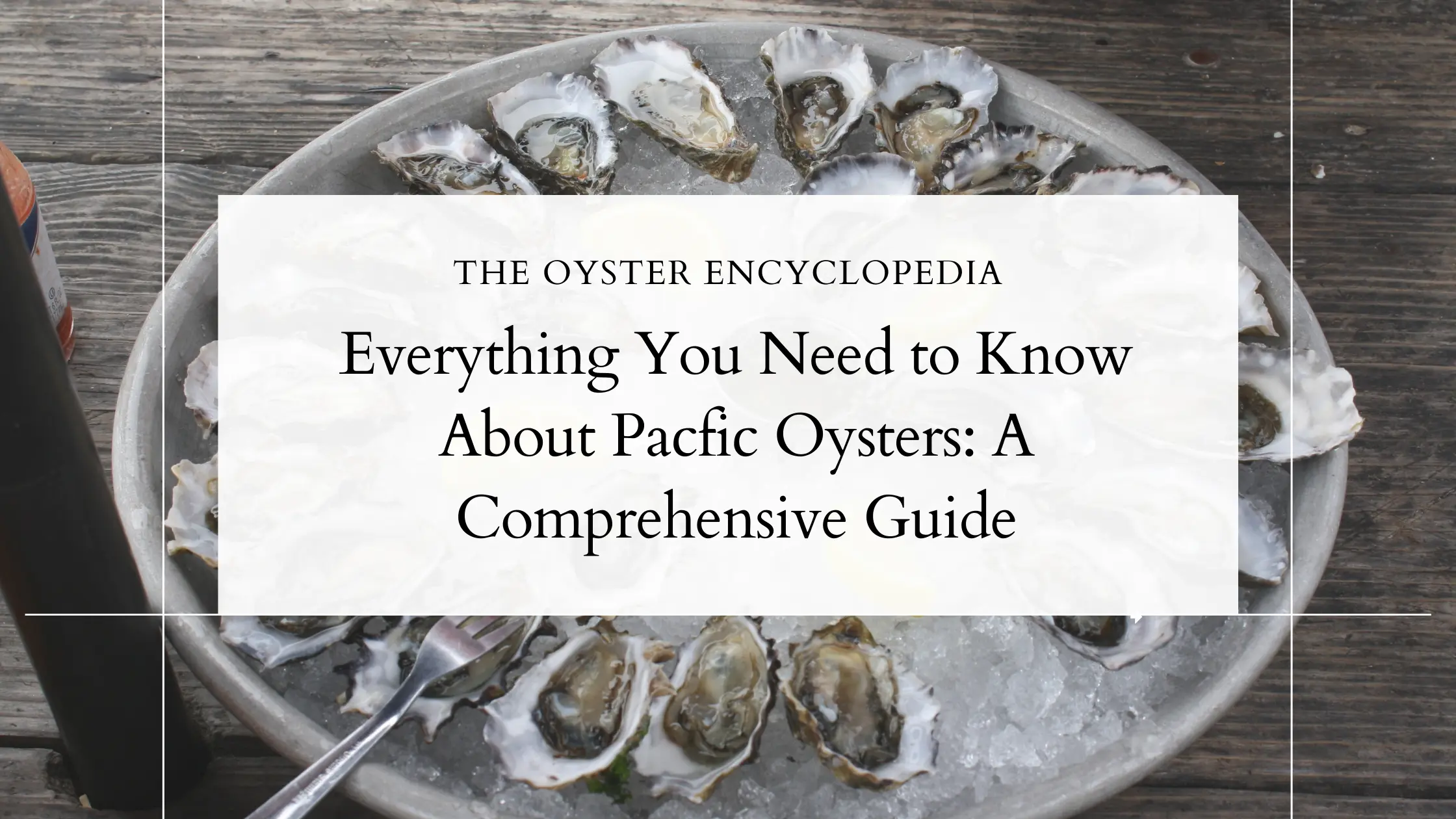
Pacific oysters, Crassostrea gigas, exhibit a distinctive appearance. Their shells are often irregular in shape, featuring ovals and pear-like forms. These shells typically sport a whitish-grey hue, while the interior is predominantly white. One remarkable feature is their robust adductor muscles, which enable them to quickly close their shells as a defense mechanism. On average, Pacific oysters measure between 62 to 64 mm in length, with a medium-sized specimen weighing approximately 50 grams.
Taste
Pacific oysters, like all oyster species, possess unique flavor profiles. However, their taste can be influenced by the local habitat or “merroir.” They are renowned for their briny and slightly metallic taste, offering a distinctive culinary experience. In contrast, Atlantic oysters boast a sweet and mild flavor, showcasing the diversity of oyster flavors across species.
Gender Dynamics
Like many oyster species, these oysters exhibit the intriguing ability to change their gender during their lifetime. While some may undergo this transformation only once or twice, others can switch genders multiple times, a fascinating aspect of their biology.
Distribution, Population, and Habitat
Pacific oysters inhabit various ecosystems worldwide, including intertidal zones, estuaries, and bays. Some species are native to specific regions, while others have been introduced to new areas. For instance, the oyster originates from Japan’s Pacific coast but has been successfully introduced to North America, highlighting their adaptability.

Conservation Status
The conservation status of oyster species varies due to factors such as overfishing, habitat loss, and pollution. Some oyster species, including the Olympia oyster and the European flat oyster, are considered endangered or vulnerable in certain regions. These designations underscore the importance of conservation efforts to protect these remarkable creatures.
Sustainability
To ensure the sustainability of thier populations, farmers are implementing various practices. Sustainable harvesting techniques, oyster bed restoration, and eco-friendly aquaculture methods are becoming increasingly common. However, there is ongoing room for improvement in minimizing environmental impact. Leaders in this space are continually researching and innovating to enhance sustainability in oyster farming.
Hot Spots for Pacific Oysters
- Pacific Oyster Farm
- Tomales Bay Oyster Company
- Taylor Shellfish Farms,
- Hog Island Oyster Company
- Totten Inlet Pl
- Hood Canal Marina
- Fanny Bay
- Puget Sound
- Chelsea Oyster Company
- Humboldt Bay Wildlife Refuge
- Oregon Oyster Farm
- Huîtres Breuil – Marennes Oléron
- Huîtres POGET
- Othniel Oysters
- Lindisfarne Oysters Ltd
- Atlantic Edge Oysters
- Pacific Oyster Farms Limited
- Clevedon Coast Oysters
- Stella Marie Oyster Co.
- Pristine Oyster Farm
- Campbell’s Oyster Farm
- Mizuyama Oyster Farm
- Farm Suzuki
- Souto Kumaru
- Islandia
- ACE Oysters
- Dutch Imperial Oysters
Fun Facts about Pacific Oysters
- Scientifically known as Crassostrea gigas.
- They can efficiently filter up to 50 gallons of water per day, contributing to improved water quality.
- They grow rapidly and can reach market size within 18-30 months.
- Shell colors can vary, ranging from white to greenish-brown.
- They are versatile and can be enjoyed raw on the half-shell, grilled, baked, or fried.
- These oysters exhibit adaptability to a wide range of salinity levels.
- They are a rich source of essential nutrients, including zinc, iron, and vitamins.
- Cultivation began in the 1920s, significantly impacting the seafood industry.
The Key Take Aways
Pacific oysters, Crassostrea gigas, are a remarkable species with a unique blend of taste, gender dynamics, and adaptability. As you explore the world of Pacific oysters, it’s crucial to consider their conservation and sustainability efforts, ensuring these delicious bivalves continue to thrive. Whether you’re a seafood connoisseur or simply curious about the natural world, Pacific oysters offer a captivating journey into the depths of the ocean’s bounty.
Discover more from The Oyster Encyclopedia
Subscribe to get the latest posts sent to your email.
Pingback: The 5 (Most Common) Oyster Species and The 200 Others You Haven't Heard Of - The Oyster Encyclopedia