


Cut-resistant gloves for oysters aren’t about fear — they’re about control, safety, and learning proper shucking technique without wrecking your hands.
Oyster shucking isn’t dangerous. Bad technique is.
Every year, emergency rooms treat thousands of hand injuries caused by oyster knives slipping, shells cracking unexpectedly, or people forcing their way through a stubborn hinge. Most of those injuries happen at home, not in restaurants.
Oysters punish overconfidence.
A cut-resistant glove gives you a margin for error while you learn proper technique, build confidence, and shuck cleanly instead of aggressively. It doesn’t replace skill, but it dramatically reduces the consequences of mistakes.
This guide covers the best cut-resistant gloves for oyster shucking, selected for real oyster work, food-safe materials, usable dexterity, and availability from trusted retailers.
This is part of the Raw Bar Bible, where technique, tools, and safety are treated as one system.
Why Oyster Shucking Requires a Different Type of Cut-Resistant Glove
Most cut-resistant glove guides focus on slicing vegetables, meat prep, or mandolines. Oyster shucking is a different task entirely.
During shucking, the non-knife hand is bracing a hard, uneven shell, absorbing twisting force, and sitting directly in the danger zone if the blade slips. The motion is rotational, not linear, and the resistance is unpredictable.
That means glove choice matters. Too stiff and you lose control. Too thin and you’re relying on luck.
The goal is protection without killing feel.
What Actually Matters in a Cut-Resistant Glove for Oysters
The best cut-resistant glove for oyster shucking is worn on the non-knife hand. It offers ANSI Level 5 protection or higher, is food-safe and washable, and still allows you to feel the oyster hinge. Gloves that are too stiff reduce control, while gloves that are too thin increase injury risk.
Cut resistance
Look for ANSI Level 5 protection or higher. Anything below that does not provide a meaningful safety margin for oyster work.
Food safety and washability
You’re handling raw shellfish. Gloves must be food-grade and easy to clean.
Dexterity and hinge feel
If you cannot feel the hinge point, you will fight the shell. Fighting the shell leads to slips.
The Best Cut-Resistant Gloves for Oyster Shucking
Below are the top gloves, organized by real use case—not marketing hype.
The Best Cut-Resistant Gloves for Oyster Shucking
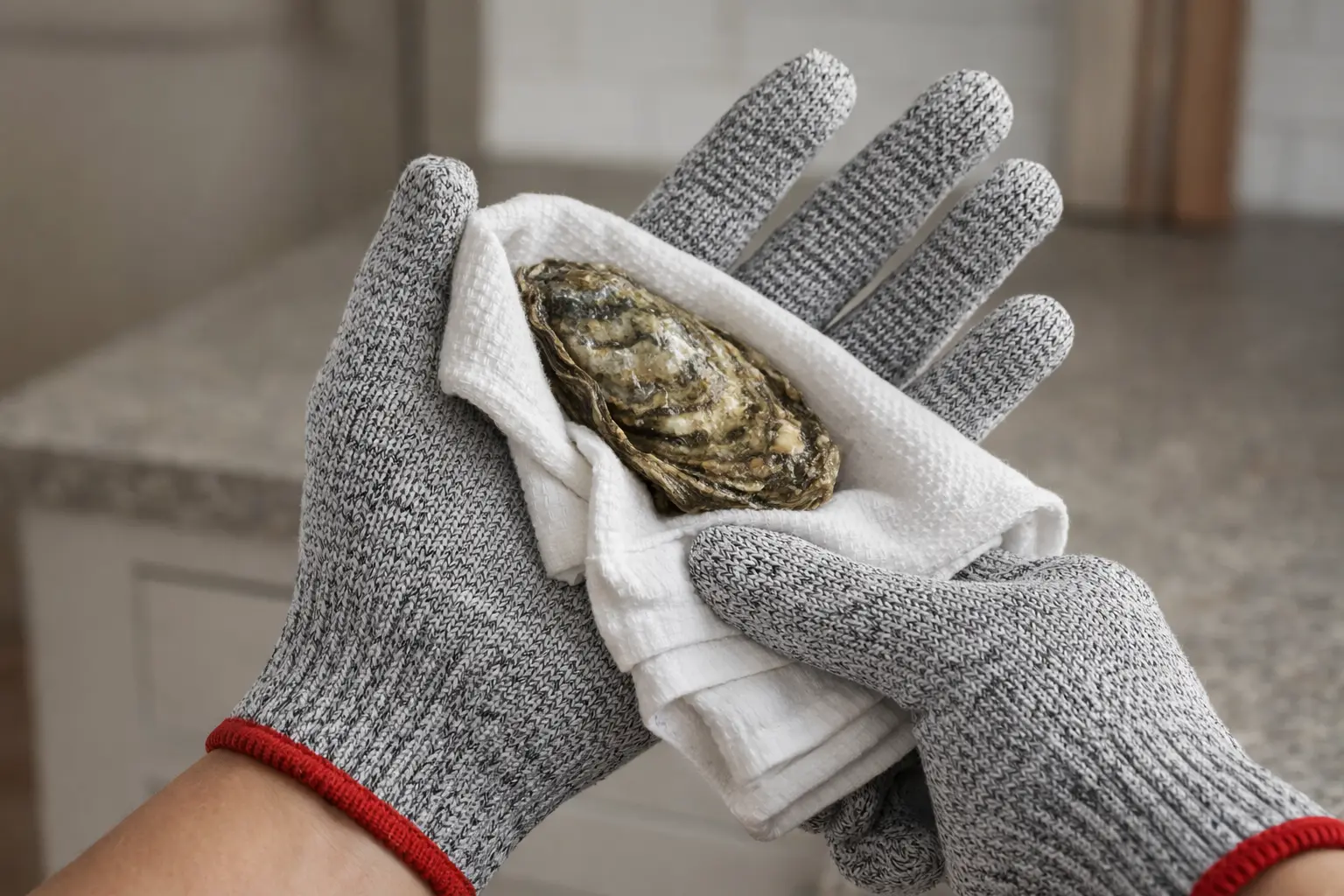
Best Overall Cut-Resistant Glove
NoCry Premium Cut Resistant Gloves (Level 5)
Best Overall Balance: Protection + Dexterity + Comfort
Why It’s Elite
- Strong cut protection without turning your hand into a stiff block.
- Flexible enough to feel the hinge point—control stays high.
- Comfortable for longer sessions, so people actually keep it on.
Performance Scores
Chef Commentary
This is the glove most people should start with. You keep the feel you need to shuck clean, but you get real protection if the blade slips. The safety win is that it’s comfortable enough that people actually wear it the whole time.
Who It’s For
- Home shuckers, beginners, and anyone who wants “one glove that just works.”
- People who want protection without bulky chainmail.
- Anyone building a serious raw bar kit at home.
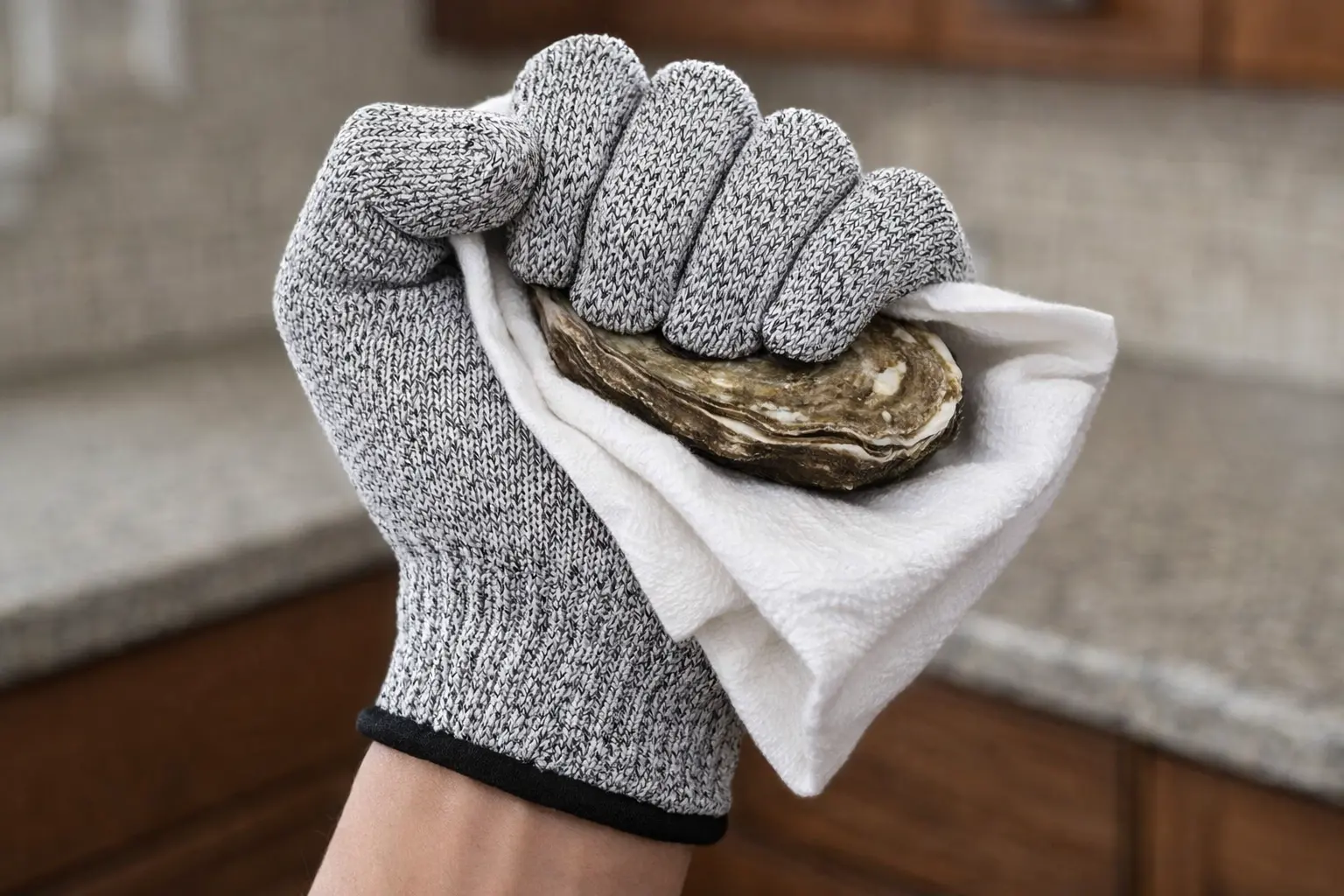
Best Budget Cut-Resistant Gloves
Dowellife Cut Resistant Gloves (Level 5)
Best Budget: Safe, Simple, Effective
Why It’s Elite
- Solid protection at a lower price point—great “first glove.”
- Food-grade, straightforward, and easy to keep clean.
- Does the job safely without paying for premium extras.
Performance Scores
Chef Commentary
This is the glove for “I want to stop cutting myself” without overthinking it. It’s not the most refined feel, but it’s a legit safety upgrade for beginners and occasional shuckers.
Who It’s For
- Beginners, occasional shuckers, and value shoppers.
- Anyone building a safety kit on a budget.
- People who want reliable protection without premium pricing.
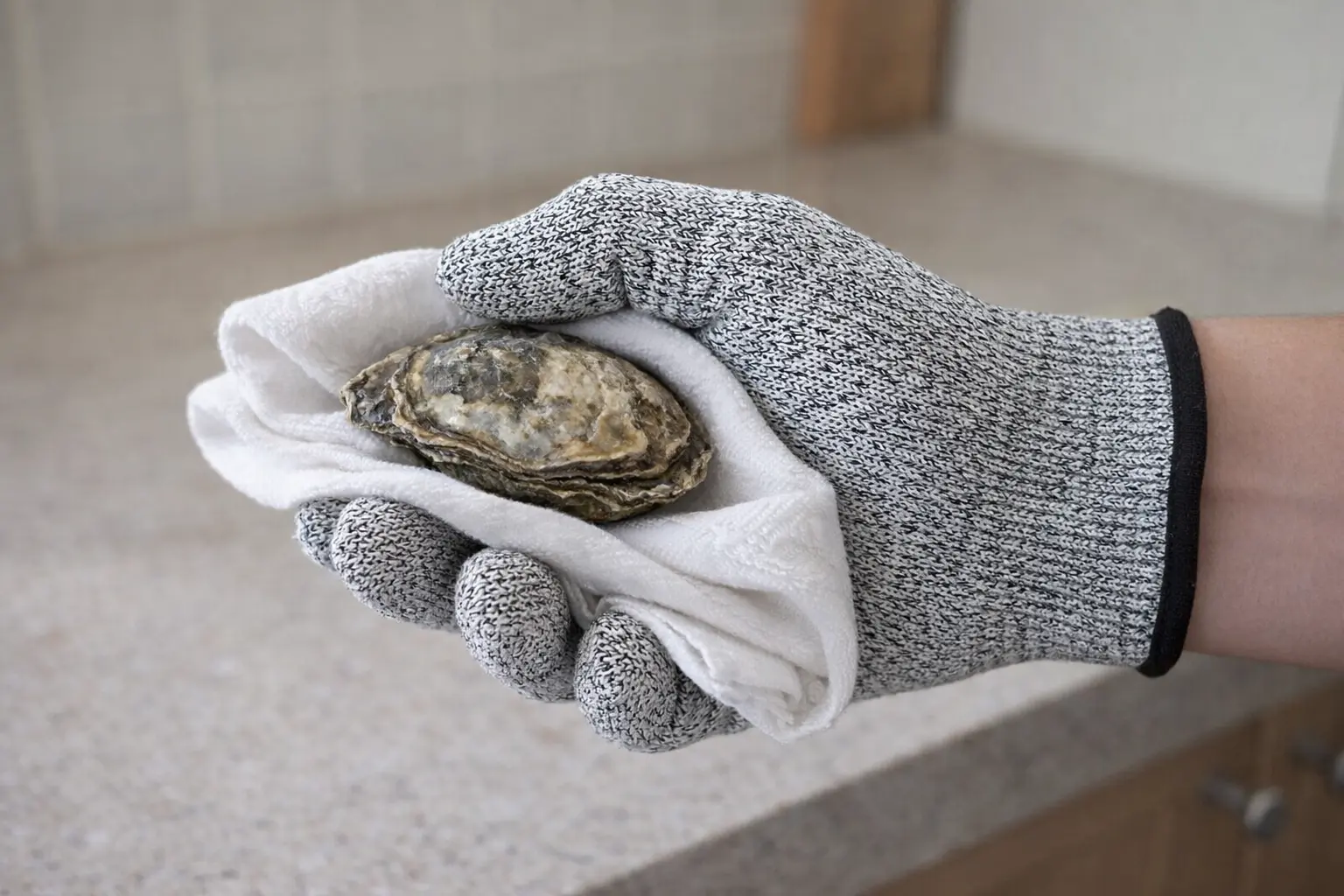
Best Value Multipack
Ohsuni Cutting Gloves (2-Pack)
Best Multipack: Two Pairs for Oyster Nights
Why It’s Elite
- Two pairs makes oyster nights safer—no sharing one glove mid-shuck.
- Perfect for guests, shared kitchens, or keeping a clean backup ready.
- Great value for building a home raw bar setup.
Performance Scores
Chef Commentary
The underrated win here is logistics. Hosting goes smoother because nobody “just skips the glove” when the only one is wet or already in use. Two pairs = fewer mistakes.
Who It’s For
- Entertaining, shared kitchens, and oyster nights with friends.
- Couples who shuck together.
- Anyone who wants a backup glove on deck.

Best for Comfort and Everyday Kitchen Use
ZEEGO Level 5 Cut Resistant Gloves
Most Wearable: Soft + Flexible + Easy Wash
Why It’s Elite
- Comfort-forward fit that people actually keep on.
- Flexible enough for oyster hinge work and daily prep tasks.
- Ambidextrous and easy to wash—simple utility glove.
Performance Scores
Chef Commentary
Comfort equals compliance. The glove doesn’t help if it lives in a drawer. This is the “always within reach” option that can pull double duty in the kitchen.
Who It’s For
- Home cooks who want one glove for oysters and prep.
- Anyone who prioritizes comfort and washability.
- People who dislike stiff, bulky safety gear.
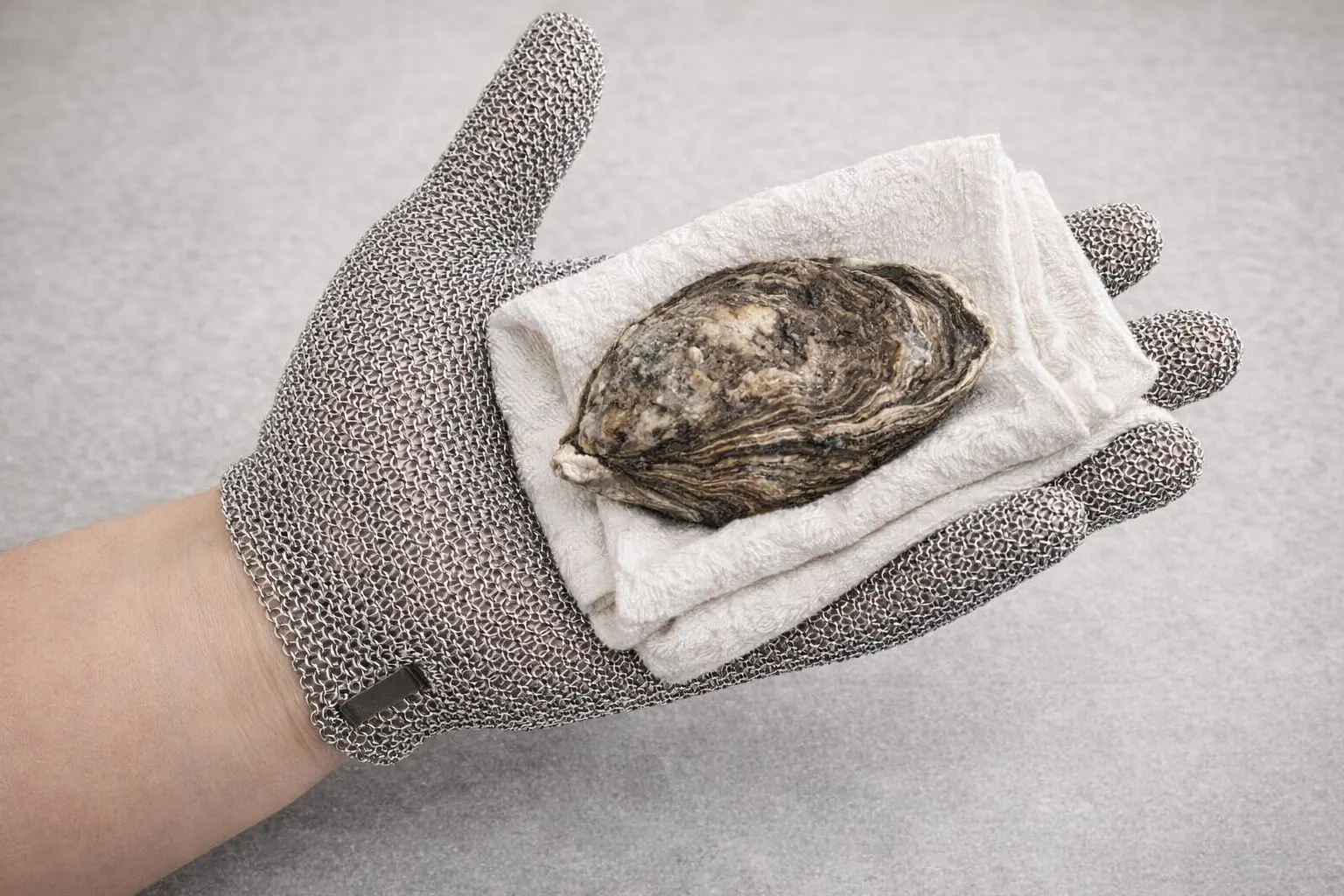
Best Entry-Level Chainmail Glove
VINAER Stainless Steel Chainmail Glove
High Protection: Chainmail Safety Tier
Why It’s Elite
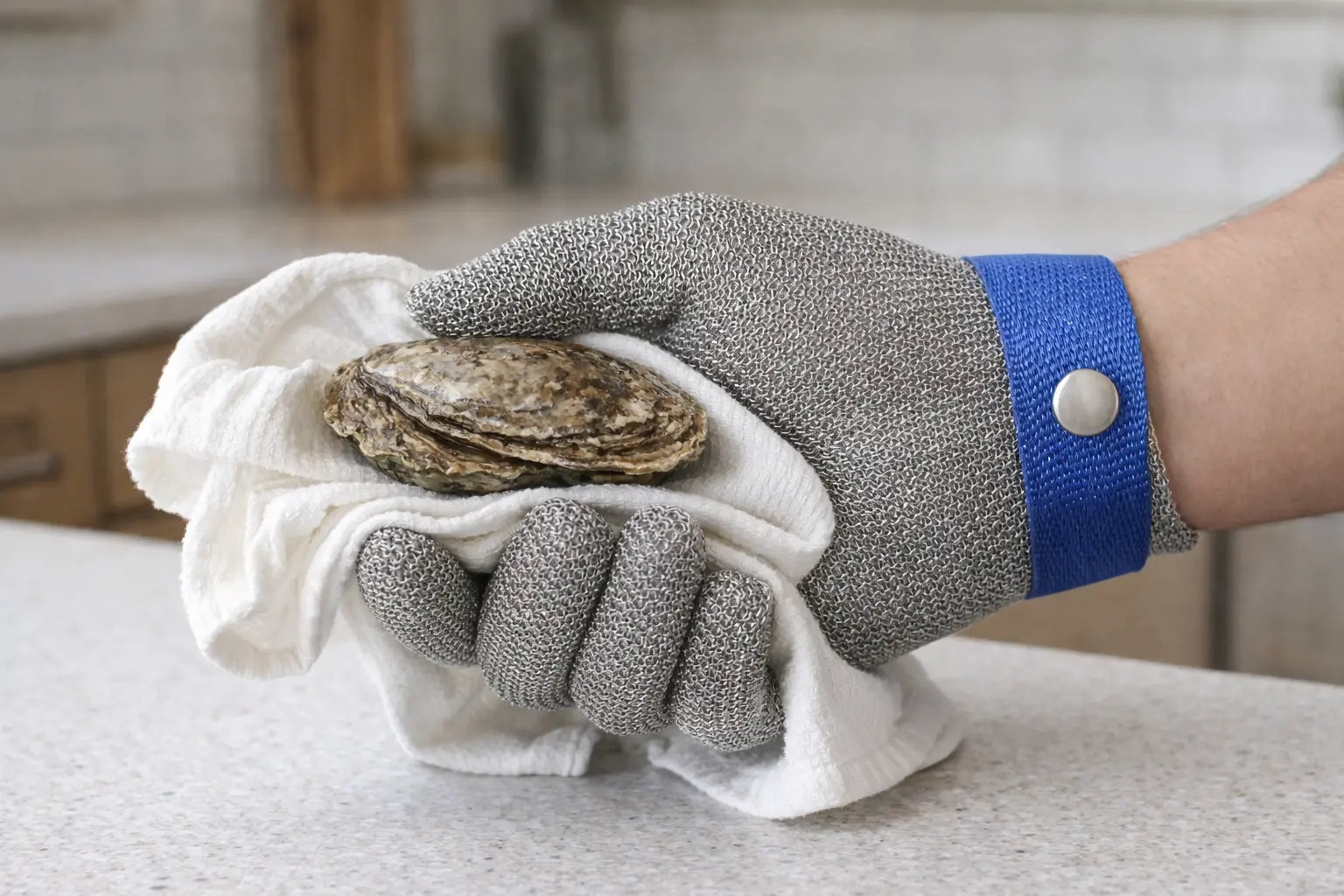
- Chainmail-level protection for high-risk hands and hard shells.
- Great “confidence glove” if you’ve been injured before.
- Most approachable chainmail option before going full ANSI A9.
Performance Scores
Chef Commentary
Chainmail changes the game: you gain protection but lose feel. If you go this route, slow down and prioritize clean hinge entry. This is for people who want maximum confidence in the off-hand.
Who It’s For
- People with prior hand injuries or high anxiety about slips.
- Very hard-shelled oysters and higher-volume shucking.
- Anyone choosing protection over finesse.

Best Maximum Protection (Pro Pick)
Schwer SlicePro ANSI A9 Chainmail Glove
Maximum Protection: ANSI A9 Safety Armor
Why It’s Elite
- ANSI A9 cut resistance is the “nothing gets through” tier.
- Built for commercial kitchens and high-volume work.
- Peace-of-mind protection when fatigue increases risk.
Performance Scores
Chef Commentary
This is maximum protection, period. If you’re shucking fast and fatigue is real, this glove makes worst-case slips survivable. Just accept you’re trading finesse for armor.
Who It’s For
- Commercial or high-volume shucking.
- Anyone prioritizing safety over dexterity.
- People who want top-tier cut resistance.
Alternative Pro Chainmail Option
gol-siv ANSI A9 Stainless Steel Mesh Glove
A9 Alternative: Same Armor Tier, Different Fit
Why It’s Elite
- Second ANSI A9 option for people who want another fit/design.
- Same maximum-protection category, different feel on hand.
- Best for experienced users who understand chainmail tradeoffs.
Performance Scores
Chef Commentary
This glove exists because fit matters. If one chainmail option feels awkward, you’ll compensate and get sloppy. This gives you another top-tier option without leaving the ANSI A9 protection class.
Who It’s For
- Experienced users who want ANSI A9 protection with an alternate design.
- High-volume shuckers who already have strong technique.
- Anyone who wants maximum cut resistance options.
Compare Gloves At a Glance
| Feature |
|---|
Gloves vs Towels: What Actually Keeps You Safe
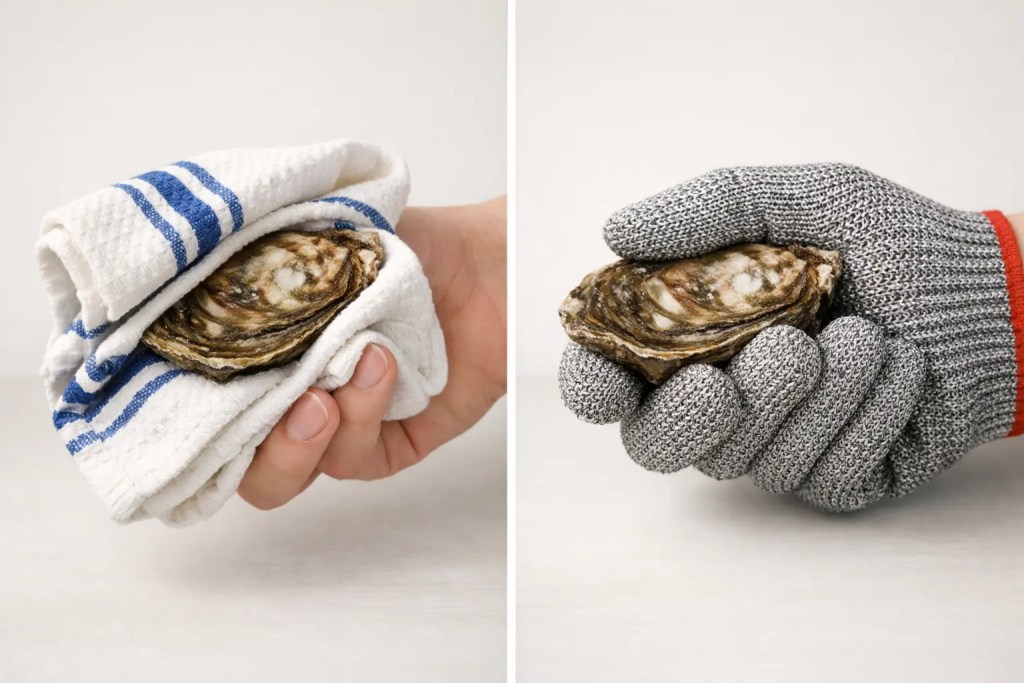
A folded towel improves grip.
The cut-resistant glove prevents injuries.
They do different jobs.
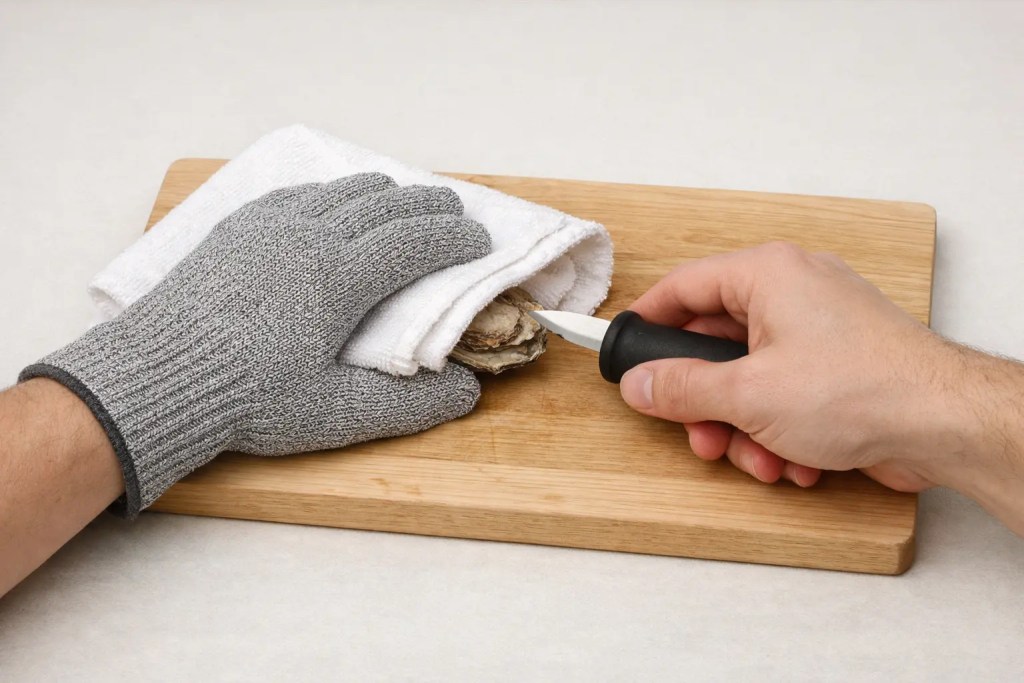
Best practice is to wear cut-resistant gloves for oysters on the non-knife hand and use a folded towel over the oyster. This combination provides control, stability, and protection if something goes wrong.
No single tool replaces good technique, but gloves significantly reduce injury severity when mistakes happen.
Knife Choice Is Part of the Safety Equation
Most oyster injuries are not caused by gloves failing. They are caused by the wrong knife, excessive force, or poor blade angle.
A proper oyster knife reduces slipping, requires less pressure, and keeps the blade where it belongs. Pairing the right glove with the right knife addresses the problem at the source.
For knife recommendations, see The Definitive Best Oyster Knives of 2026.
Frequently Asked Questions
Which hand should wear the cut-resistant glove?
The glove should be worn on the non-knife hand, the hand holding the oyster. This is the hand exposed if the blade slips.
Do experienced shuckers still use cut-resistant gloves?
Many do, especially during long sessions or when working with hard-shelled oysters. Experience reduces risk, but fatigue increases it.
Is Level 5 protection enough, or do I need chainmail?
Level 5 fabric gloves are ideal for most home and intermediate shuckers because they preserve dexterity. Chainmail or ANSI A9 gloves offer maximum protection but reduce feel and are better suited for high-volume or commercial work.
Can cut-resistant gloves be washed?
Yes. Fabric gloves should be machine washed according to manufacturer instructions. Chainmail gloves can be scrubbed and sanitized. Clean gloves are essential when handling raw shellfish.
Can I shuck oysters safely with just a towel?
A towel improves grip but does not stop a blade. Towels and gloves serve different purposes and work best together.
Final Recommendation
For most people, the NoCry Premium Cut Resistant Gloves offer the best balance of protection, comfort, and control.
Dowellife Level 5 gloves are a solid budget option.
Ohsuni’s two-pack works well for hosting or shared setups.
ZEEGO gloves prioritize comfort and everyday kitchen use.
Schwer SlicePro ANSI A9 gloves provide maximum protection for high-volume or commercial shucking.
There is no advantage to shucking barehanded.
Protect your hands, shuck with confidence, and enjoy the oysters without a trip to the emergency room.
Related Guides in the Raw Bar Bible
- Are Oysters Good for You? A Complete, Evidence-Based Guide
- 7 Reasons Oysters Are the Only Superfood Worth Eating (Science Says So)
- The Definitive Best Oyster Knives of 2026
Discover more from The Oyster Encyclopedia
Subscribe to get the latest posts sent to your email.